Whether a Bloodhound Needs a Helper to Train
Training a Bloodhound can feel like a wrestling match with a highly intelligent, stubbornly single-minded scent machine, and many owners quickly wonder if they're fighting a losing battle alone. It's a common frustration: you're trying to teach 'sit' while their nose is already processing the squirrel that might have been there three hours ago. This guide will delve into whether a helper is truly essential for Bloodhound training, particularly in specialized scent work, offering strategies for both solo efforts and how to best utilize an extra pair of hands.
Understanding the Bloodhound's Unique Training Needs
Before we even talk about bringing in a helper, it's crucial to grasp what makes Bloodhounds, well, Bloodhounds when it comes to learning. They aren't your typical Golden Retriever, eager to please and easily redirected from distractions. Their world is dictated by scent, and everything else often takes a backseat.
The All-Consuming Nose: Why Distraction is Inherent
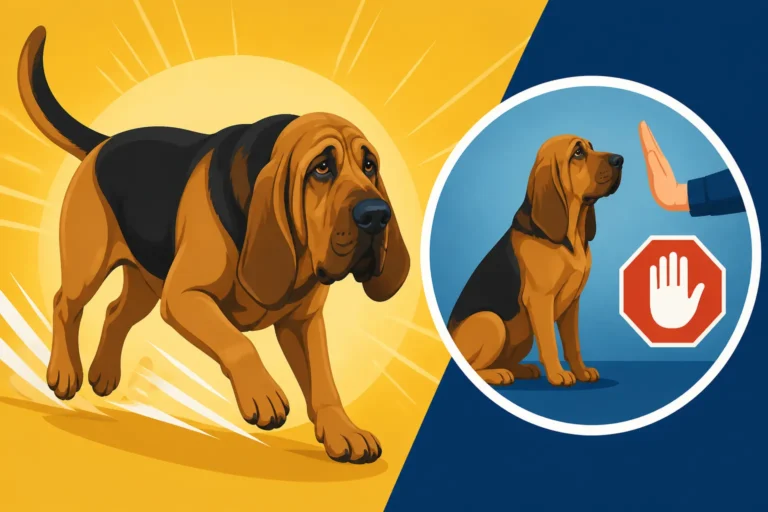
Imagine trying to have a serious conversation with someone in a room where every single wall is covered in fascinating, moving pictures and loud, engaging sounds. That's a bit like what asking a Bloodhound to focus on "sit" in a park feels like. Their nose is their primary sensory organ, and it's constantly feeding them a rich, complex tapestry of information about the world around them. When a Bloodhound drops its nose, it's not being disobedient; it's simply following an ancient, powerful instinct. This profound drive means that what we consider distractions – a leaf blowing, a distant dog bark, a speck of old food on the ground – are, to them, incredibly compelling narratives demanding their full attention. This is why a simple walk can turn into a full-body drag if a fascinating scent crosses their path. It’s hard to compete with such a deep-seated biological imperative, which leads many owners to conclude that Why a Bloodhound's Nose Outvotes Its Handler.
This inherent focus on scent profoundly impacts training sessions. Traditional obedience, which often relies on visual cues and rapid responses, can be a slow, sometimes maddening process with a Bloodhound. You might have them offering a perfect "down" in your quiet living room, only for that skill to vanish entirely the moment you step outside and the world's olfactory symphony begins. The challenge isn't just getting them to understand a command, but to prioritize it over the incredible scent trails whispering to them from every blade of grass. This is precisely why many owners find themselves pulling their hair out, wondering if they'll ever get a moment of undivided attention.
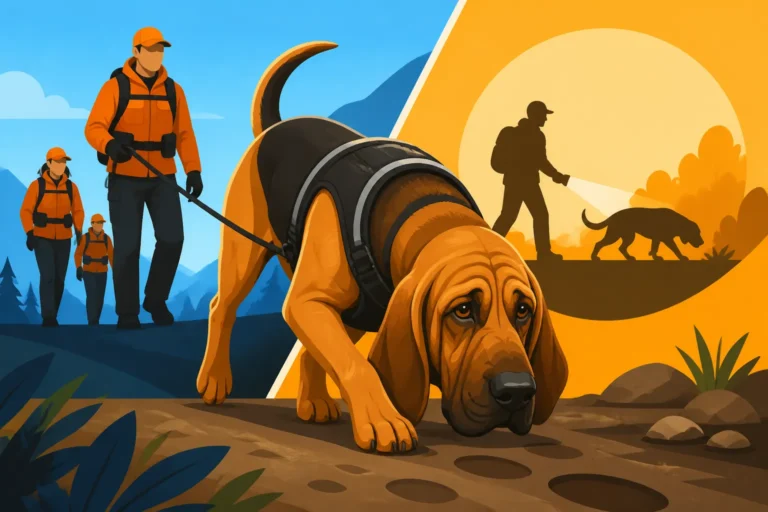
For specialized scent work, like mantrailing, this natural inclination is a huge asset, but it also presents a unique challenge for the trainer. If you're trying to set up a trail for your dog to follow, you need to ensure the trail is clear, consistent, and that your dog doesn't see you laying it. If you're alone, how do you lay a "blind" trail, where the dog doesn't know where the tracklayer went or hid, while also managing your Bloodhound, who is already trying to decode every whiff in the air? This logistical hurdle alone often pushes owners towards seeking assistance, even if they're just starting out with basic scent games.
Independence vs. Compliance: A Bloodhound's Mindset
Beyond their formidable nose, Bloodhounds possess a distinct personality characterized by a strong streak of independence. They were bred to follow a scent for miles, often out of sight and hearing of their handler, relying on their own judgment and incredible instincts. This is not a breed engineered for immediate, robotic compliance or performing tricks on cue solely for praise. While they are affectionate and generally gentle, their eagerness to please human beings doesn't manifest in the same way it does for, say, a Border Collie or a Labrador. Their primary "job" is to track, and in their mind, that is what they're doing when their nose is to the ground.
This independent nature means that while a Bloodhound can certainly learn obedience cues, they often process them on their own timeline. They might pause, consider, and then decide whether or not to comply, especially if there's a more interesting scent distraction. It's not usually outright defiance, but rather a profound internal debate between "do what the human wants" and "follow that amazing smell." Building cooperation, rather than demanding strict obedience, becomes the cornerstone of successful Bloodhound training. It's about convincing them that working with you, even if it's for a treat or a favorite toy, is more rewarding than chasing that phantom scent solo.
The challenge this presents for a handler, especially a solo one, is immense. If your Bloodhound is physically strong and deeply immersed in a trail, you need not only the physical strength to manage them on a long line but also the mental fortitude to stay consistent with your cues, despite their apparent indifference. An extra person can help manage the physical aspects, allowing you to focus more on the dog's mental engagement. They can also provide a vital second opinion on whether your dog is genuinely ignoring you or simply taking a moment to process multiple stimuli, helping you avoid unnecessary frustration. It's a dance that often benefits from more than one partner.
When a Helper Becomes Invaluable in Bloodhound Training
While you can do some training alone, there are specific scenarios where a helper transitions from being "nice to have" to "absolutely essential," especially if you're serious about developing your Bloodhound's natural trailing abilities.
Laying Effective Scent Trails for Training
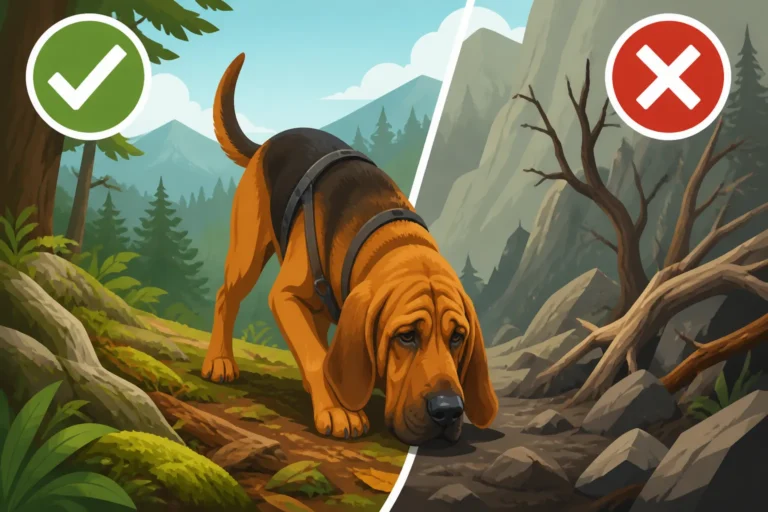
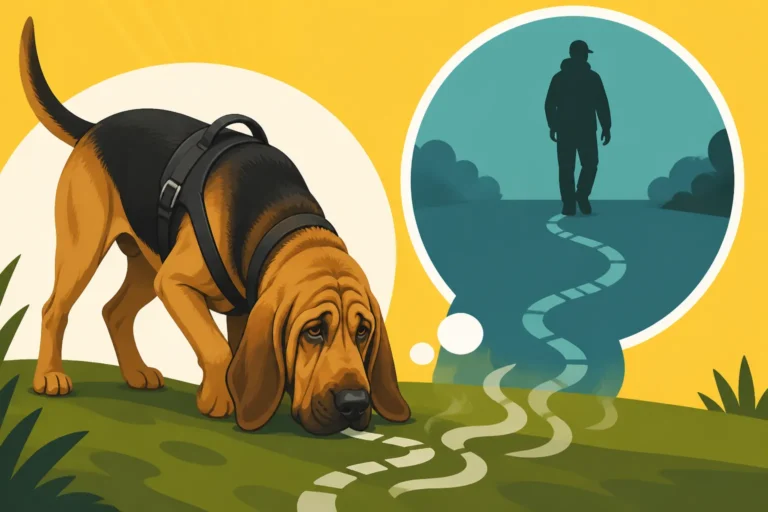
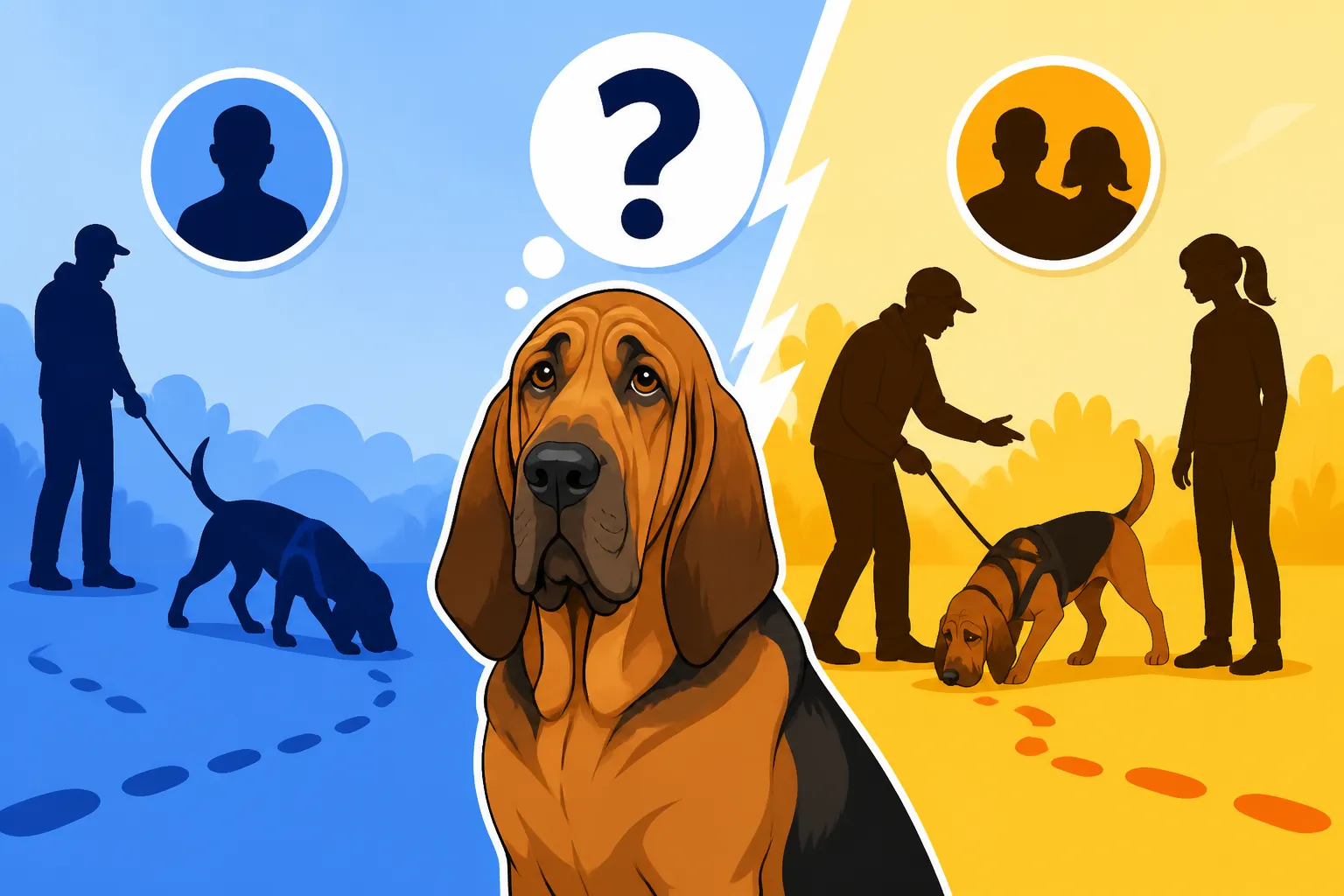
Mantrailing, or scent work, is where the Bloodhound truly shines. To train effectively, you need to lay trails that simulate real-world conditions, gradually increasing in difficulty. This process requires a "runner" or "quarry"—the person whose scent the Bloodhound will follow. Attempting to lay a truly blind trail, where your dog hasn't seen the person depart, while also managing your Bloodhound, is practically impossible. The core principle of trailing is that the dog follows human scent, not visual cues. A helper ensures this fundamental element is met. They can walk out, leave a scent article, and hide, allowing you to bring your Bloodhound to the starting point without any visual contamination.
Imagine trying to teach your Bloodhound to track a specific person if that person is you. As soon as you step away to lay the trail, your dog knows exactly where you've gone. A helper, who can be anyone from a family member to a friend, becomes the "missing person." They can lay a trail with turns, through different terrains, and even hide in challenging spots, giving your Bloodhound a realistic and enriching problem to solve. This also allows you to focus 100% on handling your dog, observing their behavior, and learning to read their subtle cues, rather than trying to perform two roles at once. Without a dedicated runner, the depth and realism of your trailing exercises will be severely limited, hindering your Bloodhound's progression.
Furthermore, a helper is crucial for proofing and increasing difficulty. They can introduce distractions along the trail, such as crossing other scents, walking near busy areas, or even having someone else briefly interact with the runner's path (a "cross track"). This level of complexity is vital for preparing a Bloodhound for real-world scenarios, where trails are rarely pristine. It's also safer. A helper can watch from a distance, ensuring the dog isn't getting into trouble and confirming they're on the right track, especially in unfamiliar or hazardous environments. This collaborative effort makes the training experience far more effective and enjoyable for both dog and handler.
Managing the Bloodhound's Power and Focus on the Line
Bloodhounds are powerful dogs, often weighing in at 90-110 pounds, and when they are locked onto a scent, they become a force of nature. Managing this strength on a long line, typically 15 to 30 feet, requires considerable physical stamina and precise handling skills. The handler needs to maintain control, avoid tangles, and guide the dog without inadvertently interfering with their trailing process. It's a delicate balance of providing enough slack for the dog to work while being ready to step in if necessary. How Long a Line Suits a Bloodhound in the Open is an important consideration here, as it directly impacts your ability to manage them.
A helper can be invaluable in mitigating the physical demands of handling. They can act as a "spotter," watching for potential hazards ahead—a busy road, another dog, or a sudden drop-off—allowing you to keep your focus squarely on your Bloodhound. If you're navigating complex terrain or crowded areas, a helper can manage the slack in the long line, prevent tangles, and ensure the line doesn't snag on obstacles, freeing you to concentrate on reading your dog's subtle shifts in body language and nose work. This is particularly useful in urban environments or heavily wooded areas where unexpected obstacles are common.
Beyond physical assistance, a helper provides a second set of eyes and an objective perspective. They can observe your handling technique, pointing out if you're unintentionally pulling on the line, giving unclear commands, or missing crucial cues from your Bloodhound. They can also help manage the environment, ensuring that curious bystanders don't interfere with your dog's work or that a car doesn't suddenly drive through your trail area. This collaborative approach enhances safety, refines your handling skills, and ultimately leads to more productive and less stressful training sessions.
Introducing New Environments and Distractions
Training a Bloodhound, or any dog for that matter, requires gradually exposing them to new environments and increasing levels of distraction. However, doing this alone can be incredibly challenging and even dangerous. If you're trying to practice obedience in a park, you need to be able to manage your dog, watch for potential hazards, and also introduce controlled distractions. A helper makes this process significantly easier and safer.
A helper can serve as a controlled distraction, simulating real-world scenarios in a safe, incremental manner. For example, they can walk past at a distance, gradually getting closer, or even pretend to be another dog walker. This allows you to practice your Bloodhound's focus and impulse control in a structured way, without being overwhelmed by unpredictable elements. They can also help you generalize commands. If your Bloodhound only performs a "stay" perfectly in your backyard, a helper can assist in practicing that same command in a new, slightly more distracting park setting, ensuring your dog understands the command applies everywhere.
Moreover, when working on scent trails, introducing new environments adds layers of complexity that are hard to manage solo. Imagine setting a trail in a busy shopping center parking lot or an industrial park. A helper can scout ahead, ensure the area is safe, and act as a spotter to warn you of approaching cars or people. They can also help manage the "find" at the end of the trail, ensuring the Bloodhound gets their well-deserved reward without accidental interference. This team approach means you can push your Bloodhound's training boundaries safely and effectively, gradually building their confidence and skill in a wider range of situations.
Training a Bloodhound Effectively Solo: Strategies and Tools
While a helper is incredibly beneficial, it's certainly possible to make significant progress with your Bloodhound's training on your own, especially with foundational skills and some creative scent work. It just requires different strategies and the right mindset.
Adapting Trailing Exercises for One Person
Training a Bloodhound for scent work alone requires some clever adaptations to how you lay trails. The key is to create "blind" trails without having a separate runner. One common technique is using geometric patterns that allow you to lay the trail and then double back or loop around to a starting point where your dog can pick up the scent without having seen you depart. For instance, you can walk a long straight line, make a sharp U-turn, and walk back parallel to your original path, then hide your scent article a short distance off the original path. Your dog starts at your initial departure point and tracks the aged trail.
Another effective solo strategy involves laying "aged" trails. You lay a simple, short trail (perhaps just a straight line from your house to a tree in your yard, leaving a glove there) and then go inside for an hour or two. When you come back out with your Bloodhound, the trail has had time to age, and your own presence has dispersed, making it a more realistic challenge. This allows your dog to focus on the lingering ground scent rather than following your immediate air currents or visual cues. Remember to always start incredibly simple and short, building duration and complexity very gradually. Even a twenty-yard straight line with a visible reward at the end is a fantastic start for a young pup. For more ideas on how to begin, consider resources like The First Runaway a Bloodhound Puppy Should Follow.
Solo trailing also lends itself well to "proofed" items. You can leave a strongly scented item, like a worn t-shirt or an old shoe, in a hidden spot and then bring your Bloodhound to an obvious starting point where they know to find that specific item. This helps them understand the concept of searching for a unique scent without the added complexity of tracking a moving person. As you both gain experience, you can increase the distance, add gentle curves, and use more challenging hiding spots, all while maintaining the focus on the dog's ability to track a specific item's scent, rather than requiring a dedicated runner.
Essential Equipment for the Solo Bloodhound Handler
Even when training alone, having the right gear can make a world of difference in safety, comfort, and effectiveness. A strong, comfortable harness is absolutely non-negotiable for a Bloodhound. It distributes pressure evenly across their chest and shoulders, preventing injury to their neck and throat, especially when they suddenly lunge onto a scent. Look for a Y-front harness that allows for full range of shoulder motion, rather than one that restricts the shoulders. Companies like Ruffwear make excellent harnesses that stand up to the rigors of Bloodhound work. Which Harness a Bloodhound Trails In provides more detail on selecting the right one.
Next up, a good quality long line is your best friend. For solo training, where you don't have a helper to manage slack, a longer line (15-30 feet) made of durable, non-absorbent material like Biothane or nylon is essential. It allows your Bloodhound enough freedom to work a scent without pulling you off your feet, while still keeping them safely connected to you. You can find a wide variety of excellent long lines on platforms like Amazon, offering different lengths and materials to suit your specific needs and terrain. Remember, the goal is control without restriction.
Finally, don't underestimate the power of high-value rewards. Bloodhounds will work for what motivates them, and that's often food, especially stinky, delicious treats like cooked chicken, cheese, or hot dogs. A squeaky toy or a vigorous game of tug can also be powerful motivators for a Bloodhound. Keep a generous supply on hand in a treat pouch that's easy to access, as quick, enthusiastic rewards reinforce positive behavior. Understanding What a Bloodhound Will Work For is key to successful motivation, whether you're alone or with a team.
Building Foundational Obedience and Impulse Control
Even if your ultimate goal is advanced scent work, strong foundational obedience is crucial, especially if you're training alone. A reliable "stay" or "wait" can give you those precious seconds you need to manage the long line, secure a gate, or simply take a breath. Practice these commands in low-distraction environments first, gradually introducing more sensory input. Short, frequent training sessions (5-10 minutes, several times a day) are far more effective than one long, tedious session, especially for a breed that can lose focus if not consistently engaged.
Impulse control is another vital skill for the solo handler. Teaching your Bloodhound to "leave it" or "drop it" can literally be a lifesaver, whether they're sniffing something questionable on the ground or fixating on a distant squirrel. These commands, practiced consistently, empower you to manage your dog's strong drives in the absence of a second person. There are excellent online resources and programs, such as those offered by BAXTER & Bella, that focus on building these critical life skills through positive reinforcement, allowing you to work at your own pace from home.
Remember, Bloodhounds are intelligent, and while they might not offer lightning-fast responses, they can learn. Patience, consistency, and a positive reinforcement approach will go much further than frustration or harsh corrections. The goal is to build a cooperative relationship where your Bloodhound respects your guidance, even when their nose is telling them otherwise. This strong foundation makes any future helper-assisted training smoother and more productive.
Finding and Utilizing Training Helpers
Once you've mastered the basics and solo techniques, or if you simply want to accelerate your Bloodhound's scent work, bringing in a helper can be a game-changer. The right helper can elevate your training from good to outstanding.
Where to Look for Reliable Assistance
Finding a good helper for Bloodhound training, especially for scent work, is like striking gold. The first place to look is often within your immediate circle: friends, family members, or even neighbors who are dog-savvy and enjoy spending time outdoors. They don't need to be professional dog trainers; they just need to be reliable, patient, and able to follow instructions. Explain to them the joy and satisfaction of watching a Bloodhound work and how important their role is. You might be surprised by who steps up!
Beyond your personal network, local dog clubs, training groups, or even online forums dedicated to Bloodhounds or mantrailing can be excellent resources. Many enthusiasts are eager to help each other out, often trading "helper" duties. Attending a mantrailing seminar or workshop can connect you with like-minded individuals who understand the unique needs of a Bloodhound and might be willing to assist. These connections can be invaluable, not just for practical help but also for sharing experiences and advice. Looking into events for What a Mantrailing Seminar Costs a Bloodhound Owner can be a great way to network.
When seeking a helper, consistency is key. A helper who understands your dog's quirks, your training methods, and the specific goals of each session will be far more effective than a constantly rotating cast of characters. Build a rapport with your helper, treat them with respect, and always thank them profusely. A small gift or a shared meal after a particularly long session can go a long way in ensuring their continued willingness to lend a hand.
Briefing Your Helper: What They Need to Know
A well-briefed helper is an effective helper. Before any training session, take the time to clearly explain their role, what you expect them to do, and the specific rules of the exercise. This includes details like: where to lay the trail, how long it should be, whether to make turns, and where they should hide. Provide them with the scent article (a glove, a piece of clothing) and ensure they understand not to interact with your Bloodhound until the "find" at the end of the trail. The dog needs to learn to work to the source of the scent, not to a person who is actively calling them.
Emphasize consistency. If the helper is meant to walk a straight line, they shouldn't suddenly veer off course. If they're supposed to hide in a specific manner, they should stick to it. This consistency is crucial for your Bloodhound to learn effectively and build confidence in the trailing process. Also, instruct them on how to reward the dog at the "find" – usually with enthusiastic praise, a play session with a favorite toy, or a generous portion of high-value treats. The end of the trail should always be a positive and exciting experience for the Bloodhound.
Safety is paramount. Ensure your helper knows to stay clear of traffic, be aware of their surroundings, and not to make sudden movements that might startle your Bloodhound. If you're working in an area with wildlife, advise them on what to do if they encounter anything. A brief run-through of the plan before each session, perhaps with a quick map sketch for the trail, can prevent misunderstandings and ensure a smooth, productive training experience for everyone involved.
The Value of Professional Guidance
Even with a dedicated helper, there comes a point where professional guidance can significantly enhance your Bloodhound's training. A certified mantrailing instructor or a professional scent work trainer possesses expertise that can be invaluable. They can observe your handling, your helper's trail-laying, and your Bloodhound's work with an objective eye, identifying subtle issues or opportunities for improvement that you might miss.
A professional trainer can introduce you to advanced techniques, help you troubleshoot specific problems (e.g., your Bloodhound air-scenting too much, or struggling with cross-tracks), and design progressive training plans tailored to your dog's individual strengths and weaknesses. They can also guide both you and your helper, ensuring that the entire team is working cohesively and effectively. Their experience can shave years off your learning curve and prevent the development of bad habits.
Consider investing in an introductory seminar or a series of private lessons with a reputable Bloodhound or mantrailing expert. Even a few sessions can provide you with the tools and confidence to continue training effectively on your own or with your helper. Whether your goal is competitive mantrailing, search and rescue, or simply an enriched life for your amazing Bloodhound, professional input can unlock their full potential and deepen the incredible bond you share. This specialized training is far more suitable for a Bloodhound than general obedience, which is why Mantrailing Is the Answer to a Bloodhound, Not Obedience.
Comparing Solo vs. Helper-Assisted Bloodhound Training
To give you a clearer picture, here's a quick comparison of the pros and cons of training your Bloodhound with and without a helper, particularly focusing on scent work.
| Feature / Aspect | Solo Training | Helper-Assisted Training |
|---|---|---|
| Trail Laying | Limited to self-laid or aged trails; can be predictable for the dog. | Allows for truly blind trails, complex patterns, and varied hiding spots. |
| Distraction Control | Relies on careful location selection and internal impulse control training. | Helper can actively introduce and manage distractions, simulating real-world scenarios. |
| Handler Focus | Must juggle managing the dog, the environment, and potentially laying the trail. | Handler can focus entirely on reading the dog and refining their handling skills. |
| Safety | Requires extreme vigilance from one person; can be challenging in public/unfamiliar areas. | Helper provides an extra set of eyes for hazards and environmental management. |
| Progression Rate | Slower, as complexity is limited by solo logistics. | Faster, as more realistic and challenging scenarios can be introduced more readily. |
| Learning Curve | Steep, as you must figure out many aspects yourself. | Smoother, with external feedback and shared responsibility, leading to quicker understanding. |
| Logistical Challenge | High, especially for advanced scent work. | Lower, as tasks are distributed, making complex setups more feasible. |
| Overall Training Quality | Can be good for foundational skills; limited for realistic trailing scenarios. | Significantly higher, providing more varied and effective experiences for the Bloodhound. |
Disclaimer
This article is for general informational purposes only and does not constitute professional advice. Laws, prices and regulations vary by location and change over time. Consult a qualified professional for guidance on your specific situation.