Whether Heat Shortens What a Bloodhound Can Do
It's a common dilemma for Bloodhound owners and handlers: the weather is warm, maybe even hot, and you're wondering if your dedicated partner can still hit the trail effectively and safely. You know their nose is phenomenal, but can their body keep up when the mercury rises? Pushing a Bloodhound too hard in the heat isn't just inefficient; it can be downright dangerous. This guide will walk you through exactly how warm weather impacts a Bloodhound's trailing abilities, what physiological challenges they face, and most importantly, how to keep them safe and successful when temperatures climb.
Understanding How Heat Affects a Bloodhound's Body on a Trail
Bloodhounds are built for endurance, but they are not immune to the dangers of overheating, especially when their powerful drive to work kicks in. Their unique physiology, combined with the intense physical and mental demands of trailing, makes them particularly susceptible to heat-related issues. It's not just about comfort; it's about life or death.
When a Bloodhound is working, its body generates heat. In cooler conditions, they dissipate this heat fairly efficiently through panting and the natural cooling effect of air moving over their large surface area. However, as the ambient temperature rises, and especially when humidity is high, this natural cooling system becomes less effective. The air they pant isn in is already warm, and there's less evaporative cooling from their tongue and respiratory tract because the air is saturated with moisture.
Their loose skin, which is fantastic for trapping scent, can also trap heat against their body. Those wonderful folds and dewlaps, while iconic and functional for scenting, can also reduce airflow and insulation. This means their core temperature can climb rapidly, sometimes faster than you might realize. A Bloodhound's enthusiasm can often lead them to ignore their own discomfort until it's too late. Unlike some other breeds, their single-minded focus on a scent can override their natural instincts to slow down or seek shade. They want to find that person, and they will push themselves relentlessly, which is why a handler's vigilance is absolutely critical.
The risks associated with overheating are severe. At its mildest, you're looking at heat exhaustion, which manifests as lethargy, excessive panting, and slowing down. But left unchecked, this can quickly escalate to heatstroke, a medical emergency that can cause organ damage, brain injury, and even death. This is especially true for dogs that are working intensely. Compounding this, the stress and exertion associated with intense work in heat can also increase a Bloodhound's risk for gastric dilatation-volvulus, or bloat, a life-threatening condition where the stomach twists. Bloat Is What Kills Most Bloodhounds is a devastating reality for our breed, and heat can definitely be a contributing factor. The deep, narrow chest that makes them such powerful scent hounds also makes them predisposed to this terrifying emergency. Why a Deep Narrow Chest Puts a Bloodhound at Risk is something every Bloodhound owner needs to understand.
The Direct Impact of High Temperatures on Trailing Performance and Duration
Heat doesn't just make a Bloodhound uncomfortable; it directly impairs their ability to perform their specialized task and significantly shortens the duration they can safely work. The incredible scenting prowess they possess is still there, but their physical capacity to utilize it is drastically reduced.
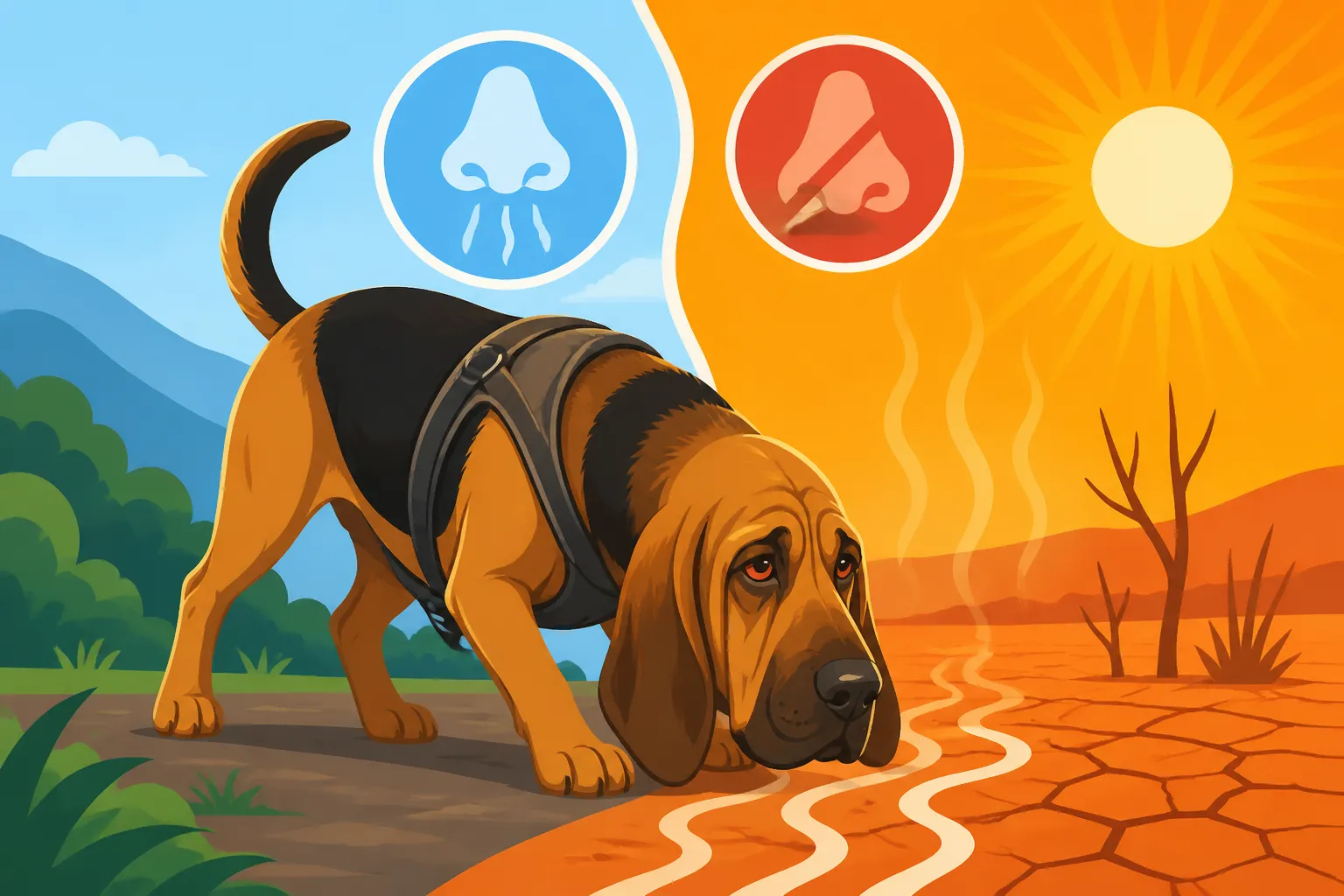
First, let's talk about scent itself. Heat affects how quickly scent dissipates and rises. Scent particles generally become more volatile in warmer air, meaning they lift off the ground and disperse more rapidly. This can make a trail harder to follow, especially if it's an older trail or one laid in a complex environment like pavement or concrete. A Bloodhound has to work harder, moving its nose faster and more deliberately to collect enough scent molecules to maintain the trail. This increased effort consumes more energy, leading to faster fatigue. Imagine trying to follow a faint trail of perfume in a hot, breezy room versus a cool, still one; the latter is always easier.
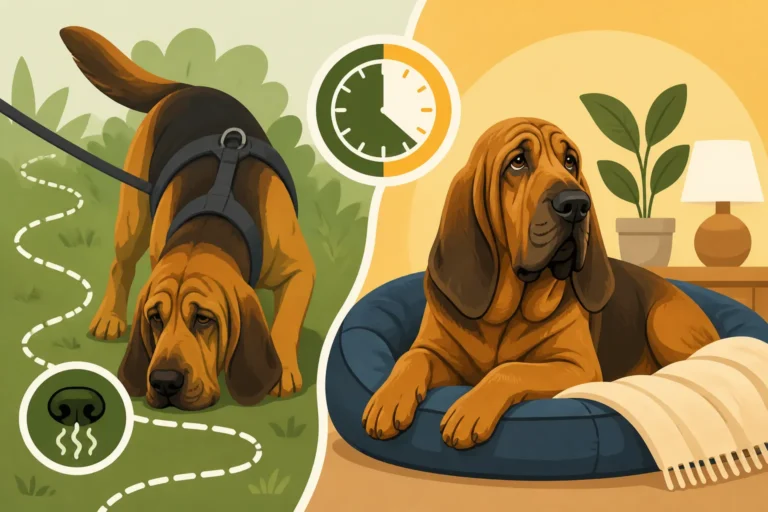
Beyond scent dispersion, the physical toll is immense. A Bloodhound's stamina, which is usually phenomenal, takes a nosedive in hot weather. Their gait might become slower, their head might drop lower, and their overall enthusiasm, while still present, can be overshadowed by physiological stress. Their heart has to work harder to pump blood to the muscles and to the surface of the body to aid in cooling, which means less oxygen is available for sustained effort. You'll notice they tire much more quickly. A trail that might take an hour in mild weather could exhaust them in 20 minutes on a hot day. This means the effective working window for a Bloodhound shrinks dramatically, limiting what they can accomplish in a single session. This is a critical factor, as How Long a Bloodhound Can Work Before It Tires is very dependent on environmental conditions.
Here's a simplified look at how ambient temperature can impact a Bloodhound's typical trailing session:
| Temperature Range | Scenting Difficulty | Stamina/Work Time | Recovery Time | General Safety |
|---|---|---|---|---|
| Below 60°F (15°C) | Ideal | Excellent | Short | High |
| 60-75°F (15-24°C) | Good | Good | Moderate | Moderate-High |
| 75-85°F (24-29°C) | Moderate-Challenging | Fair-Limited | Longer | Moderate-Low |
| Above 85°F (29°C) | Very Challenging | Very Limited | Very Long | Very Low/Risky |
As you can see, once temperatures climb above the mid-70s, the efficiency and safety of trailing plummet. This doesn't mean you can't work your Bloodhound at all, but it means a significant adjustment in expectations and care. Ignoring these factors can lead to a Bloodhound collapsing on the trail or suffering irreversible damage. Remember, their commitment to the work often makes them poor judges of their own physical limits, so you have to be their advocate.
Strategies for Mitigating Heat's Effects During Bloodhound Scent Work
When you have a Bloodhound, you know their drive for scent work is inherent, almost a calling. It's not something you can just turn off when the weather gets warm. However, you absolutely must adjust your approach to ensure their safety and continued effectiveness. Ignoring the heat isn't an option for responsible Bloodhound owners.
Smart Scheduling and Timing
The single most impactful thing you can do is adjust your schedule. Forget midday trails in summer. The best times for any scent work or vigorous exercise during warmer months are typically very early mornings or late evenings, after the sun has gone down and the ground has had a chance to cool. Even then, check the humidity. High humidity traps heat, making the "feels like" temperature much higher and hindering your Bloodhound's ability to cool itself through panting. A quick check of your local weather app can give you the heat index, which is often a more accurate measure of risk than just the temperature. If the heat index is high, even if the actual temperature isn't scorching, rethink your plans. For serious work, some handlers even invest in simple temperature and humidity gauges to carry with them.
Crucial Hydration and Cooling Methods
Hydration is paramount. You need to provide frequent water breaks, much more often than you would in cooler weather. Don't wait for your Bloodhound to show signs of thirst; proactively offer water every 10-15 minutes during a session, or even more frequently depending on intensity. Always carry ample water for both yourself and your dog. Collapsible water bowls, often found on Amazon, are incredibly handy for this, as they pack down small and are ready in an instant.
Beyond just drinking, consider external cooling. Wetting down your Bloodhound's chest, belly, and paw pads with cool (not ice-cold) water before and during breaks can help dissipate heat. Some handlers use cooling vests that are soaked in water, which can provide a continuous evaporative cooling effect. These aren't a magic bullet and shouldn't be relied upon in extreme heat, but they can offer some relief in moderately warm conditions. Always remember to monitor your dog closely when using any cooling gear to ensure it's actually helping and not trapping heat.
Recognizing Warning Signs and Knowing When to Stop
This is perhaps the most critical aspect of managing heat and trailing. You must become adept at reading your Bloodhound's subtle cues. Early signs of heat stress include excessive panting that seems labored or non-stop, a darkened tongue or gums, drooling more than usual, slowing down, and seeking shade. As it progresses, you might see stumbling, disorientation, vomiting, or a glazed look in their eyes.
If you observe any of these signs, stop immediately. Move your Bloodhound to a cooler area, offer water, and start active cooling. This means dousing them with cool water, especially on their undersides, and getting air moving over them. If the symptoms don't improve quickly, or if they worsen, you need to seek veterinary attention immediately. What to Do on the Drive With a Bloating Bloodhound talks about emergency procedures, and while bloat is different, the urgency of getting to a vet for heatstroke is similar. Always err on the side of caution; a short trail cut short is infinitely better than a life-threatening emergency.
Appropriate Gear Choices
The right gear can also make a difference. Opt for harnesses that are lightweight and breathable. Heavy, padded harnesses can trap heat, especially on a Bloodhound's deep chest. Many handlers prefer minimalist tracking harnesses made of durable, yet airy, webbing. You'll want to avoid collars for actual trailing work, as they put pressure on the trachea and can restrict breathing, which is already challenged in heat. A good, well-fitted harness, often secured with a long line, is essential. What a Mantrailing Harness and Long Line Cost can give you an idea of what to look for. When shopping, look for materials that won't absorb too much heat and allow air circulation.
Consider your own gear too! You'll be sweating, so staying hydrated and comfortable yourself will help you remain alert and focused on your Bloodhound. Training programs like BAXTER & Bella emphasize handler awareness, and this certainly extends to environmental conditions. They teach you to be a proactive partner, not just a passenger, and in heat, that means being intensely aware of your dog's condition every single second.
When to Call Off the Trail Due to Heat
Knowing when to simply say "no" to a trail is a sign of a truly responsible Bloodhound owner. While we all love seeing our dogs work, their health and well-being must always come first. There are clear thresholds that should make you seriously reconsider, or outright cancel, any strenuous scent work.
As a general rule of thumb, when ambient temperatures climb above 80°F (about 27°C), especially with high humidity, the risks begin to outweigh the benefits for a Bloodhound. If the temperature is 85°F (29°C) or higher, it's almost always a no-go for anything more than a very short, low-intensity "sniff around" in the shade, if even that. Humidity makes everything worse because it prevents evaporative cooling, which is a dog's primary way to shed heat. A day that is 75°F (24°C) with 90% humidity can be more dangerous than 85°F (29°C) with low humidity.
It's tempting to think, "Oh, we'll just go slow," or "It's only for a few minutes." But Bloodhounds are relentless. Once they're on a trail, their drive takes over, and even a "slow" pace is strenuous in high heat. Furthermore, the ground itself can become incredibly hot, especially asphalt or concrete surfaces. Imagine walking barefoot on a blacktop parking lot in summer – that's what your Bloodhound's paw pads are experiencing. This can cause burns and add to their overall body heat.
The long-term consequences of pushing a Bloodhound too hard in the heat can be devastating. Beyond the immediate danger of heatstroke, repeated overheating episodes can stress their cardiovascular system and lead to a diminished capacity for future work. It can shorten their overall working career and, tragically, their life span. We want our Bloodhounds to have long, fulfilling lives, and that means protecting them from preventable harm. Aging in a Bloodhound Starts at Six and we want them to reach that age and beyond in good health.
Ultimately, trust your gut. If you feel any hesitation or concern about the heat, it's a sign you should probably postpone or cancel. There will always be another day to trail, another scent to follow. A healthy, happy Bloodhound is far more valuable than any single successful track completed under risky conditions. Your Bloodhound relies on your judgment to keep them safe, especially when their powerful nose dictates that they ignore their own physical limits.
Disclaimer
This article is for general informational purposes only and does not constitute professional advice. Laws, prices and regulations vary by location and change over time. Consult a qualified professional for guidance on your specific situation.