What a Bloodhound Will Work For
If you've ever tried to teach a Bloodhound something new, you might have felt like you were talking to a brick wall, especially when there's a fascinating smell in the air. It's not that our hounds aren't intelligent; they are profoundly smart, but their intelligence is wired differently. Getting them to engage and learn often requires understanding what truly motivates them. This guide is all about diving deep into the Bloodhound psyche to uncover what makes them tick, helping you build a stronger, more productive relationship with your scent-driven companion.
The Deepest Motivation: Their Incredible Nose
Let's be honest, for a Bloodhound, their nose isn't just a part of their face; it's their entire world, their passion, and their primary driver. Everything else truly comes secondary when that incredible olfactory organ kicks into gear. Understanding this fundamental truth is the first step to truly motivating your Bloodhound.
The Thrill of the Trail
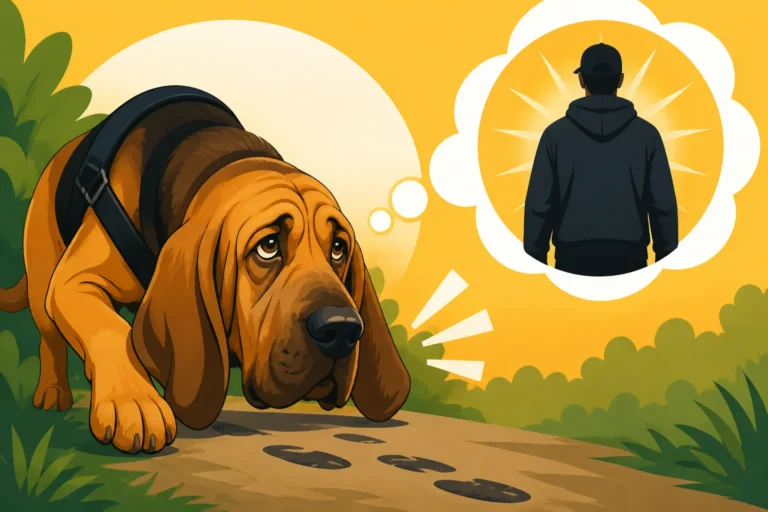
There's nothing quite like watching a Bloodhound on a fresh trail, their long ears sweeping the ground, their head down, completely engrossed in the invisible story only they can read. This isn't just "work" for them; it's the ultimate game, an inherent drive that has been selectively bred into them for centuries. The thrill comes from deciphering complex scent puzzles, following minute particles across varied terrain, and ultimately, locating the "quarry"—be it a lost person in a search and rescue scenario, or simply a family member hiding in the backyard for a training exercise. It's a primal satisfaction that no amount of kibble or praise can fully replicate. They live for the chase, the intellectual challenge of the hunt, and the sheer joy of using their unparalleled gift.
For a Bloodhound, a trail is like a gripping mystery novel. Every footstep, every leaf disturbed, every discarded object tells a story in scent, and they are compelled to read every single word. This deep, intrinsic reward system is why traditional obedience often feels like pulling teeth with them, while scent work elicits an unparalleled focus. They are literally following their bliss. If you're looking for an activity that will truly fulfill your Bloodhound and make them eager to engage, scent work, like mantrailing, is often the unequivocal answer. Mantrailing Is the Answer to a Bloodhound, Not Obedience
How Scent Work Taps into Instinct
Think about it: from the moment a Bloodhound puppy is born, its world is dominated by scent. Its mother, its siblings, its food – all processed through that extraordinary nose. As they grow, this innate ability becomes more pronounced, shaping their understanding and interaction with the world around them. Scent work, therefore, isn't just a learned skill; it's an activation of their deepest, most ancient instincts. When you engage your Bloodhound in tracking or trailing, you're not teaching them a new trick, you're giving them permission to be exactly who they were born to be.
This natural inclination means that Bloodhounds don't need external motivation to follow a trail in the same way a dog might need a treat to sit. The act of trailing itself is profoundly rewarding. The sensation of finding the source of a scent, confirming it, and following it to its conclusion provides a potent chemical reward within their brain. This is why they can work tirelessly for hours, ignoring distractions that would derail other breeds. It's less about what they're working for, and more about the act of working. This deep-seated drive is why many Bloodhound owners find immense satisfaction in harnessing their dog's natural abilities, even if it's just for fun.
Why Their Nose Outranks Everything Else
If you’ve ever seen a Bloodhound suddenly become deaf to your calls because their nose has hit a hot scent, you understand this point intimately. Their nose isn't just powerful; it's prioritized above all other sensory input and learned commands. You could have the tastiest treat in your hand, or be offering the most enthusiastic praise, but if a compelling scent wafts by, your Bloodhound’s attention will be irrevocably drawn to it. This isn't defiance; it's simply how their brain is wired. The reward of following that scent trail is far more potent than any human-assigned incentive.
This hierarchy of motivation means that when training, you must always compete with the unseen world of scent. Therefore, the most effective "rewards" often involve facilitating their access to scent. Finishing a short obedience exercise could be rewarded by being released to "find it," which then initiates a brief scent game. It's about working with their nose, not against it. Trying to force a Bloodhound to ignore a trail for a piece of kibble is like asking a human to ignore a gripping suspense movie for a cracker – it just doesn’t compute on the same level. Why Off Leash Is Not a Goal With a Bloodhound
Beyond the Scent: Food and Play Rewards
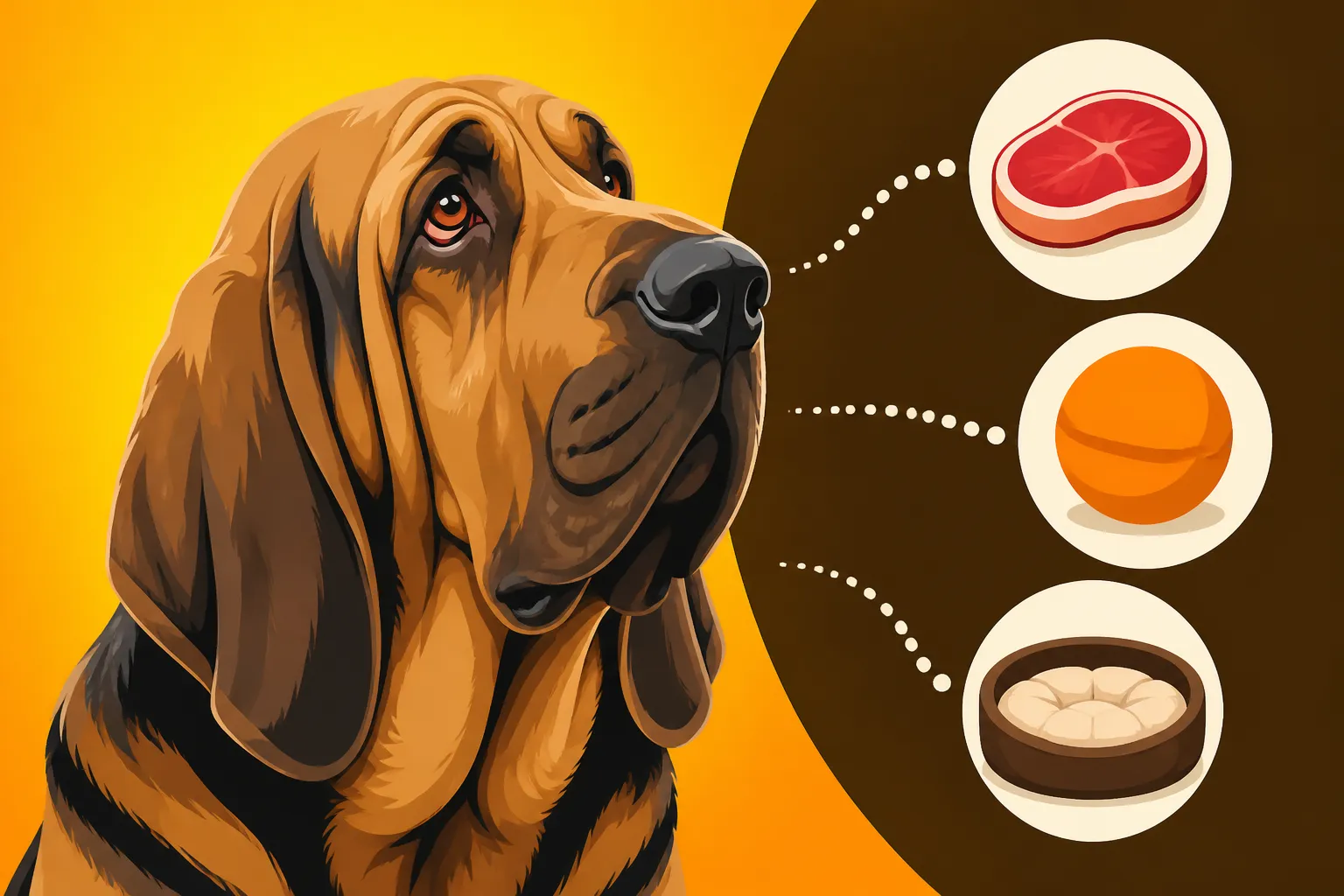
While scent is king, food and play still hold significant power in a Bloodhound's world, especially when used strategically. These rewards can be incredibly effective for general training, maintaining focus when scent isn't the primary goal, and for reinforcing desired behaviors in everyday life.
High-Value Treats for High-Stakes Work
Not all treats are created equal in the eyes of a Bloodhound. For routine practice or low-distraction environments, a standard piece of kibble or a small dry biscuit might suffice. But when you're working on something new, challenging a difficult behavior, or asking them to focus amidst distractions, you need to pull out the "high-value" treats. These are the equivalent of prime steak for us – something truly special and irresistible. Think small pieces of cooked chicken, cheese, hot dogs, or even commercial soft training treats. These powerful motivators can capture their attention and make them more willing to engage, especially when competing with less intense environmental scents.
The trick is to reserve these high-value treats only for specific, high-priority training sessions. If your Bloodhound gets boiled chicken every day, it loses its "high-value" status. Keep them special, and your Bloodhound will understand that when those particular treats come out, it's time for serious business. For example, if you're working on a "stay" in a slightly distracting environment, those cheese cubes might be the only thing that keeps their focus. You can find a wide variety of high-value training treats on platforms like Amazon, making it easy to experiment and find what your Bloodhound loves most.
Play as a Powerful Motivator
For many Bloodhounds, a good game of tug or a quick retrieve can be just as motivating as a tasty treat, sometimes even more so. Play taps into their natural instincts for chasing, grabbing, and holding, providing an outlet for their physical energy and mental engagement. A short, enthusiastic play session can be an excellent reward for a successful training exercise. The key is to make the play interactive and exciting. A quick game of tug where you let them "win" the toy, or a burst of fetch (though fetch might not be their primary joy like a retriever’s) can re-energize them and reinforce the positive experience of working with you.
It's also a fantastic way to build your bond. When you play with your Bloodhound, you become part of the fun, strengthening your relationship and making you a more valuable resource in their eyes. This can be particularly useful for dogs who might get "bored" with too many food rewards. A well-placed game of chase with a favorite squeaky toy after a successful recall (in a contained, safe area, of course!) can solidify that good behavior far more than another piece of kibble. Consider robust, interactive toys that can stand up to a Bloodhound's enthusiasm.
The Art of Timing the Reward
Regardless of whether you're using scent, food, or play, the timing of the reward is absolutely crucial. A reward is only effective if it's delivered immediately (within 1-3 seconds) after the desired behavior. If you wait too long, your Bloodhound won't connect the reward to the action you want to reinforce. Imagine trying to teach your dog to sit, and then giving them a treat five minutes later. They'll have no idea why they're getting the treat!
Precision in timing creates a clear communication channel. When your Bloodhound performs the "sit" cue, the treat should appear almost instantaneously. This helps them understand, "Ah, that action made the good thing happen!" This immediacy is even more important with Bloodhounds, who can be easily distracted by their environment. A clicker can be an invaluable tool here, as it allows you to mark the exact moment of the desired behavior with a distinct sound, bridging the gap before you can deliver the physical reward. Training programs like those offered by BAXTER & Bella often emphasize this crucial aspect of positive reinforcement, showing you how to effectively communicate with your dog.
The Human Connection: Praise and Affection
While a Bloodhound's independence is legendary, they are still deeply bonded to their people. Your praise and affection, when given genuinely, are powerful motivators that should never be underestimated. They contribute significantly to the overall positive experience of training and living together.
The Power of Your Voice and Touch
A Bloodhound might seem aloof when their nose is to the ground, but they are incredibly sensitive to their handler's tone of voice and body language. A genuine "Good job!" delivered in an enthusiastic, happy voice, coupled with a gentle scratch behind the ears or a rub on their famously wrinkled forehead, can be a potent reward. This isn't about empty praise; it's about conveying your pleasure and approval. They understand your emotions, and knowing they've pleased you can be a strong reinforcement.
Think about how your Bloodhound responds when you come home after a long day. Their whole body wags, their tail thumps, and they might even emit a happy groan. This demonstrates their deep emotional connection to you. Harnessing this connection in training means making yourself a source of positive feelings. When they succeed, make a fuss! Don't just hand over a treat; combine it with heartfelt praise and a moment of connection. This builds a foundation of trust and makes them want to engage with you more, not just for the tangible reward, but for the shared joy of accomplishment.
Building a Working Relationship
The most effective "motivator" for a Bloodhound, beyond their nose, is a strong, trusting relationship with their handler. When your Bloodhound sees you as a reliable, fair, and fun partner, they are far more likely to engage with you, even when the task isn't about scent. This relationship isn't built overnight; it's cultivated through consistent, positive interactions, clear communication, and mutual respect. It means being patient when they're slow to respond, understanding when their nose takes over, and always being their advocate.
A solid working relationship means your Bloodhound trusts that you will guide them safely, celebrate their successes, and not punish their natural instincts. It means they want to work with you because it's a positive experience. This is crucial for breeds like Bloodhounds, who often perform best for handlers they have a deep connection with. They need to know you are "on their side" and that working together is a collaborative effort, not a command-and-control dynamic. This bond enhances all other forms of motivation, making treats tastier and praise more meaningful. The First Year With a Bloodhound That Already Wants to Trail
Bloodhounds and Affectionate Reinforcement
While some dogs might get overly excited by physical affection during training, most Bloodhounds appreciate a calm, reassuring touch. A quiet moment of petting, a gentle ear rub, or just resting your hand on their broad head can be a wonderful way to reinforce good behavior. It’s a moment of connection, a subtle acknowledgment that they did well, and that you appreciate their effort. This type of affection doesn't always need to be boisterous; sometimes, the quiet comfort of your presence is the most powerful reward.
Consider using affection as a reward, especially after a particularly focused session or when they've overcome a difficult distraction. It's a way to decompress and solidify the positive feelings associated with the training. For example, after a good long-line walk where they ignored several interesting smells to stay with you, a quiet cuddle and some focused ear scratches can be incredibly meaningful. It shows them that their effort is seen and valued, not just by a treat, but by the love you share.
Avoiding the Pitfalls: What Doesn't Work
It’s just as important to understand what doesn't motivate a Bloodhound as it is to know what does. Using ineffective or counterproductive methods can damage your relationship and make training far more challenging.
Why Force and Punishment Backfire
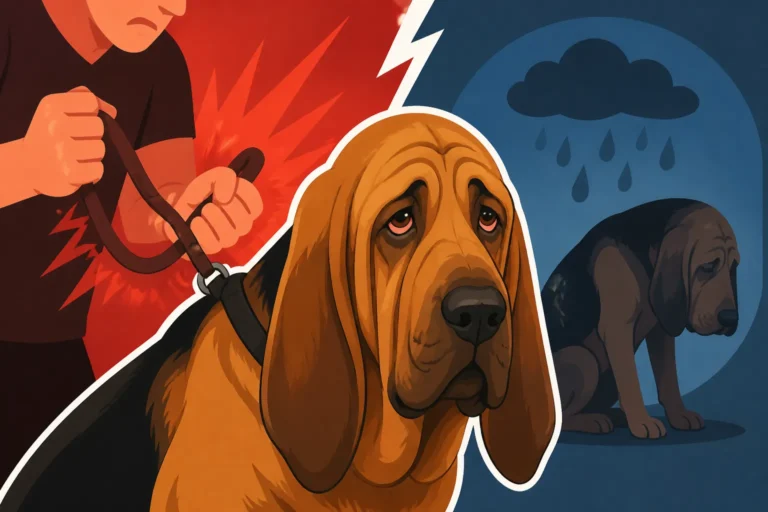
Bloodhounds are sensitive souls, despite their imposing size and independent nature. They do not respond well to harsh corrections, yelling, or physical punishment. Such methods don't teach them what you want them to do; they only teach them to fear you, shut down, or become avoidant. A Bloodhound subjected to force will likely become less cooperative, more withdrawn, and potentially even learn to evade you entirely. Their "stubbornness" can often be a reaction to perceived unfairness or confusion, not true defiance.
Moreover, punishment can actively suppress their natural trailing instincts. If a Bloodhound is punished for following a scent, it might learn to hide its interest, but the instinct will never truly go away. Instead, it creates conflict and anxiety. With a breed whose primary function is so instinctual, positive reinforcement is not just a preference; it's practically a necessity. You want your Bloodhound to want to work with you, not to avoid punishment. This requires patience, understanding, and a commitment to reward-based methods. Why a Prong Collar Is Wrong for a Bloodhound and Why an Electric Collar Is Wrong for a Bloodhound discuss these methods further.
Understanding "Stubbornness" vs. "Distraction"
Many Bloodhound owners will lament their dog's "stubbornness" when it comes to obedience. While they certainly have a strong will, what often appears as stubbornness is actually intense distraction, usually by scent. Imagine trying to concentrate on a math problem while someone is playing your favorite song loudly in the next room. You're not being stubborn by struggling to focus; you're simply overwhelmed by a more compelling stimulus. For a Bloodhound, every outdoor environment is a symphony of scents, and their brain is designed to interpret them.
So, when your Bloodhound seems to ignore a command, pause and assess the environment. Is there a faint rabbit trail? A particularly interesting patch of grass? Often, by recognizing their true motivation (scent) and working with it (perhaps by ending the session with a short, controlled "find it" game), you can reframe their "stubbornness" into an opportunity. They aren't trying to be difficult; they're just being a Bloodhound. Your job is to make your requests more appealing or manageable than the environmental distractions.
The Limits of Traditional Obedience
While a Bloodhound can learn basic obedience commands like "sit," "stay," and "come," they rarely excel in the traditional obedience ring with the same precision and enthusiasm as, say, a Border Collie. Their drive is not to please in the typical sense; it's to use their nose. Asking a Bloodhound to perform heel work with laser focus when a fascinating scent trail runs parallel to the ring is an exercise in futility and frustration for both parties. Their independent nature and specialized intelligence mean they see things differently.
This isn't to say obedience training is useless for Bloodhounds. Far from it! Basic obedience provides essential communication tools and helps manage a large, powerful dog in domestic life. But expecting perfection or intense enthusiasm for repetitive drills is often unrealistic. Instead, integrate obedience into functional contexts, like asking for a sit before going through a door, or a stay while you gather your trailing gear. The goal should be reliable, functional obedience that supports their unique needs, rather than chasing titles in a domain where their natural talents are not paramount. Whether a Bloodhound Belongs in the Obedience Ring
Tailoring Rewards to the Individual Bloodhound
Every Bloodhound is an individual, and what motivates one might not be as effective for another. The key is to become a keen observer of your own dog and adapt your approach accordingly.
Observing Your Bloodhound's Preferences
Spend time truly watching your Bloodhound. What makes their tail wag the most? Is it a particular squeaky toy? A specific type of treat? A game of tug? Or perhaps just a quiet cuddle on the couch? Pay attention to their body language and enthusiasm levels when you offer different rewards. Some Bloodhounds are absolute food fiends, while others prefer a good game. Some love physical affection, while others are content with verbal praise. What might seem like a small detail to you could be a huge motivator for them.
This observational process should be ongoing. As your Bloodhound ages, their preferences might shift. What excited a puppy might not hold the same appeal for a senior dog. By continuously tuning into their unique personality, you can tailor your reward strategy to be maximally effective. This personalization makes training more enjoyable for both of you and strengthens your bond by showing your Bloodhound that you truly understand them.
| Motivator Type | Examples | Ideal Application | Considerations |
|---|---|---|---|
| Scent Work | Tracking, Trailing, Nose Work | Core training, physical/mental exercise, problem-solving | Highest value for Bloodhounds, taps into deepest instinct. |
| High-Value Food | Cooked chicken, cheese, hot dogs, soft treats | New behaviors, high-distraction environments, quick rewards | Reserve for special use; can lose value if overused. |
| Moderate Food | Kibble, dry biscuits | Maintenance training, low-distraction environments | Less exciting, but good for reinforcing known behaviors. |
| Play | Tug, fetch (briefly), chase | Energy release, relationship building, short breaks | Must be interactive and enthusiastic from handler. |
| Praise/Affection | Enthusiastic voice, petting, ear rubs | Everyday reinforcement, bond building, calm moments | Best when combined with other rewards, or as a subtle acknowledgement. |
| Environmental | Access to a specific sniff spot, freedom to explore (on leash) | As a "jackpot" reward for exceptional focus | Must be carefully managed to avoid over-distraction. |
Rotating Rewards to Keep Things Fresh
Just like humans get bored with the same routine, Bloodhounds can lose interest if their rewards become predictable or monotonous. To keep them engaged and excited, try rotating your rewards. Don't always use the same treat or the same game. One session might end with high-value food, the next with a quick game of tug, and another with access to a fantastic sniff spot in the yard. This unpredictability keeps your Bloodhound guessing and makes working with you an exciting prospect.
Think of it as a mystery box of treats. Your Bloodhound never quite knows what they're going to get, but they know it will be good! This strategy is particularly effective for Bloodhounds who can quickly become habituated to a certain reward. By varying the reinforcement, you keep their motivation high and make them more resilient to different types of rewards in various situations. It also allows you to gauge which rewards are truly peaking their interest at any given time.
The Role of Environment in Motivation
The environment plays a huge role in what your Bloodhound will work for and how easily they'll be motivated. A quiet living room is very different from a bustling park or a dense forest full of animal scents. In highly distracting environments, even the highest-value treats might struggle to compete with the overwhelming sensory input. This means you need to adjust your expectations and your reward strategy based on where you are.
For example, when starting out with a new behavior, begin in a calm, low-distraction environment where your Bloodhound can focus primarily on you. As they become proficient, gradually introduce more distractions, always upping the value of your reward to match the challenge. If you're out on a trail in a dense woods, the reward is the trail itself. Your praise and encouragement become supportive elements rather than the primary motivator. Understanding and adapting to the environment is key to successful, low-frustration training with your incredible Bloodhound.
Disclaimer
This article is for general informational purposes only and does not constitute professional advice. Laws, prices and regulations vary by location and change over time. Consult a qualified professional for guidance on your specific situation.