Whether a Bloodhound Owner Needs an Emergency Fund
Let's be real, bringing a Bloodhound into your life is a huge joy, but it's also a significant financial commitment that extends far beyond the initial purchase. Many new owners, myself included once upon a time, are caught off guard by the sheer volume of unexpected costs that can crop up, particularly when emergencies strike. This guide is all about shedding light on why a dedicated emergency fund isn't just a nice-to-have, but an absolute necessity for every Bloodhound parent, helping you navigate those stressful, urgent situations without added financial panic.
The Inevitable Surprises of Bloodhound Ownership
Owning a Bloodhound often feels like you're signing up for a life of grand adventures, boundless love, and a bit of a slobbery mess – and it absolutely is. What sometimes gets overlooked in the excitement, however, is the very real financial landscape you're entering. These aren't just big dogs; they come with big needs and, sometimes, big medical bills that can appear without warning.
More Than Just Food and Toys
When you budget for a dog, you typically think of recurring expenses: quality food, a sturdy leash, maybe a bed or two that will inevitably be flattened by their impressive bulk. You factor in routine vet visits for vaccinations and annual check-ups. Perhaps you even set aside a little for training classes, knowing that a Bloodhound's independent nature requires a consistent hand. These are all valid and important considerations, of course. For instance, feeding a Bloodhound takes a substantial portion of your budget; finding a food that keeps them healthy and energetic, perhaps from a brand like Ollie that offers customized meal plans, is a continuous expense.
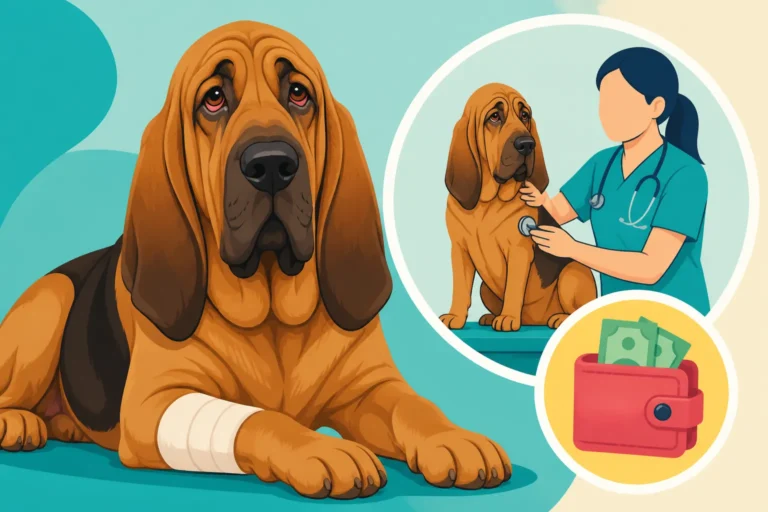
However, the real financial surprises often lie in the unforeseen. It's the sudden limp that needs X-rays, the mysterious skin rash that requires multiple specialist visits, or the late-night emergency clinic dash. These are the moments that can rapidly deplete savings accounts that weren't specifically earmarked for canine crises. It’s easy to underestimate the cost of diagnostics, medications, or even a simple overnight stay at an emergency facility when your beloved hound needs urgent care.
Breed-Specific Vulnerabilities
Bloodhounds, for all their endearing qualities, are prone to certain health conditions that can unfortunately become medical emergencies. Their unique physical characteristics, which make them such incredible scent hounds, also predispose them to specific issues. This isn't about scaremongering; it's about being prepared for the realities of the breed. We know, for example, Why a Bloodhound Dies Younger Than Its Size Predicts, and a major factor in that shorter lifespan is often sudden, critical health events.
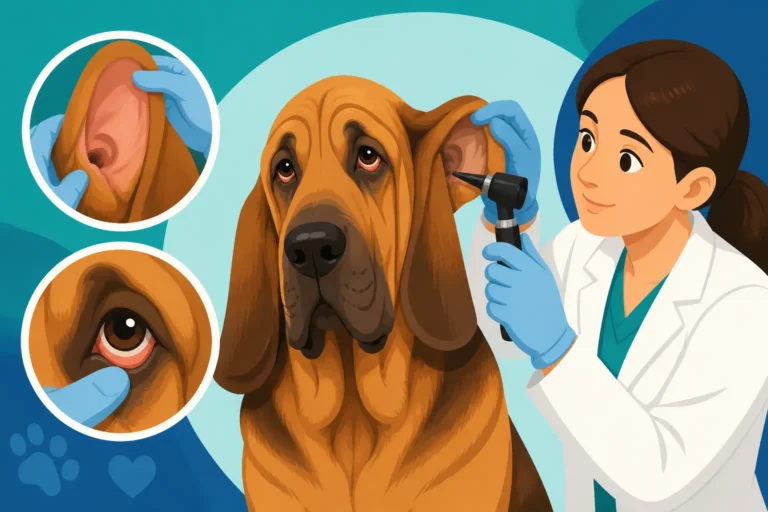
One of the most terrifying and costly emergencies is Gastric Dilatation-Volvulus (GDV), commonly known as bloat. This condition, where the stomach fills with gas and can twist, is rapidly fatal without immediate surgical intervention. Their deep, narrow chests put them at a higher risk, making it a constant concern for owners. Beyond bloat, their long, pendulous ears, while magnificent, are a breeding ground for chronic infections that can require expensive treatments or even surgery if left unchecked. Similarly, their famously droopy eyes can be susceptible to conditions like entropion or ectropion, which may necessitate surgical correction to prevent pain and preserve vision. Being aware of these breed-specific risks helps you understand why an emergency fund isn't just general good practice, but a critical safeguard tailored to the Bloodhound.
Why a Cash Reserve, Not Just Credit, Is Crucial
When a medical emergency strikes with your Bloodhound, the last thing you want to be doing is scrambling to figure out how to pay for life-saving treatment. While credit cards and pet insurance certainly have their place in a responsible owner's financial toolkit, relying solely on them can leave you vulnerable.
The Limits of Credit Cards
It’s tempting to think, "Oh, I'll just put it on my credit card!" when faced with an unexpected vet bill. And for smaller, more manageable emergencies, this might work as a temporary bridge. However, a major Bloodhound health crisis can easily rack up bills totaling thousands of dollars – sometimes in a single night. Most people don't have credit limits that can comfortably absorb that kind of expense without maxing out their cards or significantly impacting their credit utilization. This can lead to financial strain, high-interest debt that takes months or even years to pay off, and considerable stress during an already emotionally taxing time. Whether a Credit Line Is Enough for a Bloodhound Emergency is a question many owners face, and the answer is often a resounding no, or at least, not without serious repercussions.
Imagine the scenario: your Bloodhound, usually a vibrant, baying presence, is suddenly lethargic, trying to vomit but producing nothing, with a visibly distended abdomen. This is classic bloat, and it's an immediate dash to the emergency vet. You're told surgery is needed right now, and the estimated cost is substantial. If your only option is a credit card with a low limit or one already carrying a balance, you could be in a desperate situation, forced to make heart-wrenching decisions under immense pressure. Having readily available cash eliminates this layer of panic, allowing you to focus solely on your dog's well-being.
Pet Insurance: A Piece of the Puzzle, Not the Whole Picture
Pet insurance can be an absolute lifesaver for Bloodhound owners, providing a much-needed financial buffer against large, unexpected veterinary expenses. Companies like Healthy Paws offer various plans designed to help cover accident and illness costs, which can certainly take the sting out of a hefty bill. Enrolling your Bloodhound in a comprehensive policy when they are young and healthy is highly recommended, as it often means fewer exclusions for pre-existing conditions. What Insurance Will and Will Not Cover on a Bloodhound is important to understand because not all policies are created equal, and even the best ones have limitations.
However, pet insurance is rarely a "pay-nothing-out-of-pocket" solution. Most policies come with deductibles you'll need to meet annually, as well as a co-payment percentage, meaning you'll still be responsible for a portion of every bill. There might also be annual or per-incident caps on coverage. Furthermore, you typically pay the vet clinic upfront and then submit a claim for reimbursement. This means you still need access to the full amount of funds at the time of service, even if you'll get a percentage back later. An emergency fund fills this gap, ensuring you have the liquid cash to cover your deductible, co-pay, or the entire bill while you wait for your insurance reimbursement to come through. It acts as the immediate cash flow that insurance often doesn't provide.
Common Bloodhound Emergencies That Drain Funds
Understanding the specific types of emergencies that disproportionately affect Bloodhounds can help you truly grasp why an emergency fund isn't a luxury but a necessity. These aren't just minor ailments; they can be sudden, severe, and incredibly expensive to treat.
Gastric Dilatation-Volvulus (Bloat)
If you own a Bloodhound, you live with the knowledge of bloat. It's a terrifying condition where the stomach fills with gas (dilatation) and often twists on itself (volvulus), cutting off blood supply. It comes on rapidly, often with little warning, and is excruciatingly painful for your dog. Signs like a distended abdomen, unproductive retching, restlessness, and excessive drooling demand immediate veterinary attention. Signs a Bloodhound Is Bloating can manifest quickly, turning a normal evening into a frantic dash.
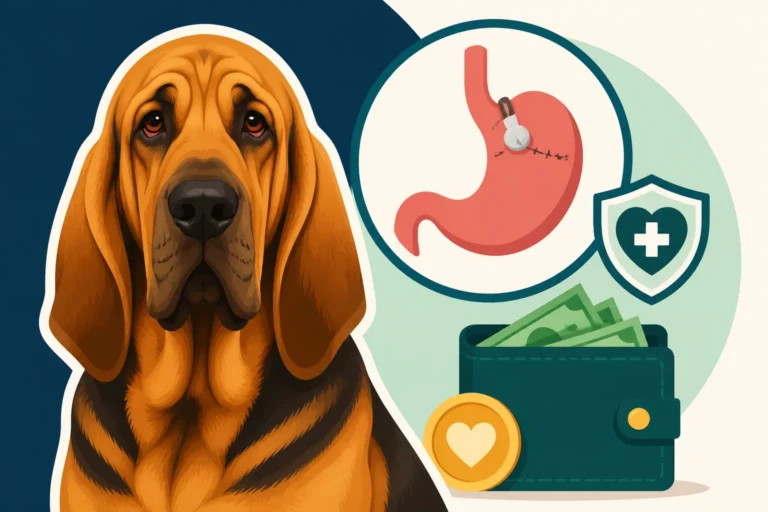
The treatment for bloat is always emergency surgery to untwist the stomach, decompress it, and, ideally, perform a gastropexy to tack it to the abdominal wall to prevent future occurrences. This is a complex, invasive surgery with significant risks, and it requires intensive post-operative care. The costs associated with emergency diagnostics (X-rays, blood work), the surgery itself, anesthesia, pain management, and several days in intensive care can easily run into the high thousands. What Emergency Bloat Surgery Costs on a Bloodhound is a bill no one wants to face unprepared, and it's one of the primary reasons a substantial emergency fund is so critical for this breed.
Severe Ear Infections and Their Complications
A Bloodhound's long, heavy ears, while iconic, are also a perpetual maintenance project and a hotspot for infections. The warm, moist environment under those heavy leathers, combined with limited airflow, creates an ideal breeding ground for yeast and bacteria. While routine cleaning can prevent many issues, some Bloodhounds are prone to severe, recurrent infections that can become chronic and difficult to resolve. A Bloodhound's Ears Are a Standing Infection Risk is a reality that owners face daily.
What starts as an itchy ear can quickly escalate. Repeated infections can lead to thickening of the ear canal tissues, making it even harder for medications to penetrate and for the ear to air out. In severe, chronic cases that don't respond to medication, a total ear canal ablation (TECA) surgery might be recommended. This procedure, which surgically removes the diseased ear canal, is highly specialized and, as you might imagine, incredibly expensive. It's a drastic measure, often a last resort, but it highlights how a seemingly common issue like an ear infection can spiral into a major financial emergency if not managed aggressively or if a dog is simply predisposed to extreme issues. When a Bloodhound's ear infection becomes truly permanent and debilitating, surgical intervention is the only solution, and it comes with a considerable price tag.
Eye Injuries and Acute Conditions
The Bloodhound's famously droopy eyelids and soulful eyes are also a point of vulnerability. Conditions like ectropion (where the lower lid rolls outward) and entropion (where the lid rolls inward, causing eyelashes to rub against the cornea) are common. While many cases are mild, a severe instance of entropion can cause constant irritation and lead to serious corneal ulcers, which are painful and can threaten vision if not treated immediately. What Ectropion Looks Like on a Bloodhound is often noticeable, but the damage from entropion can be hidden.
Beyond congenital conditions, Bloodhounds are just as susceptible to accidental eye injuries as any other dog, if not more so due to their low-hanging ears and propensity for sniffing the ground, where sharp debris might be found. A scratch to the cornea, a foreign object embedded in the eye, or a sudden onset of glaucoma are all acute emergencies that require immediate veterinary attention. Treating these can involve specialized ophthalmic exams, medications (which can be costly and needed long-term, perhaps sourced from a reputable online pharmacy like Chewy), and potentially emergency surgery. Whether a Bloodhound's Corneal Ulcer Is an Emergency is absolutely yes; these conditions need rapid intervention to prevent permanent damage or even loss of the eye, and the associated costs can be substantial.
How Much Should Be in Your Bloodhound's Emergency Fund?
This is the million-dollar question, or perhaps more accurately, the several-thousand-dollar question. There's no single magic number, but understanding the potential costs and having a realistic plan to build your fund is key to financial peace of mind.
Assessing Potential Costs
When trying to determine how much to save, it helps to consider the "worst-case scenario" costs for a Bloodhound. A major surgery like bloat correction can easily range into the thousands, often at the higher end, especially if complications arise or if it's an overnight emergency. Even non-surgical emergencies, like a severe allergic reaction requiring hospitalization or intensive diagnostics for an unknown illness, can quickly rack up a bill in the hundreds or low thousands. What a Bloodhound's Bloat Surgery Bill Comes To highlights the many components of such an expense.
Beyond a single catastrophic event, consider that a Bloodhound might face multiple expensive issues over its lifetime. It’s not uncommon for an older Bloodhound to develop arthritis requiring ongoing medication, or for a young one to need eyelid surgery for entropion, and then later suffer a severe ear infection. A good rule of thumb is to aim for a fund that could cover at least one major emergency, conservatively estimating it to be in the range of several thousand dollars. While I can't give you exact figures, think in terms of preparing for costs that could rival a significant car repair or a home appliance replacement.
| Funding Method | Pros | Cons | Best For |
|---|---|---|---|
| Emergency Savings | Immediate access, no interest, peace of mind | Requires discipline to save, can take time to accumulate | All emergencies, especially large, unexpected ones |
| Pet Insurance | Covers a percentage of costs, predictable premiums | Deductibles & co-pays required, pre-existing exclusions, upfront payment & reimbursement model | Major accidents & illnesses, long-term chronic conditions |
| Credit Cards | Immediate access to funds | High interest rates, can lead to debt, credit limits may be insufficient | Smaller, urgent bills if paid off quickly, bridge while waiting for insurance |
| Payment Plans/Loans | Spreads out costs, lower interest than credit cards | Requires approval, adds debt, interest accrues | Large, unexpected bills when savings are insufficient |
Building Your Fund Realistically
Building an emergency fund for your Bloodhound doesn't have to happen overnight. It's a marathon, not a sprint. Start small, even if it's just setting aside twenty or fifty dollars from each paycheck into a dedicated savings account. Treat it like a non-negotiable bill. Look for areas in your budget where you might be able to trim a little, perhaps by adjusting your personal spending or re-evaluating subscriptions.
Another strategy is to "bank" any savings you make elsewhere. Did you find a great deal on dog food through Chewy? Put the difference you saved into the emergency fund. Did your personal car insurance go down? Redirect that extra cash. The key is consistency. Over months and years, these small contributions will accumulate into a substantial safety net. Remember, even having a few hundred dollars saved can make a huge difference in the initial shock of an emergency, covering initial diagnostic fees or medications while you figure out the rest.
The Peace of Mind Factor
Beyond the purely financial aspect, having an emergency fund for your Bloodhound offers an invaluable psychological benefit: peace of mind. When your dog is sick or injured, your emotional bandwidth is already stretched thin. You're worried, you're scared, and you just want to do everything you can for your beloved companion. The last thing you need is the crushing burden of worrying about how you're going to pay for it.
Knowing that you have a dedicated fund means you can make medical decisions based on what's best for your Bloodhound, rather than what your credit card limit allows or what you can scrounge together. It frees you to be present for your dog, to comfort them, and to communicate effectively with your vet. This emotional relief is, in itself, priceless. It's about being a responsible, loving owner who is prepared for whatever life (or a curious Bloodhound) throws your way.
Proactive Steps to Mitigate Financial Surprises
While an emergency fund is essential for reactive care, there are also many proactive steps Bloodhound owners can take to potentially reduce the frequency and severity of emergencies, thereby safeguarding their finances.
Prioritizing Preventive Care
An ounce of prevention is truly worth a pound of cure, especially with a Bloodhound. Regular veterinary check-ups are paramount, allowing your vet to catch potential issues before they become full-blown crises. This includes routine vaccinations, parasite prevention, and dental care. Beyond the vet, diligent home care is crucial. Their long ears need How Often a Bloodhound's Ears Need Cleaning to prevent infections, and their deep skin folds, especially around the face and neck, require daily wiping to prevent skin fold dermatitis.
Feeding a high-quality, balanced diet is another cornerstone of preventive health. Brands like Ollie, which focus on fresh, whole ingredients, can contribute to overall health. Furthermore, understanding Feeding a Bloodhound So It Does Not Bloat by using slow feeders, splitting meals, and avoiding exercise immediately after eating can significantly reduce the risk of that devastating emergency. A healthy, well-cared-for Bloodhound is less likely to need emergency interventions, indirectly protecting your emergency fund.
The Benefits of a Gastropexy
Given the incredibly high risk and devastating consequences of bloat in Bloodhounds, considering a preventive gastropexy is one of the most significant proactive steps you can take. A gastropexy is a surgical procedure that permanently tacks the stomach to the abdominal wall, preventing it from twisting (volvulus). While it doesn't prevent the stomach from filling with gas (dilatation), it eliminates the life-threatening twist. The Gastropexy Decision Every Bloodhound Owner Faces is a serious one, but for many, it offers profound peace of mind.
This procedure can often be done at the same time as spaying or neutering, or as a standalone laparoscopic procedure, which is less invasive. While there is an upfront cost to a gastropexy, it is almost always significantly less than the cost of emergency bloat surgery. Think of it as an insurance policy for your Bloodhound's stomach. Many owners feel that The Case for Tacking a Bloodhound's Stomach Down Early is overwhelmingly strong, not just for the dog's well-being but also for the potential massive savings on future emergency veterinary bills. If your Bloodhound never experiences bloat, it's money well spent on preventing a potential catastrophe.
Researching Local Emergency Vet Costs
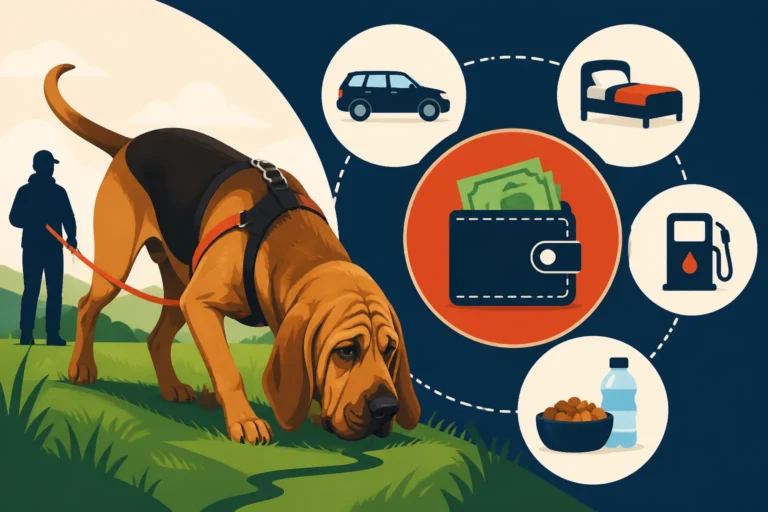
Being prepared isn't just about having the money; it's also about knowing where to go and what to expect when an emergency hits. Take the time before you need it to identify the closest 24-hour emergency veterinary hospitals in your area. Look up their websites, read reviews, and understand their intake procedures. Some clinics require deposits upfront, especially for critical care, and it’s good to know this in advance.
It's also perfectly reasonable to call a local emergency clinic (when you don't have an actual emergency, of course) and politely inquire about the average range of costs for common emergency procedures for large breeds. While they won't give you exact quotes without seeing a patient, they can often provide a broad estimate, helping you refine your emergency fund goal. Whether a Bloodhound Owner Should Ask for an Estimate Range is a smart question that can help you gauge the financial reality of severe issues. Having this information empowers you to make informed decisions quickly when every second counts, and it removes one layer of stress from an already terrifying situation.
Emergency Fund Scenarios and Funding Options
Let's look at some hypothetical situations to illustrate how various funding options might play out for a Bloodhound owner.
| Scenario | Cost Shape | Best Funding Strategy | Notes |
|---|---|---|---|
| Sudden Bloat (GDV) | High thousands | Emergency Savings (primary), Pet Insurance (reimbursement), Payment Plan (if savings insufficient) | Immediate cash needed for surgery and ICU. Pet insurance helps after initial outlay. |
| Chronic Ear Infections Requiring TECA | Mid to High thousands (over time or for surgery) | Pet Insurance (recurrent visits), Emergency Savings (for surgery deductible/co-pay), Payment Plan | Ongoing vet visits and medications covered by insurance, large surgery needs savings. |
| Corneal Ulcer from Entropion | Low to Mid thousands | Pet Insurance (primary), Emergency Savings (deductible/co-pay) | Timely treatment is crucial. Insurance can cover much of the specialized care. |
| Acute Injury (e.g., fractured leg) | Mid to High thousands | Pet Insurance (primary), Emergency Savings (deductible/co-pay), Payment Plan | Accidents are unpredictable. Insurance is vital here, but savings for out-of-pocket costs. |
| Sudden Allergic Reaction | Hundreds to low thousands | Emergency Savings (primary), Pet Insurance (reimbursement) | Can vary from a single vet visit to overnight hospitalization. |
This table provides a glimpse into the diverse financial demands that can arise. It reinforces that a multi-pronged approach, featuring a robust emergency fund alongside pet insurance, offers the most secure safety net for your Bloodhound.
Disclaimer
This article is for general informational purposes only and does not constitute professional advice. Laws, prices and regulations vary by location and change over time. Consult a qualified professional for guidance on your specific situation.