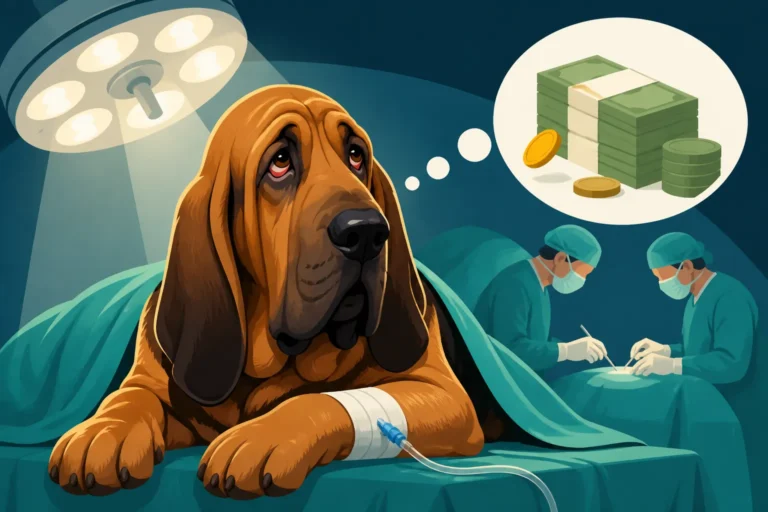
Whether a Credit Line Is Enough for a Bloodhound Emergency
Life with a Bloodhound is a joy, but it also comes with the very real and often heartbreaking reality of unexpected health emergencies and their associated costs. Many owners find themselves in a bind, wondering if a simple credit line will be enough to cover a sudden, critical vet bill. This guide will explore the nuances of relying on a credit line for your Bloodhound's medical needs, detailing common emergencies, the financial tools available, and how to best prepare for the inevitable.
The Reality of Bloodhound Emergencies and Their Costs
Let's be honest: owning a Bloodhound is not for the faint of heart or wallet. These magnificent, droopy-faced hounds are prone to several serious health conditions that can strike suddenly and demand immediate, expensive veterinary intervention. It's a truth Bloodhound owners know all too well – one minute your beloved hound is fine, the next you're rushing to an emergency clinic, bracing yourself for the bill.
Common and Costly Bloodhound Health Issues
When we talk about Bloodhound emergencies, a few specific issues immediately come to mind, each carrying a heavy price tag. These aren't just minor inconveniences; they're life-threatening or deeply impactful conditions that require swift action.
Bloat (Gastric Dilatation-Volvulus – GDV)
Bloat is the absolute terror of Bloodhound ownership. It strikes without warning, often in the middle of the night, turning a happy hound into a desperately sick one in mere minutes. This condition involves the stomach filling with gas and sometimes twisting on itself, cutting off blood supply. It's excruciatingly painful and fatal if not treated surgically. The cost for emergency bloat surgery, especially after hours, can be astronomical. You're looking at a diagnostic workup, the complex surgery itself, anesthesia, and often several days of intensive post-operative care. Bloat Is What Kills Most Bloodhounds is a stark reminder of this danger. The clock is ticking the moment symptoms appear, and you have perhaps The Half Hour a Bloating Bloodhound Has before the situation becomes critical. This is one of those times where hesitation due to finances can be fatal.
Eye Problems Requiring Surgery
Bloodhounds are iconic for their loose, soulful eyes, but those features are also a major source of health issues. Conditions like ectropion (where the eyelid rolls outward) and entropion (where it rolls inward) are incredibly common. Ectropion leaves the eye exposed to dust and injury, while entropion causes the eyelashes to constantly rub against the cornea, leading to irritation, pain, and potentially serious corneal ulcers. Eyelid Surgery Is the Bill Bloodhound Owners Do Not Expect is a sentiment many can relate to. What might start as a seemingly minor irritation can quickly escalate into a full-blown emergency if an ulcer forms. What Ectropion Looks Like on a Bloodhound can often seem benign, but it can lead to chronic issues. And then there's Cherry Eye in a Bloodhound, where a gland in the third eyelid pops out, resembling a small red cherry. All these conditions typically require surgical correction, and waiting too long can lead to permanent damage or blindness.
Chronic and Severe Ear Infections
A Bloodhound's magnificent, long, heavy ears are perfect for sweeping scent towards their incredible nose, but they are also a perfect breeding ground for infections. The ear canal is deep, dark, and poorly ventilated, making it a constant struggle to keep healthy. While routine ear cleanings are preventative, sometimes infections take hold fiercely, becoming chronic or resistant to standard treatments. A Bloodhound's Ears Are a Standing Infection Risk is a huge understatement for these hounds. A severe, untreated ear infection can lead to excruciating pain, permanent hearing loss, or even require a Total Ear Canal Ablation (TECA) – a radical surgery to remove the entire ear canal. This isn't just about drops; it can involve cultures, advanced diagnostics, repeated vet visits, sedated cleanings, and, in the worst cases, major surgery.
The Unexpected Nature of Vet Bills
Even if you meticulously budget for routine care, the truly unexpected bills are the ones that catch everyone off guard. Vet costs aren't uniform; they vary wildly based on your location, the type of clinic (general practice vs. emergency vs. specialty referral), the time of day (after-hours care costs more), and the complexity of the specific case. A simple foreign body ingestion might be an overnight stay with fluids, while a ruptured spleen during bloat surgery adds significant cost. The Two Surgeries a Bloodhound Owner Should Expect are often the gastropexy and possibly eyelid surgery, but emergencies can easily add a third or fourth major procedure.
Imagine this scenario: your Bloodhound, Buster, suddenly becomes lethargic, tries to vomit but can't, and his belly starts to distend. You know it's bloat. You rush him to the emergency vet. The initial exam, X-rays, and bloodwork are hundreds of dollars before any treatment even begins. If he needs surgery, that’s thousands more. Then comes the aftercare: IV fluids, pain medication, antibiotics, and overnight monitoring in intensive care. The bill can easily climb into the mid-to-high four figures, sometimes even five figures, faster than you can say "stethoscope." These are not "maybe" costs for a Bloodhound owner; they are "when" costs.
Understanding Credit Lines as a Financial Tool for Pet Care
Given the potential for such high and sudden costs, many owners turn to credit lines specifically designed for medical expenses. But what exactly are they, and how do they really work when your Bloodhound is in crisis?
What is a Pet Care Credit Line?
A pet care credit line, often offered by third-party financial services, is essentially a specialized credit card designed for healthcare expenses, including veterinary bills. Popular options include CareCredit or Scratchpay. They function much like a regular credit card with a revolving credit limit, but they are specifically marketed towards covering medical costs.
Here's how they typically work:
- Application Process: You apply for the credit line, often directly at your veterinary clinic or online. Approval depends on your credit history and score, much like any other credit product.
- Credit Limit: If approved, you're given a specific credit limit you can use at participating veterinary practices.
- Promotional Financing: The key appeal of these credit lines is often their promotional financing periods. For a certain amount of time (e.g., 6, 12, or 24 months), you might pay no interest on purchases over a certain amount, provided you pay the full balance by the end of that promotional period.
- High Interest Rates: This is crucial. If you do not pay off the entire balance within the promotional period, deferred interest can be applied retroactively from the original purchase date, and standard interest rates (which can be very high, often 20-30% APR or more) will kick in on the remaining balance.
So, while it offers immediate access to funds, it's a financial tool that requires discipline and a clear understanding of its terms to avoid significant debt.
Pros and Cons of Relying on a Credit Line
Like any financial tool, a pet care credit line has its advantages and disadvantages, especially when facing the stress of a Bloodhound emergency.
Pros of a Pet Care Credit Line:
- Immediate Access to Funds: This is perhaps the biggest benefit. When your Bloodhound needs emergency surgery now, and you don't have cash on hand, a credit line can provide the necessary funds almost instantly. This can literally be a lifesaver.
- Flexible Payment Options: Instead of a single, massive upfront payment, a credit line allows you to break down the bill into more manageable monthly installments. This can alleviate immediate financial pressure.
- Potential for No-Interest Periods: If you can qualify for and utilize the promotional no-interest periods, and are confident you can pay off the entire balance within that timeframe, it essentially acts as a short-term, interest-free loan. This can be a huge relief for a large, unexpected bill.
- Widely Accepted: Many veterinary clinics, including emergency and specialty hospitals, are familiar with and accept these types of credit lines, making them a convenient option.
Cons of Relying on a Pet Care Credit Line:
- High Interest Rates (If Not Paid Off): This is the most significant downside. If you miss a payment or can't pay the full balance before the promotional period ends, you can be hit with all the deferred interest, making the total cost of your Bloodhound's treatment significantly higher. It can quickly spiral into a debt trap.
- Impact on Credit Score: Opening a new line of credit can temporarily ding your credit score. More importantly, if you struggle to make payments or carry a high balance, it can negatively affect your credit health in the long term, potentially impacting future loan applications (like a mortgage or car loan).
- Temptation to Overspend: The ease of access can sometimes lead owners to approve more extensive or expensive treatments than they might otherwise, without fully considering the long-term repayment burden.
- Not a Long-Term Solution for Chronic Issues: While good for a one-off emergency, a credit line isn't ideal for managing chronic conditions that require ongoing, costly treatments. Multiple large charges can quickly max out your limit or lead to overwhelming monthly payments.
When a Credit Line Might Be Enough (or Not) for a Bloodhound
The question of whether a credit line is "enough" really depends on the specific emergency, your financial situation, and your ability to manage debt. For a Bloodhound owner, this is a critical distinction to make.
Short-Term, Manageable Emergencies
There are certainly situations where a pet care credit line can be a perfectly adequate and helpful solution. Think of these as sudden, significant but generally one-time events that you can reasonably expect to pay off within a promotional interest-free period.
For example, if your Bloodhound gets a nasty laceration on a hike and needs emergency stitches and antibiotics, or if they swallow a small toy that requires an endoscopic removal, a bill of a few hundred to a couple of thousand dollars might be manageable on a credit line. If you have a solid plan to pay it off within 6-12 months, perhaps by adjusting your current budget or using a bonus from work, then the credit line acts as a very useful bridge. Similarly, for an unexpected round of specialty eye drops for a sudden conjunctivitis flare-up, which might not be covered by your usual budget, a credit line provides immediate relief. These are situations where the financial strain is acute but likely to resolve, allowing you to pay down the balance before interest accrues.
The Pitfalls for Major, Chronic, or Multiple Emergencies
However, the real danger for Bloodhound owners lies in thinking a credit line is a panacea for any emergency, especially when dealing with the breed's more common and devastating issues.
Consider the bloat scenario we discussed. A $5,000-$10,000 bill is not uncommon. If you put that on a credit line with a 12-month no-interest period, you're looking at paying $400-$800 per month. Can you reliably do that for a year? What if, six months later, your Bloodhound develops a severe, chronic ear infection that requires weekly vet visits, specialized diagnostics, and expensive prescription medications for months? Or what if a second bloat occurs in a gastropexied dog? Whether a Bloodhound That Bloated Once Bloats Again is a real concern, even with preventive measures. You could quickly max out your credit line, or find yourself with two massive balances, each accruing high interest.
The promotional periods are tricky. Many people plan to pay off the balance but underestimate the financial commitment. If you only make minimum payments, you'll be hit with all that deferred interest, turning a $7,000 emergency into a $9,000 or $10,000 debt. A credit line can be a lifeline, but it can also become a heavy anchor if not managed with extreme caution, especially when dealing with the kind of ongoing, high-cost health issues Bloodhounds face.
Alternative and Complementary Financial Strategies
Instead of relying solely on a credit line, a more robust financial plan for a Bloodhound owner typically involves a combination of strategies. This multi-pronged approach offers far greater security and peace of mind.
Pet Insurance: This is often the first line of defense many Bloodhound owners consider. A good pet insurance policy can cover a significant portion of unexpected veterinary bills, from accidents to illnesses, including emergencies like bloat. Companies like Healthy Paws offer comprehensive plans that can reimburse a large percentage of your vet bills after your deductible is met. While you still pay upfront and wait for reimbursement, it dramatically reduces your out-of-pocket expenses for major events. It's wise to investigate What Insurance Will and Will Not Cover on a Bloodhound and get coverage early, before any pre-existing conditions arise. Whether Pet Insurance Is Worth It on a Bloodhound is a question many ponder, but for a breed with such specific health vulnerabilities, it's a strong consideration.
Dedicated Emergency Fund: The most financially sound approach is to have a dedicated savings account specifically for pet emergencies. This liquid fund can cover deductibles, initial payments, or even the full cost of smaller emergencies, meaning you avoid debt altogether. It provides instant access to cash, with no interest rates or credit score impacts. Many financial advisors recommend having several months' worth of living expenses in an emergency fund; adding a specific allocation for your Bloodhound's potential health crises is equally important. Whether a Bloodhound Owner Needs an Emergency Fund isn't a question, it's a certainty. Aim to build up How Much a Bloodhound Owner Should Keep Liquid to cover at least one major surgery.
Veterinary Payment Plans: Some veterinary clinics, particularly for non-emergency or planned procedures, offer in-house payment plans. These typically require an initial down payment and then monthly installments, sometimes with no interest or a lower interest rate than a credit card. It's always worth asking your vet if this is an option, especially if you have a good relationship with their practice.
Budgeting for Routine Care and Supplies: While not direct emergency funds, being smart about routine expenses can free up cash for the unexpected. Using online retailers like Chewy or Ollie for regular food, preventatives, and supplies can sometimes offer cost savings or subscription discounts compared to buying everything at your vet's office. This small savings can be funneled into your emergency fund, or help cover the out-of-pocket portion of an insured emergency bill.
| Financial Tool | Immediate Access | Interest-Free Potential | Long-Term Solution | Credit Impact | Best For |
|---|---|---|---|---|---|
| Credit Line | High | Yes (promotional) | No | Yes (positive/negative) | Short-term, urgent, manageable bills |
| Pet Insurance | No (reimbursement) | N/A | Yes | No | Major illnesses, accidents, chronic issues |
| Emergency Savings | High | Yes (none) | Yes | No | Any emergency, no debt, peace of mind |
Making an Informed Decision for Your Bloodhound's Health
Ultimately, whether a credit line is "enough" is a deeply personal decision, but it's one that should be made with eyes wide open to the specific challenges of Bloodhound ownership. These dogs deserve the best care possible, and that often means expensive care.
Assessing Your Financial Readiness
Before you even consider bringing a Bloodhound home, or if you already have one, take a brutally honest look at your finances. Can you comfortably afford the estimated monthly payments for a large vet bill for several months without relying on an interest-free period? Do you have an existing emergency fund that could cover at least part of a major surgery? What is your tolerance for debt?
If you're already stretched thin, relying on a credit line for a Bloodhound emergency might put you in a very precarious position. It's not about loving your dog less; it's about being realistic about what you can manage financially without causing undue stress on your entire household. Understanding your financial limits before an emergency strikes allows you to make calm, rational decisions when your emotions are running high.
Proactive Planning is Key
The best defense against overwhelming veterinary bills is always proactive planning. Don't wait for your Bloodhound to show signs of bloat or an excruciating eye condition before thinking about how you'll pay.
Start building that dedicated emergency fund now, even if it's just a small amount each week. Research pet insurance options and enroll your Bloodhound as a puppy, before any pre-existing conditions appear that might exclude coverage later. Discuss payment options with your regular veterinarian and understand what resources are available in your community. For instance, knowing Whether a Bloodhound Owner Should Bank the Gastropexy Savings and actually doing so can build a significant buffer.
A credit line can be a valuable tool in your financial arsenal for Bloodhound ownership, offering a critical safety net for those unexpected, immediate needs. But it should rarely be the only tool. Combine it with a robust emergency savings fund and, ideally, a good pet insurance policy, and you'll be far better equipped to give your magnificent Bloodhound the care they need, no matter what surprises life throws your way.
Disclaimer
This article is for general informational purposes only and does not constitute professional advice. Laws, prices and regulations vary by location and change over time. Consult a qualified professional for guidance on your specific situation.