Whether a Bloodhound Suits a Rural Property
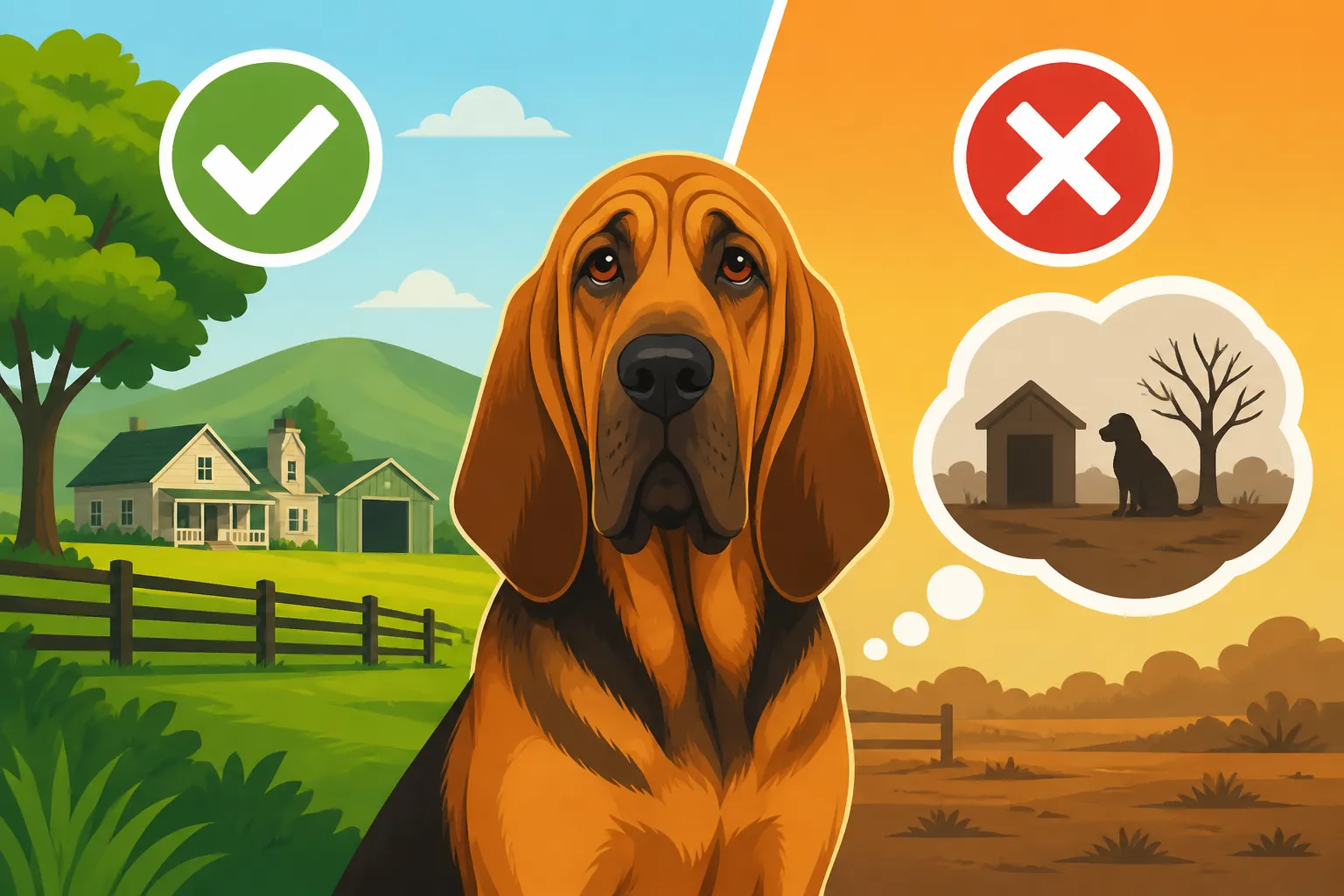
A rural property can give a Bloodhound room to sniff, wander on a leash, and enjoy a quieter routine—but open acreage is not the same as a safe place to roam. A powerful nose can pull this determined hound toward roads, livestock, wildlife, or a neighbor’s yard. This guide explains what rural living suits, what it doesn’t solve, and how to make the setup safer.
Why rural living can suit a Bloodhound
Space is useful, but a large yard is not enough
Bloodhounds often enjoy having room to move and explore, and rural life may make it easier to provide walks away from heavy traffic. A property with secure fencing, shaded resting spots, and space for supervised sniffing can be a practical environment for the breed. A quiet lane or field edge can also offer more opportunities for relaxed, varied walks than a crowded sidewalk.
But acreage does not replace daily engagement. Bloodhounds are scent-driven dogs: a smell can become more interesting than a familiar voice or a favorite toy. If a dog catches a trail, it may follow it beyond the part of the property you can see. A large unfenced field can therefore create more opportunity to disappear, not more reliable freedom. For a closer look at their activity needs, see How Much Exercise a Bloodhound Actually Needs.
Think about the actual layout, not just the number of acres. A small, securely fenced area beside the house may be more useful for everyday breaks than many acres that border a road, creek, or pasture. Rural suitability depends on whether you can safely manage the dog’s access to the land.
Rural quiet can be a benefit—and a challenge
A less busy setting may mean fewer close encounters with strangers and less noise from traffic. That can be welcome for a large dog that likes to take its time on walks. Rural homes may also offer more flexibility for scent games and supervised outdoor activities.
Still, quiet does not mean no neighbors. A Bloodhound’s bay carries, especially when the dog is excited, lonely, or following a scent. At night, sound can travel across open land, and a nearby household may hear it clearly even if you cannot. A dog that spends long stretches outside may bark or bay at wildlife, passing vehicles, or sounds from neighboring properties.
The goal is not to expect a Bloodhound never to vocalize. It is to plan for company, activity, and a place to settle indoors. If you are weighing the breed’s temperament alongside the property setup, Whether the Bloodhound Is Actually Gentle offers useful context: gentleness does not mean quiet, low-energy, or safe to leave unattended.
Rural life still involves regular care
Living outside town may make some parts of dog ownership easier, but it can make other parts more complicated. You may have more space for exercise while being farther from a veterinary clinic, groomer, boarding facility, or training group. A dog that needs prompt care after an injury or sudden illness still needs a realistic route to help.
Bloodhounds also need routine attention to their ears, eyes, skin folds, nails, and coat. Mud, burrs, wet grass, and dust can add cleanup after outdoor time. Keeping towels and basic grooming supplies near the door can make the daily routine less frustrating. If local stores are a long drive away, some owners use retailers such as Chewy for routine supplies, while checking product choices with their veterinarian when health or skin concerns are involved.
Before bringing a dog home, consider the people and services your rural routine depends on. Who can help if you are away? Is there a nearby clinic that can see a large dog? Can you safely transport the dog in your vehicle? These practical details matter just as much as having open space.
The biggest rural risk is following a scent off the property
A Bloodhound should not be trusted to stay close just because it knows home
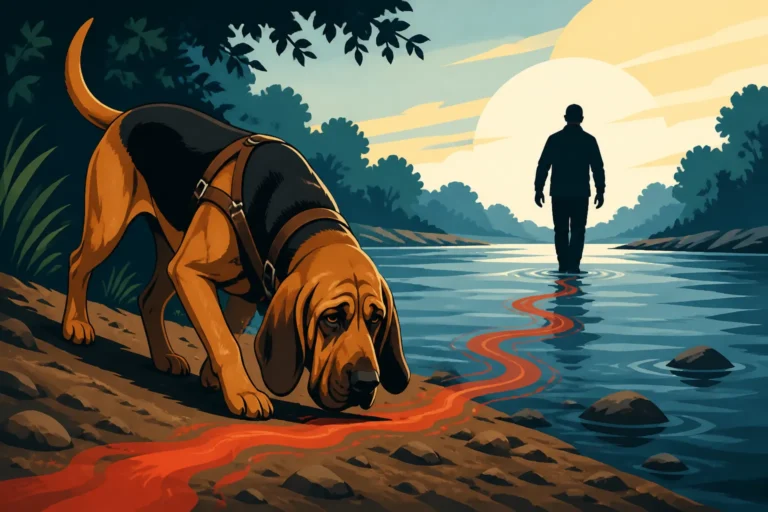
A familiar property may feel secure to the owner, but a Bloodhound’s priorities can change quickly when it catches an interesting trail. The dog may follow a scent through a gap, under a fence, along a ditch, or across a road. A dog that usually comes when called indoors may not respond the same way when absorbed in a trail.
That is why off-leash freedom should depend on secure boundaries and supervision—not on confidence in recall alone. Training helps with handling and everyday manners, but it cannot guarantee that a dog will abandon a strong scent outdoors. If your property is not fully enclosed, use a leash or long line during outdoor time. For more on boundary planning, see What Fencing Actually Holds a Bloodhound and Whether a Bloodhound Escapes From a Yard It Likes.
Also check the less obvious routes out. A gate that is sometimes left open, a low spot where water has washed away soil, or a gap behind a shed can matter more than the fence’s overall length. Walk the perimeter regularly, especially after storms, repairs, or landscaping work.
Fencing needs to account for climbing, pushing, and digging
There is no single fence design that guarantees every dog will stay put. The right setup depends on the Bloodhound, the property, the fence condition, and what lies beyond it. Inspect gates and latches, look for gaps at ground level, and consider whether the dog can reach or lean on weaker sections. For further details, read How High a Fence a Bloodhound Needs and Whether a Bloodhound Digs Under a Fence.
An invisible boundary should not be treated as a substitute for a physical barrier. A scent-driven dog may cross a warning area, and a system that discourages the dog from leaving does not keep other animals or people from entering. If the property borders a busy road, a livestock area, or a public trail, the consequences of a boundary failure can be serious.
A useful test is to ask what would happen if the dog noticed a deer, a rabbit, or a fresh human trail just beyond the fence. If you would not trust the barrier to hold in that moment, plan on supervised access and a leash rather than relying on the dog to make a calm choice.
Identification and routines help if a dog gets loose
Even careful owners can have a gate left open or a visitor who does not latch it properly. Make sure the dog wears an ID tag and has a microchip with current contact information. A recent photograph and a written description can also help if you need to alert neighbors quickly.
Set a household routine for gates: decide who checks them, make sure visitors know the rules, and avoid leaving a Bloodhound unattended near an open vehicle or driveway. Practice calm leash handling before you need it in an urgent situation. You can also ask your veterinarian about preventive care suited to local outdoor risks, including parasites and region-specific hazards.
| Rural feature | Potential benefit | What to plan for |
|---|---|---|
| Open acreage | More room for supervised exploration | A scent can carry the dog beyond sight or property lines |
| Quiet roads | Less traffic during walks | Country roads can still have fast-moving vehicles |
| Pastures and farms | Interesting smells and varied terrain | Livestock, fencing, and wildlife require careful management |
| Long distance from town | More privacy and space | Veterinary care, supplies, and help may take longer to reach |
| Large yard | Convenient outdoor access | Unfenced land is not a safe off-leash area |
Livestock, wildlife, and neighbors need a plan
Do not assume a Bloodhound will ignore farm animals
A Bloodhound may live peacefully around livestock, especially when introductions are gradual and the dog is managed carefully. But a dog’s interest in a scent, movement, or unfamiliar animal can make unsupervised access risky. Even playful chasing can frighten or injure animals, and a dog that follows a trail through a pasture can put itself in danger.
Keep the dog leashed or behind a secure barrier around horses, cattle, sheep, goats, and other animals until you have a reliable management plan. Never count on a fence between fields to keep a dog safe unless it is designed and maintained for that purpose. For related considerations, see Whether a Bloodhound Chases Livestock and Whether a Bloodhound Can Live With Chickens.
If you share property with a farmer or have animals of your own, agree on boundaries and gate procedures before the dog arrives. A Bloodhound should not be allowed to wander into a barn, feed area, or enclosure simply because it has done so before without incident.
Wildlife can draw a dog toward hazards
Rural areas often bring close encounters with deer, rabbits, rodents, and other wildlife. A dog may become highly focused on an animal’s scent even if it has never shown much interest in chasing one. Streams, drainage ditches, barbed wire, farm equipment, and unfamiliar dogs can add hazards along the route.
Walks are safer when you use a secure harness or collar fit and keep enough control to respond if the dog pulls toward a scent. A long line can provide room to sniff while giving you a way to prevent the dog from reaching roads or animals. Check paws, ears, and coat after walks, particularly after going through brush or tall grass.
A rural home is not automatically a healthier environment. Heat, cold, storms, and wet ground still affect a dog, and a Bloodhound should have access to shelter and water. If you live somewhere with hot summers, consider the added management described in Whether a Bloodhound Suits a Hot Climate.
Being considerate of neighbors is part of rural ownership
Open space can create a false sense that noise and wandering will not affect anyone else. In practice, nearby homes, farms, and public roads may be closer than they appear. A dog that bays for long periods, crosses property lines, or approaches other animals can create conflict even in a sparsely populated area.
Supervise outdoor time, especially early in the morning and at night, when sounds may carry. Bring the dog indoors when it is repeatedly vocalizing, and look for the cause rather than simply leaving it to continue. Boredom, isolation, and an exciting scent can all make it harder for a dog to settle.
If you will be away for work, consider whether the dog can spend the day comfortably indoors with appropriate breaks and enrichment. Rural property does not mean a Bloodhound can be left alone outdoors for hours. For a related question about daily schedules, see Whether a Bloodhound Fits Around a Working Day.
How to decide whether your property is a good fit
Use the property checklist before committing
Walk your land as if you were following the dog’s route rather than your own. Look for road access, open gates, weak fence sections, wildlife paths, neighboring animals, ponds, ditches, and areas where the dog could disappear from view. Consider where the dog will rest, where it will toilet, and how you will get it into a vehicle if it is injured or unwell.
Then picture a normal weekday, not just a pleasant weekend. Will someone have time to walk the dog, provide company, and handle grooming and cleanup? Can you secure the dog when deliveries arrive or farm work is happening? If your plans depend on the Bloodhound staying within an unfenced boundary, the setup needs to change before the dog arrives.
A rural home is more likely to suit a Bloodhound when the owner can provide secure containment, regular companionship, supervised exercise, and a practical care routine. The amount of land matters less than whether it can be used safely.
Compare your setup against these everyday needs
| Question | A promising answer | A sign to rethink the setup |
|---|---|---|
| Is there a secure outdoor area? | The dog can go out without access to roads or livestock | Most outdoor time would be on unfenced land |
| Can you supervise exploration? | Walks and yard time have an attentive person present | The dog would often be left outside alone |
| Are neighboring animals protected? | There are clear barriers and controlled introductions | The dog could reach a pasture, coop, or barn |
| Can you manage noise? | The dog will have company and can come indoors | Baying would go unchecked for long periods |
| Is care accessible? | You have a transport plan and know where to seek veterinary help | Basic care depends on an uncertain long drive |
| Is the dog part of daily life? | You can offer interaction, training, and indoor rest | The property is expected to entertain the dog by itself |
Make a realistic plan for supplies and support
Before the dog comes home, gather basics for muddy walks, grooming, feeding, safe transport, and cleanup. If shopping options are limited nearby, you might compare local stores with online retailers such as Chewy for routine items, while confirming that deliveries reach your address and that anything medically specific is approved by your veterinarian. Keep essential supplies on hand rather than assuming a same-day trip will be convenient.
Also identify a local veterinarian and an emergency option, and ask how they handle large dogs and urgent visits. A nearby neighbor, family member, or pet sitter can be valuable if you are sick, traveling, or working late. Some rural owners also find a training class or experienced hound handler helpful for building leash skills and a manageable daily routine.
If you are still comparing breeds, be honest about the limits of your property and schedule. A Bloodhound can thrive in a rural home, but it needs more than space: it needs secure boundaries, supervision, companionship, and an owner prepared to manage its powerful interest in scent. Think of the land as a resource to use thoughtfully—not as a substitute for training or care. For a broader first-time-owner perspective, see Whether a Bloodhound Suits a First Time Owner.
Disclaimer
This article is for general informational purposes only and does not constitute professional advice. Laws, prices and regulations vary by location and change over time. Consult a qualified professional for guidance on your specific situation.