Whether Black and Tan Is the Most Common Bloodhound Color
A black-and-tan Bloodhound is the color many people picture first, but “most common” is harder to prove than it sounds: there is no single, complete count of every Bloodhound coat color. This guide explains why black and tan is so familiar, how it compares with the other accepted colors, and what a puppy’s changing coat does and does not tell you.
Is black and tan the most common Bloodhound color
Why black and tan is the best-known pattern
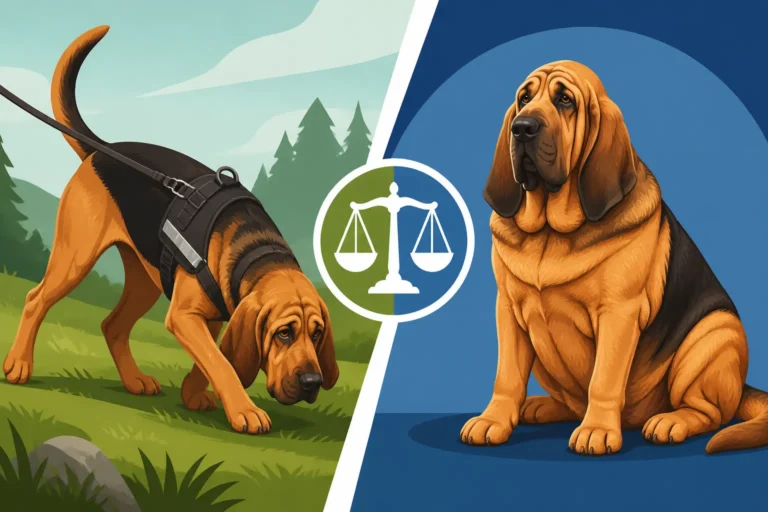
Black and tan is probably the Bloodhound color most people encounter or recognize first. The pattern typically combines a dark “saddle” or blanket over the back with tan coloring on parts of the head, legs, and underside. The exact balance varies: one dog may look mostly black from above, while another shows more tan across its body.
That familiarity does not mean every Bloodhound is black and tan, or that this color is required for a dog to be a Bloodhound. Bloodhounds also come in liver and tan and red. Those colors are part of the breed’s recognized range, not unusual signs that a dog is mixed or somehow less typical. For a quick overview of the accepted options, see Which Colors the Bloodhound Standard Allows.
The phrase “most common” is worth treating carefully. It can mean the color people recognize most readily, the one they see most often in a particular area, or the color with the largest share of registrations. Those are different things. Without a comprehensive count broken down by coat color, it is safer to say black and tan is especially familiar than to claim it makes up a precise share of Bloodhounds.
What the color pattern looks like in real life
A black-and-tan Bloodhound does not have to look like a neatly painted two-color dog. The dark area can cover much of the back and sides, while tan appears around the muzzle, above the eyes, on the legs, and beneath the body. Some coats have a broad, solid-looking dark blanket; others show more variation in where the colors meet.
Lighting and grooming can also affect how the coat appears. A dark coat may look nearly black in shade and warmer brown in bright sunlight. Loose hair, dust, and outdoor grime can make the boundaries between dark and tan areas less crisp until the dog is brushed or bathed. That is ordinary coat variation, not a change in the dog’s underlying color pattern.
Bloodhound appearance involves more than coat color. Head shape, loose skin, long ears, and overall build are all part of the familiar look. If you are comparing dogs or learning the breed’s range, The Colors a Bloodhound Comes In gives useful context alongside What a Bloodhound Weighs and How Tall It Stands.
How black and tan compares with other Bloodhound colors
Liver and tan and red coats
Liver and tan has a similar general arrangement of colors to black and tan, but the darker portions are brown rather than black. Depending on the light, that brown can look deep and rich or somewhat muted. The tan markings may still appear on the face, legs, and underside, though their contrast against the darker coat can look different from dog to dog.
Red Bloodhounds have a coat that reads as red or reddish brown, with variation in shade. “Red” does not mean every dog has one identical, bright color from head to tail; natural coats can vary in depth and appearance. To look more closely at how that color is described, see What a Liver and Tan Bloodhound Looks Like and Whether a Red Bloodhound Is Standard.
These distinctions are useful when describing a dog, but they do not tell you what its personality will be like. A red Bloodhound is not inherently more energetic, and a black-and-tan Bloodhound is not automatically more suitable for trailing or family life. Temperament and behavior depend on the individual dog, its background, health, and experiences—not the color of its coat.
A simple comparison of the recognized colors
| Coat color | General appearance | Helpful note |
|---|---|---|
| Black and tan | Dark black areas with tan markings | Especially familiar and often the color people picture first |
| Liver and tan | Brown or liver-colored areas with tan markings | Similar broad pattern to black and tan, with a different dark coat color |
| Red | Red or reddish-brown coat | Shade can vary from dog to dog |
This table is a practical way to distinguish the broad color descriptions, not a ranking or a count of how frequently each occurs. Within a color category, individual coats can still look quite different. A black-and-tan dog with a large dark saddle may look dramatically different from one with more visible tan, even though both are described by the same basic color name.
White markings can also appear, but they do not turn the main coat colors into a different category. The amount and placement matter when people are discussing how closely a dog matches a breed standard. For more on that distinction, see Whether a Bloodhound Can Have White Markings. If you are wondering about an all-black appearance, Whether a Bloodhound Can Be Solid Black addresses that separate question.
What a Bloodhound’s color can and cannot tell you
Color is not a shortcut to judging a dog
Coat color alone cannot confirm that a dog is purebred. A black-and-tan appearance may be familiar, but breed identification involves more than color, and appearance by itself cannot establish ancestry. If you are considering a puppy, ask about its parents, health records, breeder practices, and documentation rather than relying on a coat-color label as proof.
Color also does not establish health, working ability, or show quality. A particular shade cannot tell you whether a dog has sound joints, comfortable eyes, healthy ears, or the temperament that suits your home. Those questions are better addressed through veterinary care, responsible breeding information, and time spent getting to know the individual dog.
It can be tempting to choose a puppy because its markings look exactly like the Bloodhound you have imagined. That is understandable—people often fall for a face or a striking saddle pattern. Still, a good match depends on the dog’s needs and your household, including how you will manage exercise, training, drool, and scent-driven behavior. The breed’s wider characteristics are discussed in The Bloodhound Against the Other Scenthounds.
Puppies may not keep exactly the same look
A puppy’s coat can change in appearance as it grows. The pattern may become easier to see as the coat develops, and the shade or contrast can seem different as the dog matures. Changes in light, seasonal shedding, and the condition of the coat can also affect how dark or warm a color looks in photographs.
That does not mean a puppy will necessarily change from one recognized color category to another. It is more helpful to think of maturation as a possible change in how clearly the pattern and shade show, rather than expecting a completely different adult coat. If you are choosing a puppy, ask the breeder how the parents’ coats developed and whether they can share photos of the litter as it grows. For more detail, see Whether a Bloodhound Puppy's Color Changes.
A puppy photo can be misleading, too. Warm indoor lighting can make black areas look brown, while shadows can hide tan markings. If the exact shade matters to you, look at the dog in natural light and ask for a clear description rather than trying to identify the color from a single snapshot. In most homes, though, the practical question is not whether a coat is the most common shade; it is whether the dog’s overall needs are a good fit.
Choosing and caring for a Bloodhound with any coat color
Focus on the dog, not just the markings
If you are comparing puppies, use coat color as one small detail in a much bigger decision. Ask what health screening has been done, what the parents are like to live with, and how the puppies are being socialized. A responsible breeder should be willing to discuss these subjects without presenting one coat color as a guarantee of better health or temperament.
For an adult dog, ask about its history, current health, and daily habits. A rescue or rehomed Bloodhound may have limited information about its early life, but that does not make its coat color more or less meaningful. A careful introduction, realistic expectations, and a plan for secure handling matter much more than whether the dog has a black saddle or a red coat.
Remember, too, that color descriptions are not always used consistently in casual conversation. One person may call a coat dark brown; another may call it liver. If you need an accurate description for records or a conversation with a breeder, ask them to explain the color rather than assuming everyone uses the same label.
Keep coat care simple and appropriate
Bloodhounds have short coats, but short does not mean no upkeep. Regular brushing helps lift loose hair and surface dirt, while bathing is best based on the dog’s condition rather than an attempt to make a specific color look brighter. Avoid using human hair products or harsh cleaners to intensify a coat’s shade; if skin irritation or unusual discoloration concerns you, ask a veterinarian.
For routine supplies, some owners compare brushes, dog shampoos, and grooming cloths through retailers such as Chewy. Read labels carefully and choose products intended for dogs; a product being marketed for coat appearance does not make it necessary for every Bloodhound. Chewy can also be one place to look for basic grooming supplies when you are assembling a simple kit, but the dog’s skin and coat needs should guide your choice.
A clean coat is only one part of Bloodhound care. The breed’s ears and facial folds often need more attention than its color does, especially after meals, walks, or wet weather. If you are planning everyday care, The Coat Is the Easy Part of a Bloodhound offers broader grooming context. Chewy may help you compare ordinary supplies, but persistent odor, redness, itching, or discharge calls for veterinary advice rather than a stronger shampoo.
Disclaimer
This article is for general informational purposes only and does not constitute professional advice. Laws, prices and regulations vary by location and change over time. Consult a qualified professional for guidance on your specific situation.