Whether Breeders Are Making Bloodhounds Heavier
A Bloodhound can look heavier because of its broad frame, loose skin, deep chest, and substantial head, but appearance alone cannot show whether breeders are producing larger dogs. This guide explains what breed standards say, how genetics and feeding shape adult size, and how to tell a naturally large Bloodhound from one carrying excess weight.
Are breeders making Bloodhounds heavier
What breed standards say about size
Bloodhounds are large dogs, and there is natural variation between individuals. Breed standards describe the desired type and proportions, including height ranges and general expectations for weight. They do not mean that the heaviest dog is automatically the best example of the breed. Soundness, balance, movement, and overall health matter alongside size.
A Bloodhound may look imposing without being overweight. Its long body, deep chest, heavy bone, and loose skin can create an impression of extra bulk. For a clearer baseline, see What a Bloodhound Weighs and How Tall It Stands. A weight number becomes more meaningful when considered with the dog’s height, frame, age, and body condition.
Standards can also allow some variation beyond the average measurements when a dog’s proportions and quality remain sound. That is different from treating maximum size as the goal. A breeder who selects dogs simply because they are heavier risks confusing bulk with quality, while a lighter dog may still have the substance and structure expected of the breed.
What people mean by a heavier Bloodhound
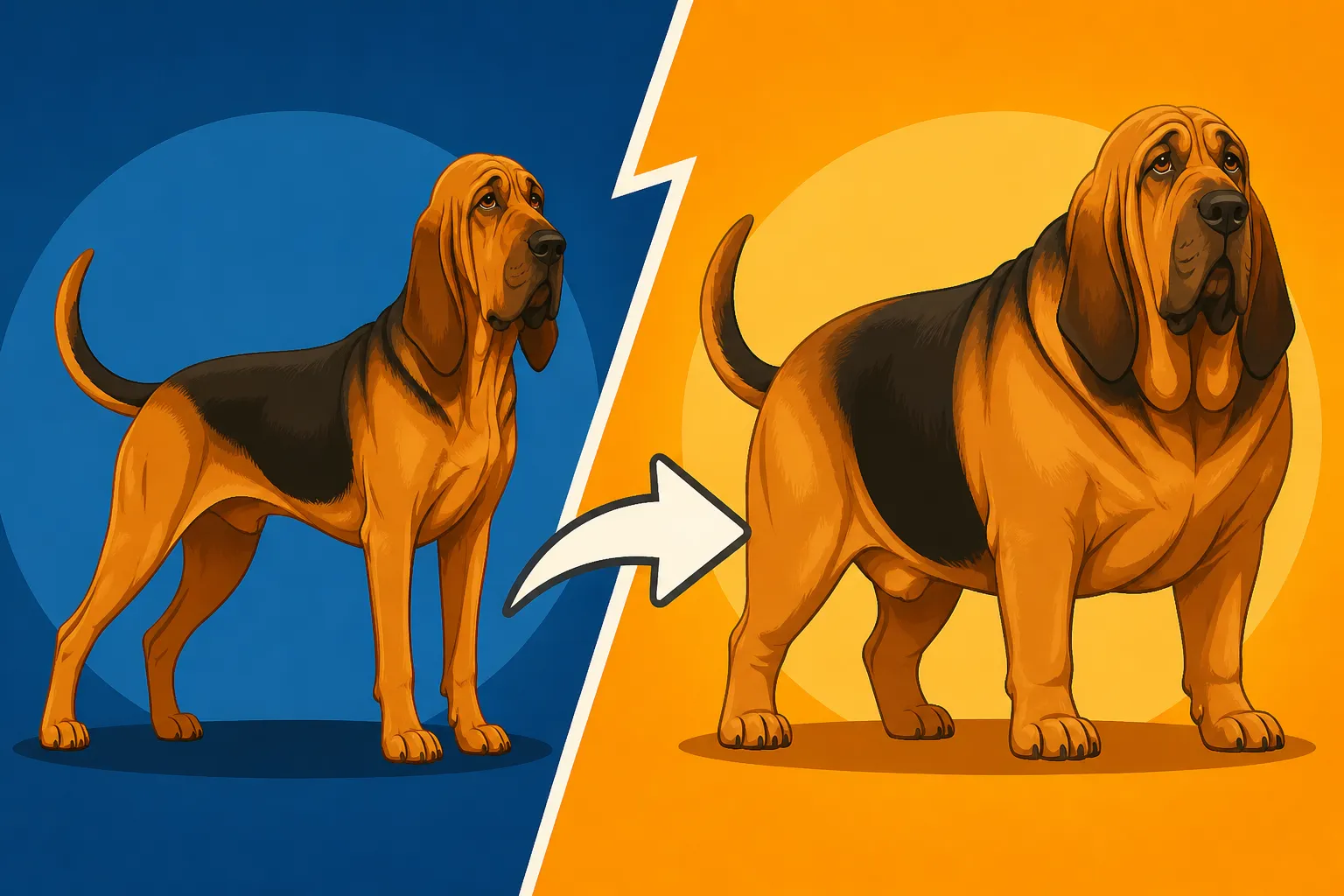
“Making Bloodhounds heavier” can mean several different things: selecting for taller or broader dogs, favoring heavier bone, breeding dogs that mature to a higher weight, or producing dogs that are simply overweight. These are not interchangeable. A naturally large, well-conditioned Bloodhound is different from a dog whose ribs are difficult to feel because it has excess fat.
People may also compare today’s dogs with Bloodhounds they remember from years ago, or compare show dogs with working dogs. Those comparisons can be misleading if the dogs differ in age, sex, height, conditioning, or lifestyle. A working dog that spends time trailing may be leaner than a dog with a less active routine, but that alone does not prove breeders are changing the breed. See Whether a Working Bloodhound Is Leaner Than a Show One for more on that distinction.
The most careful answer is that individual breeders may favor different sizes and types, but a broad claim that breeders as a whole are making Bloodhounds heavier needs evidence across generations. A few strikingly large dogs, photographs, or social media posts cannot establish a breed-wide trend. Look instead for reliable records, consistent measurements, and information about how the dogs are bred and maintained.
Why Bloodhound size varies
Genetics shape the dog, but not in isolation
A puppy inherits traits from both parents, and family lines can differ in height, frame, bone, and rate of growth. Even puppies from the same litter can mature into noticeably different adults. A breeder’s selection choices can influence the traits that appear more often in a line over time, but no single measurement tells the whole story.
When evaluating a breeder’s dogs, ask about mature relatives on both sides of the pedigree. A parent may be a moderate-sized adult while grandparents or siblings are considerably larger, or vice versa. Ask for actual adult weights and heights where available, rather than relying on descriptions such as “huge,” “massive,” or “extra-large.” Those words are subjective and often say little about body condition or sound movement.
Size should be considered alongside health and function. A breeder’s priorities are more informative than one dog’s scale reading: do they discuss temperament, structure, movement, and health screening, or mostly promote size? What the American Bloodhound Club Asks Breeders to Screen offers useful context for thinking about health priorities when discussing breeding choices.
Growth and feeding can change the final picture
A Bloodhound’s adult weight is not fixed by genetics alone. Diet, activity, age, and individual development all play a part. Puppies grow rapidly, and owners can feel pressure to provide extra food because a large-breed puppy looks as though it should grow as quickly as possible. That can backfire: rapid or excessive weight gain is not a sensible way to encourage a healthy adult frame.
Ask the puppy’s breeder and veterinarian how to monitor growth and adjust portions. The goal is steady development and a body condition appropriate to the individual puppy, not reaching a particular weight as early as possible. Whether Overfeeding a Bloodhound Puppy Harms Its Joints and The Age a Bloodhound Reaches Full Weight explore those related questions.
Adult weight can rise later too, especially when food portions do not change after activity levels drop or after a dog is neutered. That kind of increase is not evidence that breeders are producing heavier Bloodhounds. It may simply reflect the dog’s daily routine, calorie intake, or a medical issue worth discussing with a veterinarian.
How to distinguish a large frame from excess weight
Use body condition, not appearance alone
A Bloodhound’s loose skin and deep chest make visual judgments tricky. Instead of asking only whether the dog looks big, assess its overall body condition. In a healthy-weight dog, the ribs should generally be possible to feel under a light layer of tissue, and the body should have a discernible waist when viewed from above. The abdomen often rises somewhat behind the rib cage when viewed from the side.
These are general observations, not a diagnosis. Coat, posture, age, and body shape can make a quick glance misleading, and a veterinarian can assess condition in person. A dog can be large-framed and lean, or relatively short and carrying excess weight. If you are uncertain, ask your vet to show you how to check the ribs and waist, then use the same approach over time. Signs a Bloodhound Is Overweight and Keeping a Bloodhound Lean on Purpose cover practical ways to track condition.
A scale is still useful, but it works best as one part of a record. Weigh the dog consistently and note changes alongside activity, food portions, and body condition. A gradual increase may be easy to miss when you see the dog every day. Regular check-ins help you spot a trend before the dog becomes uncomfortable or less willing to move.
| What you observe | What it may indicate | What to check next |
|---|---|---|
| A high weight with ribs easy to feel and a visible waist | A naturally large frame may be contributing | Compare weight with height, family size, and veterinary body-condition assessment |
| Ribs are difficult to feel and the waist is hard to see | Excess body fat may be contributing | Ask a veterinarian to assess condition and review feeding and activity |
| Weight rises while daily activity has decreased | Routine or calorie intake may have changed | Review portions, treats, and exercise with your veterinarian |
| A puppy is gaining weight very quickly | Growth and feeding plans may need review | Discuss the puppy’s growth pattern with the breeder and veterinarian |
Keep feeding decisions separate from breeding claims
If a dog is gaining weight, it is tempting to search for a food marketed for a specific size or to change portions quickly. First, record what the dog actually eats, including treats, chews, food used in training, and scraps from the table. Then ask your veterinarian whether the current food and amount suit the dog’s age, health, and activity.
Retailers such as Chewy can be useful for comparing available food options and reading product details, but a product page cannot determine how many calories an individual Bloodhound needs. If you shop there, use the information as part of a conversation with your veterinarian, not as a substitute for a personalized feeding plan. Chewy may also make it convenient to reorder a food your veterinarian has recommended, but the dog’s weight and body condition still need monitoring.
Avoid trying to slim a dog rapidly or restricting a growing puppy without professional guidance. If you need to adjust the food, ask your vet how to do so safely and how often to reassess. For an adult dog, changes in portions should reflect its condition and routine—not the assumption that all Bloodhounds are supposed to be smaller or that a heavier dog is automatically healthier.
What to ask a breeder about adult size
Ask about family patterns and priorities
When you contact a breeder, ask how large related adult dogs tend to be and whether they keep weight or height records. Ask whether the breeder prioritizes a particular size, and how they balance that preference with health, movement, and temperament. A thoughtful breeder should be able to explain their choices without promising that a puppy will reach an exact adult weight.
You can also ask to meet adult dogs from the line, if practical, and look at how they move and carry themselves. A photograph can help, but it can distort scale and body condition. If you are comparing two litters, ask the same questions about both rather than relying on a single puppy’s paws or the breeder’s estimate of its future size.
A useful conversation is specific: “How tall and heavy are the adult dogs in this family, and how do you assess whether they are in good condition?” That is more revealing than asking whether the puppies will be “giant.” If the answer focuses mainly on impressive size and avoids discussion of soundness or health, that is worth considering when you decide whether the breeder’s priorities suit you.
Focus on a healthy adult, not a target number
There is no universal ideal weight that fits every Bloodhound. Sex, height, frame, muscle, and body condition all matter. A larger adult can be healthy, and a smaller adult can be healthy; neither should be judged by weight alone. The practical goal is a dog that moves comfortably, maintains a suitable body condition, and has a lifestyle and care plan that support long-term health.
If you are trying to compare breeds, avoid assuming that a heavier dog is necessarily more typical or better built. For example, comparisons with another scent hound need to account for different proportions and standards, not just numbers on a scale; Whether a Bloodhound Is Heavier Than a Coonhound looks at that kind of comparison.
Ultimately, the question is not simply whether breeders are making Bloodhounds heavier. It is whether particular breeding choices favor size at the expense of balance, health, or function—and whether an individual dog’s weight reflects its frame or its condition. Ask for measured information, look at the whole dog, and bring feeding or growth concerns to a veterinarian. If you use Chewy to shop for food or supplies, keep your veterinarian’s guidance at the center of those choices.
Disclaimer
This article is for general informational purposes only and does not constitute professional advice. Laws, prices and regulations vary by location and change over time. Consult a qualified professional for guidance on your specific situation.