Whether the AKC Prefers a Taller Bloodhound
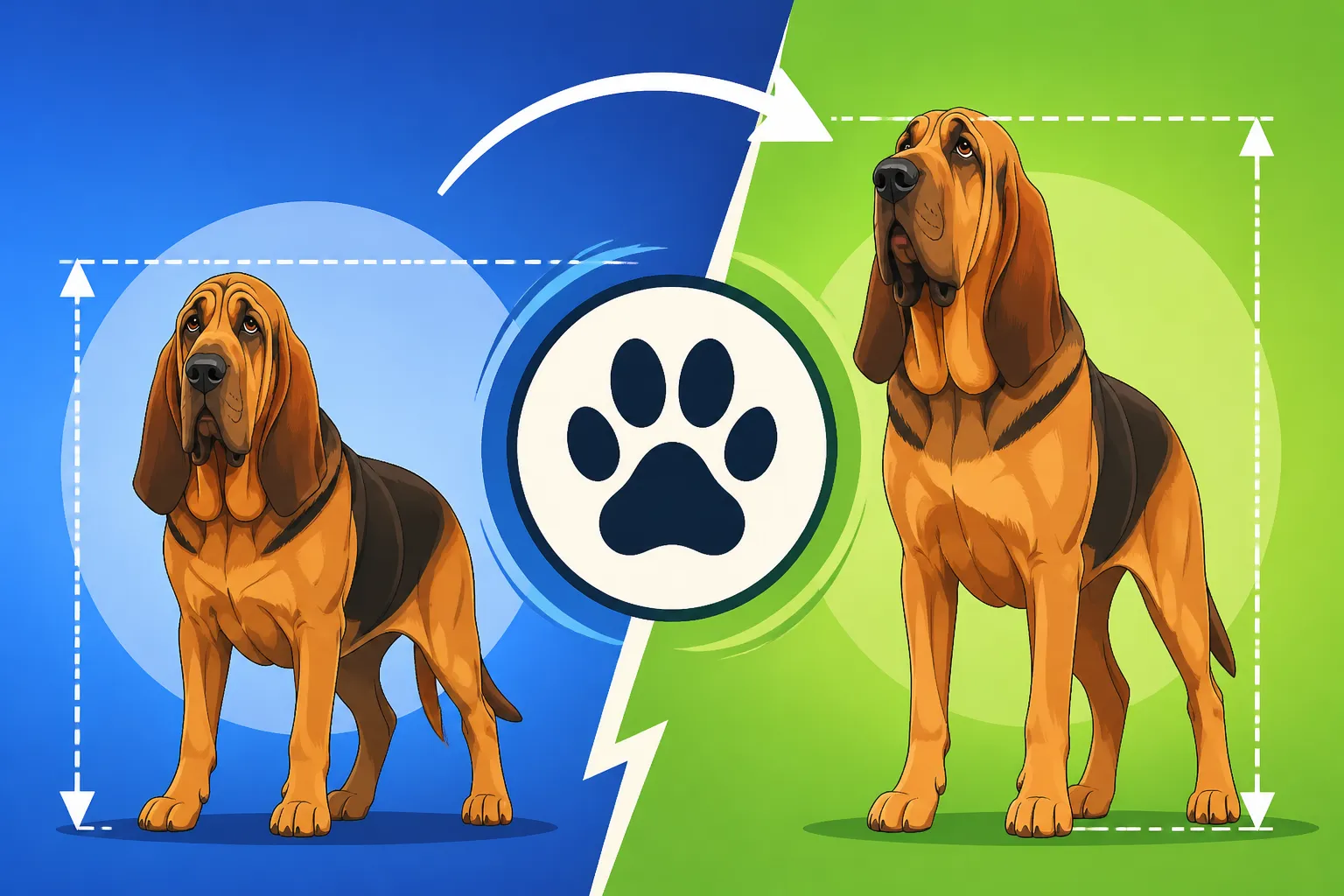
A Bloodhound that stands above the usual height range can make owners wonder whether the AKC considers it especially desirable. The short answer is no: height alone does not make a Bloodhound better by the breed standard. The standard gives a preferred range, but also allows larger dogs when they retain the right proportions, soundness, and overall quality.
What the AKC Bloodhound standard says about height
The standard gives a range, not a height contest
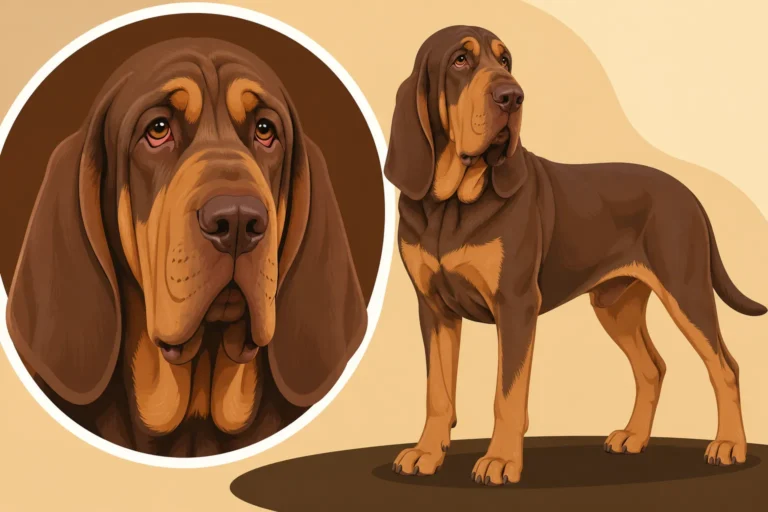
The American Kennel Club’s Bloodhound breed standard describes a height range for each sex: males are generally listed at 25 to 27 inches at the shoulder, and females at 23 to 25 inches. It also allows larger specimens when their proportions and quality are retained. That qualification matters: the standard does not say that the tallest dog is automatically the best dog.
A dog just above the stated range is not necessarily disqualified from consideration simply because of height. A judge assesses the whole animal, including its construction, movement, and breed character. If a taller Bloodhound remains balanced and sound, its height alone may not count against it. If extra height comes with poor proportions or awkward movement, however, it is not an advantage.
If you are comparing your dog with the standard, remember that a range describes a reference point, not a promise that every healthy Bloodhound will land neatly inside it. The guide How Tall a Bloodhound Stands at the Shoulder looks at the breed’s general measurements, while What a Bloodhound Weighs and How Tall It Stands puts height in context with overall size.
Height is only one part of the picture
Bloodhounds are large, substantial dogs, but the standard is not asking for height without structure. A tall dog still needs to look and move like a Bloodhound, with the characteristic long, powerful outline and a body that appears balanced rather than stretched or coarse. A dog’s outline, chest, legs, feet, and movement all contribute to that impression.
Think of two dogs standing side by side. One is taller but has a narrow, unbalanced frame and an uneven gait. The other is slightly shorter but well-proportioned, moves comfortably, and has the breed’s characteristic appearance. Greater height would not automatically make the first dog the stronger example. Judges evaluate the dog in front of them, not a number in isolation.
That whole-dog perspective is also helpful when you are comparing males and females. Males are typically taller than females, but individual dogs vary, and there is no need to treat a larger female or a smaller male as abnormal based on that expectation alone. For more context, see Whether a Male Bloodhound Is Much Larger Than a Female.
How judges assess a taller Bloodhound
Proportion and balance matter more than extra inches
When a Bloodhound stands above the typical height range, the practical question is not simply “How tall is it?” It is “Does the dog remain balanced and well-made at that height?” A judge considers how the dog’s parts fit together, rather than rewarding height as a separate achievement.
For example, imagine a tall young dog whose legs seem out of proportion to its body and whose movement looks loose or unsteady. Its height may draw attention, but it does not resolve concerns about balance or soundness. A different taller dog may have a more harmonious outline and move with ease. In that case, the extra height may be acceptable under the standard’s allowance for larger specimens.
Movement is particularly useful because it shows how the dog uses its structure. At a show, the dog is examined standing and in motion. A confident, efficient gait can help demonstrate that the dog’s size is supported by functional construction. A dog that struggles to move comfortably should not be considered improved simply because it is tall.
The standard’s broader expectations are part of the breed’s history and type, too. If you are curious about how the written standard has evolved, Whether the Bloodhound Standard Has Changed Since 1900 offers related context. The key point for this question remains simple: the AKC standard permits some variation in size, but it does not turn height into the main measure of quality.
Substance is not the same as being oversized
Bloodhounds are meant to be powerful dogs, and “substance” is often used to describe a dog’s overall strength and solidity. But substance should not be confused with simply adding height or weight. A dog can be large yet poorly balanced; another can be powerful and well-proportioned without being especially tall.
This distinction matters because people sometimes assume that the biggest Bloodhound must be the most impressive or most representative of the breed. In a show ring, size may be visually striking, but it is only one part of the evaluation. A dog that is excessively heavy for its frame or moves with difficulty is not necessarily a better example than a somewhat smaller, athletic dog.
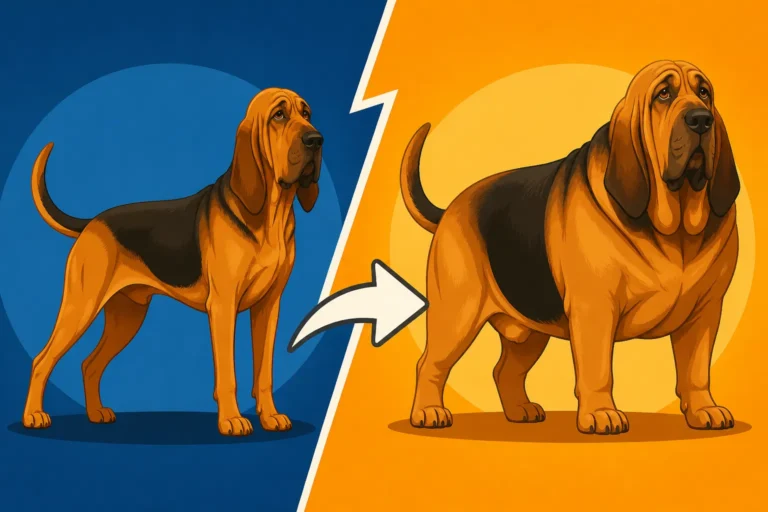
There is also a difference between a dog being naturally large and a dog being out of condition. Weight can make a dog look bulkier, but it does not change its height at the shoulder. If your dog appears much larger than others, consider height, weight, and body condition separately rather than treating them as the same issue. The related article Whether Breeders Are Making Bloodhounds Heavier explores why size and weight can be discussed separately.
| What you notice | What it may indicate | What it does not prove |
|---|---|---|
| Your dog stands above the usual height range | It may be a larger individual | That the dog is automatically a better show prospect |
| Your dog looks especially bulky | Weight, coat, posture, or build may affect its appearance | That the dog is taller |
| Your dog moves awkwardly | A structural or conditioning issue may be worth discussing | That height alone caused the problem |
| Your dog is smaller than many show dogs | Normal individual variation may be involved | That the dog is unhealthy or poor quality |
Measuring your Bloodhound at home
Take a careful shoulder-height measurement
The standard’s height measurement is taken at the shoulder, not at the top of the head or the highest point of the ears. Getting a useful measurement at home takes a little patience, especially if your Bloodhound is excited, wiggly, or more interested in sniffing the measuring tape than standing still.
Ask another person to help if possible. Set your dog on a level, non-slip surface and have it stand naturally, with its weight distributed evenly. Avoid measuring while it is sitting, leaning, stretching upward, or standing on a soft bed. Those positions can make the result misleading. A rigid measuring stick or a flat object held level across the top of the shoulder can help you identify the height, while a tape can record the distance from the floor.
You do not need an elaborate kit. A basic measuring tape, a level surface, and a calm helper are usually enough. If you need ordinary pet-care supplies or small training rewards to make practice easier, you might shop locally or through retailers such as Chewy. The important part is the setup, not where the supplies come from.
Do not worry if your first measurement is inconsistent. Take it again when your dog is relaxed, and write down the date and result rather than repeatedly repositioning the dog in one session. For a formal assessment, a show judge or veterinarian can help you understand how the measurement is taken.
Make a growth record instead of chasing a number
Puppies can look temporarily awkward as they grow. Their legs may seem too long for their bodies one month, then their frame may look more balanced later. A single measurement during that stage is not a reliable prediction of adult height or future show quality.
Keep a simple record of measurements, weight, age, and any questions you want to bring to your veterinarian or breeder. That record can help you distinguish steady growth from a sudden change and can make conversations about development more specific. If you use a treat pouch or other small rewards for calm handling, you can find those through many pet retailers, including Chewy, but keep training brief and positive.
Avoid trying to speed up or slow down a puppy’s growth by changing food without veterinary guidance. Feeding decisions should support healthy development and body condition, not a target height. Your veterinarian can help you assess whether the puppy is growing appropriately for its age and build. A breeder familiar with the parents and related dogs may also provide useful perspective, but no one can guarantee a puppy’s adult height from an early measurement alone.
What a taller-than-average height means for owners
A tall dog is not automatically unhealthy
Height by itself does not diagnose a health problem. A Bloodhound that is taller than the usual range may be healthy, just as a dog within the range may still need routine veterinary care. If your dog is comfortable, moves normally, and maintains a healthy body condition, an extra inch or two is not, by itself, a reason to panic.
Still, a very large dog has practical needs that owners should plan for. A taller, heavier Bloodhound may take up more room in the car, need a sturdy resting surface, and require careful handling around stairs or slick floors. It can also be more physically demanding to manage on a leash, particularly when it catches an interesting scent. Those are everyday ownership considerations, not evidence that the dog falls short of the breed standard.
Bloodhounds vary in build, and their working roles can influence how people describe them. A lean, fit working dog may look different from a heavily built show dog, but neither label should replace an individual assessment. The article Whether a Working Bloodhound Is Leaner Than a Show One provides more context on those differences.
Ask the right questions if you are choosing a puppy
If you are selecting a puppy and hoping for a dog that fits the AKC standard, ask the breeder about the parents’ height, overall structure, and movement. Those details may help you understand the family’s general size, but they cannot promise exactly how tall an individual puppy will become. Growth depends on more than a single measurement, and puppies from the same litter may not mature alike.
A responsible conversation should cover health, temperament, and suitability for your home—not just the biggest puppy or the one with the most dramatic look. Ask how the breeder evaluates structure and what support they offer if you have questions as the dog matures. You can also read Whether the Bloodhound Is Heavier Than a Coonhound for a broader comparison of large scent hounds, while remembering that breed comparisons do not predict an individual dog’s adult size.
If your concern is specifically about showing, ask an experienced Bloodhound breeder or handler to explain the standard and help you assess the dog in person. A photograph can distort proportions, and a number on a tape measure cannot show movement, temperament, or overall quality. The most useful answer is usually not whether the dog is taller than average, but whether it is sound, balanced, and recognizably a Bloodhound.
Disclaimer
This article is for general informational purposes only and does not constitute professional advice. Laws, prices and regulations vary by location and change over time. Consult a qualified professional for guidance on your specific situation.