Why a Bloodhound’s Head Is Shaped the Way It Is
A Bloodhound’s long muzzle, loose skin, heavy lips, and sweeping ears give its head a distinctive look—but those features are more than decoration. They reflect the breed’s history and structure, while also creating everyday care needs. This guide explains what each part does, what its scent-tracking role may be, and which head features deserve a closer look from an owner.
The main features of a Bloodhound’s head
A long muzzle and substantial skull
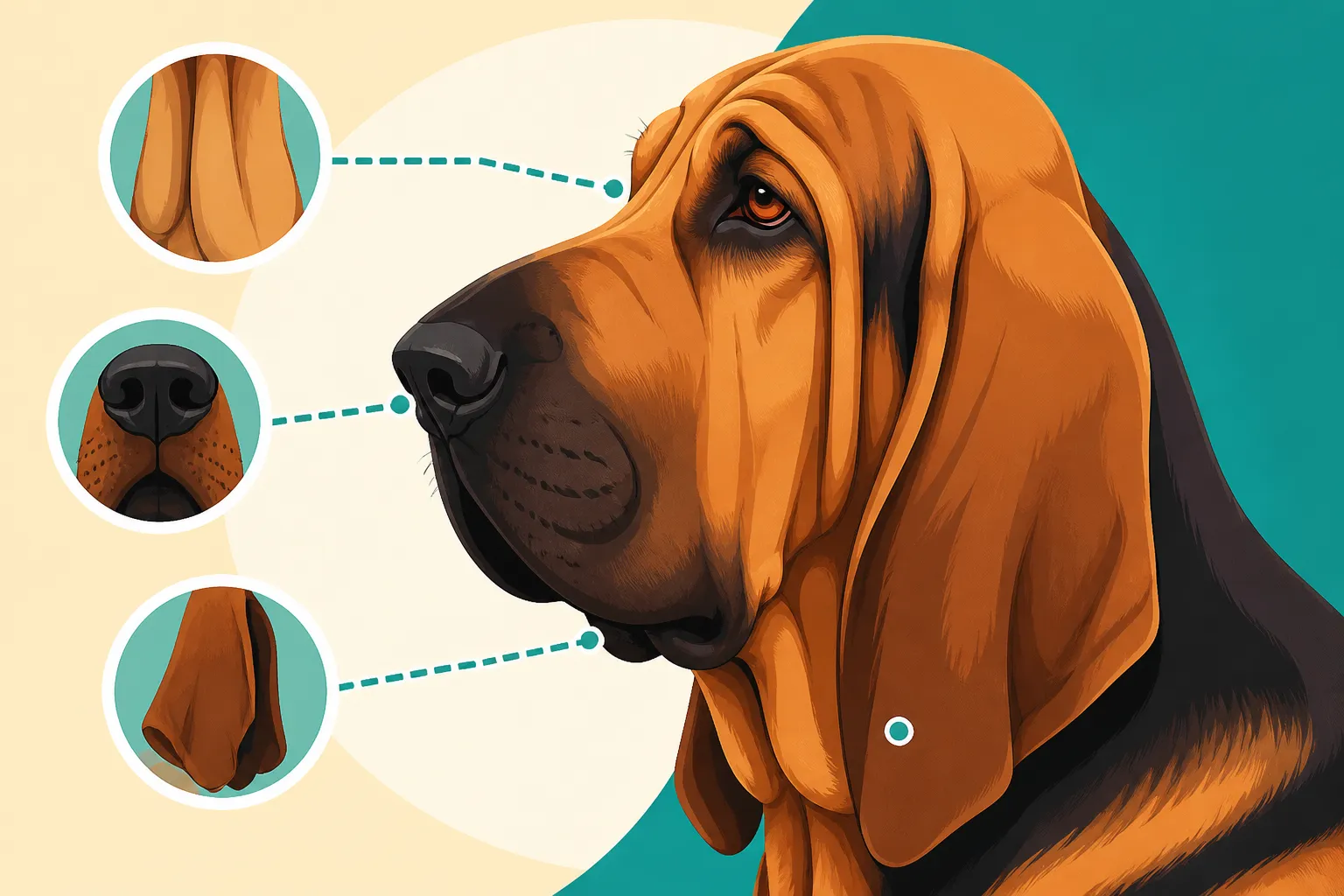
A Bloodhound’s head is long and narrow in profile, with a deep muzzle and a skull that appears comparatively high and rounded at the back. The muzzle gives the dog plenty of room for its nose and nasal passages, while the overall head shape is part of the breed’s traditional appearance. It is not simply an oversized nose attached to a generic dog’s head: the skull, muzzle, lips, and skin all contribute to the Bloodhound’s characteristic profile.
The breed’s scent ability is closely associated with its nose, but head shape alone does not explain how a Bloodhound follows a trail. A dog’s scenting performance also depends on its nasal structures, breathing, experience, motivation, and training. The long muzzle is one piece of a larger biological and behavioral picture, not a guarantee that every Bloodhound will automatically trail well.
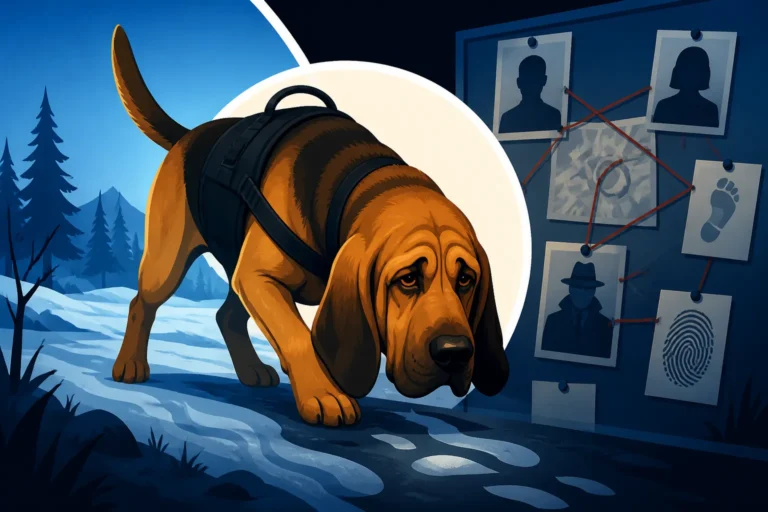
When you watch a Bloodhound work, you may see it lower its head and move steadily, sampling scent close to the ground. Its nose is investigating a complex mixture of odors rather than following a visible line. For a closer look at that process, see What a Bloodhound Is Actually Smelling on a Trail. The shape of the head supports the breed’s familiar appearance, but the dog’s trained behavior is what turns scenting ability into useful trailing work.
Loose skin, wrinkles, and pendulous lips
The skin around a Bloodhound’s head is loose, especially around the face and neck. Folds gather around the forehead and cheeks, while the lips and flews hang down at the sides of the mouth. These features create the breed’s soft, serious-looking expression and can move as the dog lowers its head or investigates an odor.
Owners often hear that facial wrinkles “hold” scent and help funnel it toward the nose. That explanation is repeated in breed discussions, but it should not be treated as a complete or proven account of how scenting works. Loose skin is part of the breed’s inherited structure; the exact contribution of each fold to tracking is less certain than the everyday observation that a Bloodhound’s nose and behavior are highly adapted to following scent. The question is explored further in Whether a Bloodhound’s Wrinkles Hold Scent and Whether a Bloodhound’s Loose Skin Helps It Trail.
The pendulous lips also have a practical consequence: they can collect saliva, food, and water. After a drink or meal, a quick wipe around the mouth and chin may prevent dampness from lingering in the folds. If a fold stays wet or develops persistent redness, irritation, or an unpleasant odor, it is worth asking a veterinarian whether inflammation or infection is developing. Those signs are not simply a normal part of having a wrinkled face.
How the Bloodhound’s head relates to scenting
The nose is central, but the whole head works together
A Bloodhound’s head is built around a pronounced muzzle and nose, but scent detection is not a matter of appearance alone. The dog samples odor in the air and on surfaces, then responds to the scent picture it encounters. It may adjust its pace, circle, or revisit a spot as it works out where the trail continues. The handler’s job is to read those changes and give the dog room to investigate safely.
Bloodhounds also have long, low-set ears that can brush near the ground as the dog moves. A common explanation is that the ears help stir or direct scent toward the nose. That may be part of why the feature is associated with trailing, but it is better not to imagine the ears functioning like a precise mechanical funnel. They are one part of the breed’s distinctive anatomy, and the full relationship between ear movement and scenting is more nuanced. Read Why a Bloodhound’s Ears Sweep Scent Toward Its Nose for more detail.
The trailing head posture also makes a secure harness and a suitable long line important. A dog absorbed in a scent can pull forward suddenly, and a collar may put pressure on the neck when the dog leans into the trail. Training, equipment, and surroundings matter as much as physical structure: even a talented scent hound needs a handler who can manage roads, wildlife, and other hazards.
Breed history and appearance are both part of the answer
The Bloodhound’s head did not take its present form for one single reason. It reflects generations of selective breeding for a recognizable hound type, including a long face, loose skin, and hanging ears. The breed’s history is closely tied to scent work, but it is difficult to assign every feature a precise job or to claim that each one evolved only to improve tracking.
Breed standards describe an ideal appearance, and breeders may make choices that influence how strongly particular features show. That is why individual Bloodhounds can differ in the depth of their wrinkles, the amount of loose skin, or how low their eyelids appear. A healthy dog should not be judged by how exaggerated its folds look. Comfort, clear vision, healthy skin, and easy movement matter more than an extreme version of a breed trait.
The expression people call “sad” is especially well known. It comes from the combination of long facial lines, low-set eyes, loose skin, and drooping lips—not from the dog necessarily feeling unhappy. The breed standard’s influence on that look is discussed in Whether the Bloodhound Standard Asks for a Sad Expression. For broader context on how the Bloodhound compares with related breeds, see The Bloodhound Against the Other Scenthounds.
Everyday care needs created by the head shape
Eyes and lower eyelids need observation
Bloodhounds’ loose facial skin and drooping lower eyelids can leave some dogs with more exposed tissue around the eyes. The amount varies from dog to dog. Mild visible pink tissue may be part of an individual dog’s anatomy, but persistent redness, thick discharge, squinting, pawing at the face, or sensitivity to light deserves veterinary attention. A change in comfort or appearance matters more than whether the eyes look “typical” in a photograph.
Avoid assuming that every drooping lid is harmless or that every visible haw—the inner eyelid membrane—needs treatment. A veterinarian can assess whether the eyelids are protecting the eye properly and whether irritation, dryness, or another issue is present. Owners looking for a fuller explanation can read Whether a Bloodhound’s Eyes Are Meant to Droop and What Ectropion Looks Like on a Bloodhound.
For routine care, use a clean, soft cloth to gently remove discharge from the surrounding skin, using a separate clean area of cloth for each eye. Do not put human eye drops, medicated wipes, or cleaning solutions into the eye unless a veterinarian has advised it. If you are picking up basic grooming cloths or other nonmedical supplies, retailers such as Chewy may be one option; check that anything used near the eyes is suitable for the intended purpose. A product marketed for general household cleaning is not automatically safe for a dog’s face.
Ears and folds can trap moisture and debris
Long ear leather and facial folds can make routine checks especially useful. After walks through brush or tall grass, look over the ear leather for burrs, ticks, or small cuts. After bathing or getting caught in rain, make sure the outer ear leather and visible folds are dry. Moisture that stays trapped can irritate skin, and the ear canal itself should be cleaned only with a product and method suited to the dog.
A simple weekly check can help you notice changes before they become harder to manage. Look for new redness, swelling, a sour or unusually strong odor, repeated head shaking, or discomfort when you touch the ear. Do not push cotton swabs down the ear canal. If the dog seems painful or the ear is producing discharge, a veterinary examination is more appropriate than trying several cleaners at home. See A Bloodhound’s Ears Are a Standing Infection Risk for more on why ear care matters in this breed.
For folds, gently separate the skin, inspect it, and dry any damp areas. The goal is not to scrub deep into every crease or use harsh products; vigorous wiping can make irritated skin worse. Keep a few washable cloths near the dog’s food and water area, and consider a separate cloth for face care. Chewy may be convenient for sourcing general pet-care supplies, but a retailer cannot diagnose a sore fold or recommend treatment for an infection. If you need wipes or a cleanser for a skin problem, ask your veterinarian what is appropriate. More guidance on routine cleaning is available in Wiping a Bloodhound’s Folds Before They Sour.
What is typical and what needs attention
A Bloodhound’s head can look dramatic, and normal variation between dogs is considerable. The table below separates common breed features from changes that should prompt a closer look.
| Head feature | What can be typical | What deserves attention |
|---|---|---|
| Long muzzle | A deep, elongated face that is characteristic of the breed | A sudden change in breathing, swelling, or pain around the muzzle |
| Facial folds | Loose skin and wrinkles that vary in depth between dogs | Persistent redness, dampness, sores, or a worsening odor |
| Hanging lips | Pendulous flews that may collect saliva or water | Cracks, bleeding, painful swelling, or discharge |
| Drooping lower eyelids | Some visible looseness around the eyes, depending on the individual dog | Squinting, repeated rubbing, thick discharge, or persistent redness |
| Long ears | Low-set ear leather that hangs beside the face | Repeated head shaking, pain, odor, swelling, or discharge |
| Serious expression | A naturally loose, lined face that can look solemn | A behavior change alongside signs of discomfort or illness |
A well-formed Bloodhound head is not necessarily the most wrinkled or droopy one. The most important question is whether the dog can see comfortably, keep its skin healthy, and use its ears without ongoing irritation. If you are choosing a puppy, ask about the health and comfort of the parents as well as their appearance. For an overview of the breed’s overall proportions, see What a Bloodhound Weighs and How Tall It Stands.
Don’t mistake anatomy for emotion or illness
A Bloodhound’s loose face can make it look tired, worried, or mournful even when it is relaxed. Conversely, a familiar expression should not be used to dismiss a real change in behavior. A dog that suddenly avoids having its head touched, keeps an eye partly closed, or shakes its head repeatedly may be uncomfortable even if its face has always looked droopy.
It helps to learn your own dog’s baseline. Notice how its eyes look on an ordinary day, how its ears smell when healthy, and whether its facial folds are normally dry. If something changes, you can describe the difference clearly to your veterinarian rather than trying to decide from breed appearance alone whether it is normal.
The Bloodhound’s head is a blend of breed history, distinctive structure, and practical care considerations. Its long muzzle and unmistakable facial features are part of what makes the breed recognizable, while the ears, lips, skin, and eyes call for thoughtful routine checks. Understanding the shape helps owners appreciate the dog without assuming that every feature has one simple purpose—or that discomfort is just part of the breed.
Disclaimer
This article is for general informational purposes only and does not constitute professional advice. Laws, prices and regulations vary by location and change over time. Consult a qualified professional for guidance on your specific situation.