Whether Bloodhounds Were Used to Track Enslaved People
The short answer is yes: in parts of the United States, enslavers and slave-catching parties used dogs to pursue people escaping slavery. But the familiar image of a purebred Bloodhound on every chase is misleading. This guide explains what the historical record and the breed’s history can—and cannot—tell us about those dogs, their use, and the lasting harm of the story.
Were Bloodhounds used to track enslaved people?
Dogs were used in some pursuits
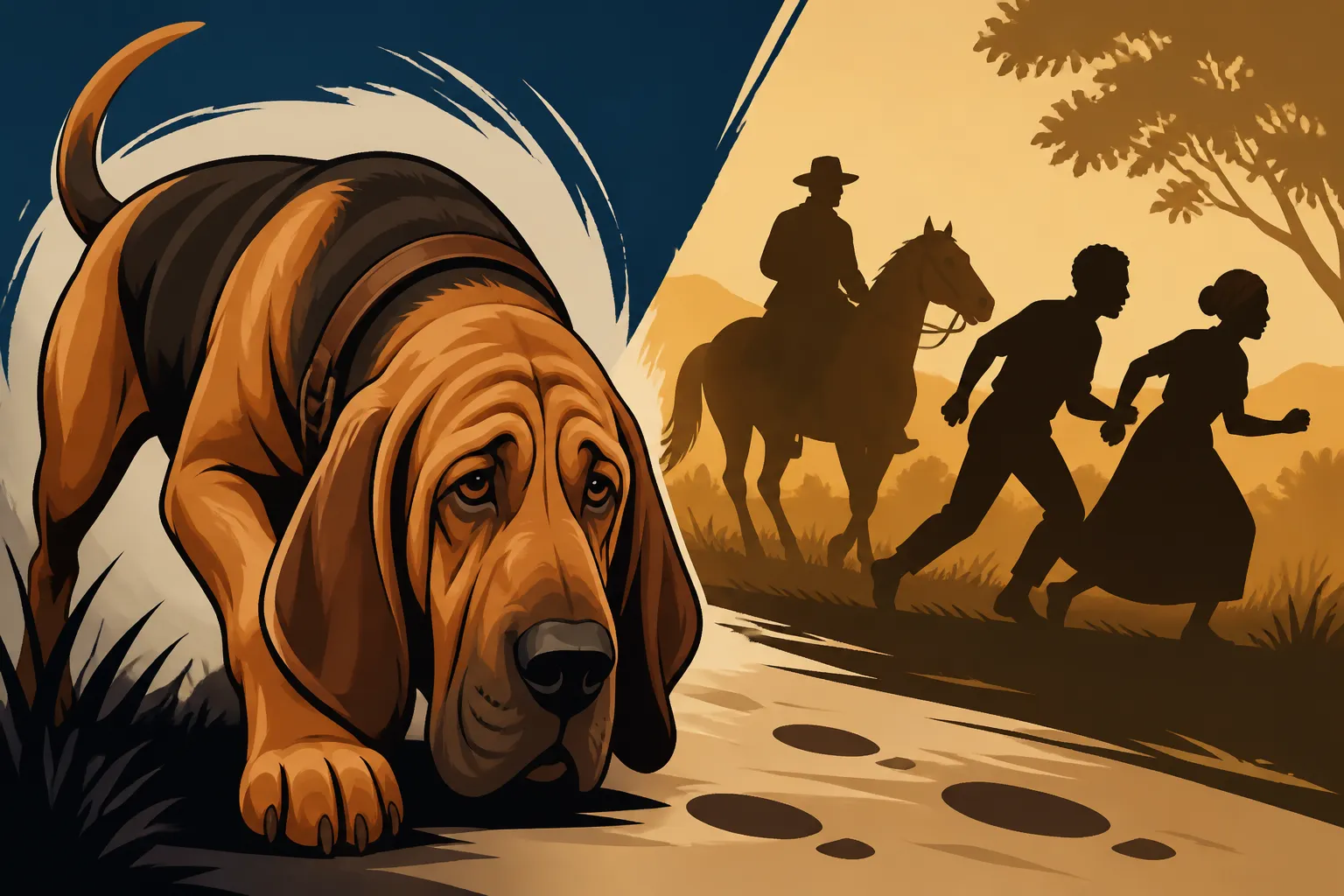
Enslavers and people hired to capture escapees sometimes used dogs to follow a person’s scent. A dog could help a pursuing party search roads, woods, swamps, and other terrain where a person might be difficult to find. The threat of being tracked by dogs was part of the violence and coercion surrounding slavery, and escapees faced the danger of capture, injury, and being forced back into enslavement.
It is important to be clear about who was doing the tracking. These pursuits were not neutral search-and-rescue operations. Dogs were used to help enforce a system that treated human beings as property and punished attempts to claim freedom. The same breed’s tracking ability can be described without softening that historical purpose.
Dog use varied by time and place. Some enslavers or pursuers may have owned dogs trained for tracking; others relied on local help, horses, or people following signs on the ground. It would be inaccurate to suggest that every escape was pursued by dogs, or that every enslaved person faced a Bloodhound. Still, dogs were part of the methods used in some recapture efforts.
“Bloodhound” did not always mean a modern pedigreed Bloodhound
Historical descriptions can use “bloodhound” loosely. The word might refer to a dog thought capable of following a human scent, rather than to an individual whose ancestry could be documented against the modern breed standard. In the era of slavery in the United States, dogs used in pursuit could be mixed-breed hounds or other dogs selected or trained for the work.
That distinction matters because breed names and breeding records do not map neatly onto every historical account. The modern Bloodhound developed through a longer history of breeding and changing standards. A report that mentions a “bloodhound” is not, by itself, proof that the dog was a registered member of today’s breed.
The name also has a separate history from the idea that these dogs tracked blood. For more on that distinction, see Why Bloodhound Does Not Mean a Hound That Tracks Blood and What Blooded Stock Meant When the Bloodhound Was Named. The words used in old accounts need to be read in their historical context, not treated as precise modern breed documentation.
The practice was real, but the popular image can distort it
The fact that the familiar image is exaggerated in some accounts does not mean dog-assisted pursuit was invented. Dogs were used in some attempts to capture people escaping slavery. At the same time, popular fiction and later retellings often made the Bloodhound into a single, instantly recognizable symbol of pursuit, sometimes obscuring the variety of dogs, people, and methods involved.
A careful answer holds both points together: the use of dogs was real, and the idea that one standardized breed was used everywhere is too simple. When historical descriptions are vague, it is better to say that dogs or hounds were used in some pursuits than to assign every dog confidently to the modern Bloodhound breed.
How did these dogs fit into the pursuit of escapees?
A dog could help follow a scent, but it was not a magical tracker
A scent-trailing dog may follow odor left by a person, but a trail is affected by conditions such as wind, rain, temperature, terrain, time, and interference from other people or animals. A dog’s behavior also depends on its training, health, experience, and the handler’s ability to read it. Tracking is skilled work, not an infallible process.
In a pursuit, a dog might help a group decide which direction to search or stay with a trail that people had difficulty following. That could make the dog a useful tool for the pursuers, but it did not guarantee that they would find the person. Nor does a dog’s apparent interest in a trail establish, on its own, who made it or where that person went.
This distinction is useful when separating real canine abilities from dramatic stories. The Bloodhound is known for scent work, but even a capable tracking dog can lose a trail or be affected by conditions. For a broader account of the breed’s historical shift toward following people, see When Bloodhounds Began Trailing People Instead of Game.
Pursuit depended on people, not just dogs
A dog did not act independently of the system around it. A handler had to bring the dog, interpret its behavior, and direct the search. Other people might provide horses, local knowledge, food, equipment, or information about where someone had been seen. The outcome depended on this network of people and resources, as well as on the person being pursued and the circumstances of their escape.
That human context is easy to lose when an account focuses only on a dog’s nose. But the central story is not a heroic animal following a trail. It is the use of animals and organized effort to help return people to enslavement. A discussion of breed abilities should not eclipse the people whose freedom was being denied.
It is also worth resisting the idea that a dog’s tracking ability made capture inevitable. People escaped and evaded pursuit; conditions could frustrate trackers, and search parties could fail. A dog’s presence increased danger, but did not make the dog an all-knowing or unstoppable instrument.
The word “bloodhound” can carry more certainty than an account supports
When reading a historical passage, ask what the writer actually says. Does the account name a particular dog, describe its training, or provide evidence of its ancestry? Or does it use “bloodhound” as a broad label for a dog used to pursue a person? Those are different levels of detail.
This is especially important in newspaper stories, memoirs, political writing, and fiction. Writers may have had different motives and levels of firsthand knowledge. A vivid description can communicate fear or outrage while still leaving unanswered questions about the exact dog or the details of a pursuit.
The history of the breed itself can add context without resolving every individual case. The Abbey of Saint Hubert Bred the Bloodhound's Ancestor explores the breed’s European background, while How the Bloodhound Reached England looks at its development across countries. Neither history should be used to assume that every dog called a bloodhound in an American account was a modern purebred.
Why is the Bloodhound so strongly associated with slavery?
The breed’s tracking reputation made it a powerful symbol
The Bloodhound’s association with following a human scent made it a potent image in writing about escape and pursuit. A long-eared, loose-skinned hound with its nose to the ground could make a frightening and memorable picture. That image was easy to understand, repeat, and use in stories, whether or not the particular dog described was a modern Bloodhound.
The association grew not only from dogs’ actual use but also from the way people wrote about them. Accounts and illustrations could turn a complex system of capture into a dramatic scene centered on the dog. That framing risks shifting attention away from enslavers, slave catchers, and the laws and institutions that supported slavery.
A breed’s reputation can therefore be shaped by both practical work and cultural storytelling. The Bloodhound’s tracking ability became part of its public identity, but the breed is not defined only by this painful history. At the same time, it would be wrong to erase the connection simply because the common image is simplified.
Fiction helped fix the image in the public imagination
Harriet Beecher Stowe’s Uncle Tom’s Cabin helped popularize the image of dogs pursuing enslaved people. The novel’s scenes contributed to a powerful literary and political portrayal of slavery, but a fictional scene is not automatically a precise record of how a particular historical pursuit happened. Fiction can draw on real practices while shaping details for narrative effect.
That distinction does not make the underlying fear imaginary. People escaping slavery could face capture by human pursuers and, in some cases, dogs. But readers should avoid treating a novel as a complete account of the frequency, geography, or exact breeds involved. For a closer look at this literary legacy, see Whether Uncle Tom's Cabin Misrepresented the Bloodhound.
The image also lasted because it was so easy to reproduce. In later retellings, the dog could become the main character of the story, while the people seeking freedom and the violence of recapture became background. A more responsible account keeps the focus on the human realities and recognizes that the dog was part of a system created and controlled by people.
The breed’s reputation is more complicated than one historical role
Bloodhounds have been used for different kinds of scent work, including tracking people. Their ability to follow scent does not make them inherently cruel or responsible for the purposes people assign to them. Dogs do not choose the social or political systems in which humans use them.
That point should not be used to excuse or romanticize the historical use of dogs against enslaved people. It simply separates a dog’s natural capacities from the human decisions that directed those capacities toward capture. The history is disturbing because of the human purpose and the harm inflicted, not because the dog understood the moral meaning of the pursuit.
The Bloodhound is also widely known as a gentle, sociable breed, though individual temperament varies and every large dog needs humane handling and training. For more on that distinction, see Whether the Bloodhound Is Actually Gentle and Whether the Bloodhound's Reputation Was Damaged by Fiction. Acknowledging a breed’s present-day temperament does not erase its past, and acknowledging its past does not mean every dog today should be treated as a symbol of it.
How to talk about this history accurately
Separate established facts from assumptions
A balanced account can state that dogs were used in some efforts to pursue people escaping slavery, while avoiding unsupported claims about how often this happened or which dogs were involved in every case. It can also distinguish between the broad historical word “bloodhound” and evidence that a dog belonged to the modern breed.
| Question | Careful answer |
|---|---|
| Were dogs used in some pursuits of people escaping slavery? | Yes. Accounts describe dog-assisted pursuit in some cases. |
| Was every dog called a bloodhound a modern purebred Bloodhound? | No. Historical labels do not establish modern pedigree. |
| Did every escapee face a dog? | No. Pursuit methods varied, and not every escape involved dogs. |
| Could a dog guarantee capture? | No. Tracking depends on conditions, training, handlers, and circumstances. |
| Does the breed itself bear responsibility for this history? | No. Humans chose how dogs were used. |
When an account does not establish a dog’s ancestry or exact role, use language that reflects that uncertainty. “A dog described as a bloodhound” or “a hound used in pursuit” may be more accurate than stating confidently that it was a modern Bloodhound.
Keep the people at the center
The most important context is the experience of enslaved people who sought freedom and the danger they faced when pursued. A story focused only on a dog’s tracking skill can unintentionally turn human suffering into an exciting tale of canine ability. Keep the purpose of the pursuit explicit: it was an effort to capture people and return them to enslavement.
That does not require avoiding discussion of the dog’s abilities. It means describing those abilities in a way that does not glamorize their use. A useful account can explain scent tracking, the limits of a trail, and the changing meaning of the breed name while still centering the people harmed by the system.
Finally, be wary of sweeping claims at either extreme. It is not accurate to say that Bloodhounds were never used in these pursuits, and it is not accurate to say that every pursuit relied on a purebred Bloodhound. The most responsible description is more specific: dogs were used in some efforts to recapture people escaping slavery, while historical labels and popular stories often blur the exact breeds and details.
Disclaimer
This article is for general informational purposes only and does not constitute professional advice. Laws, prices and regulations vary by location and change over time. Consult a qualified professional for guidance on your specific situation.