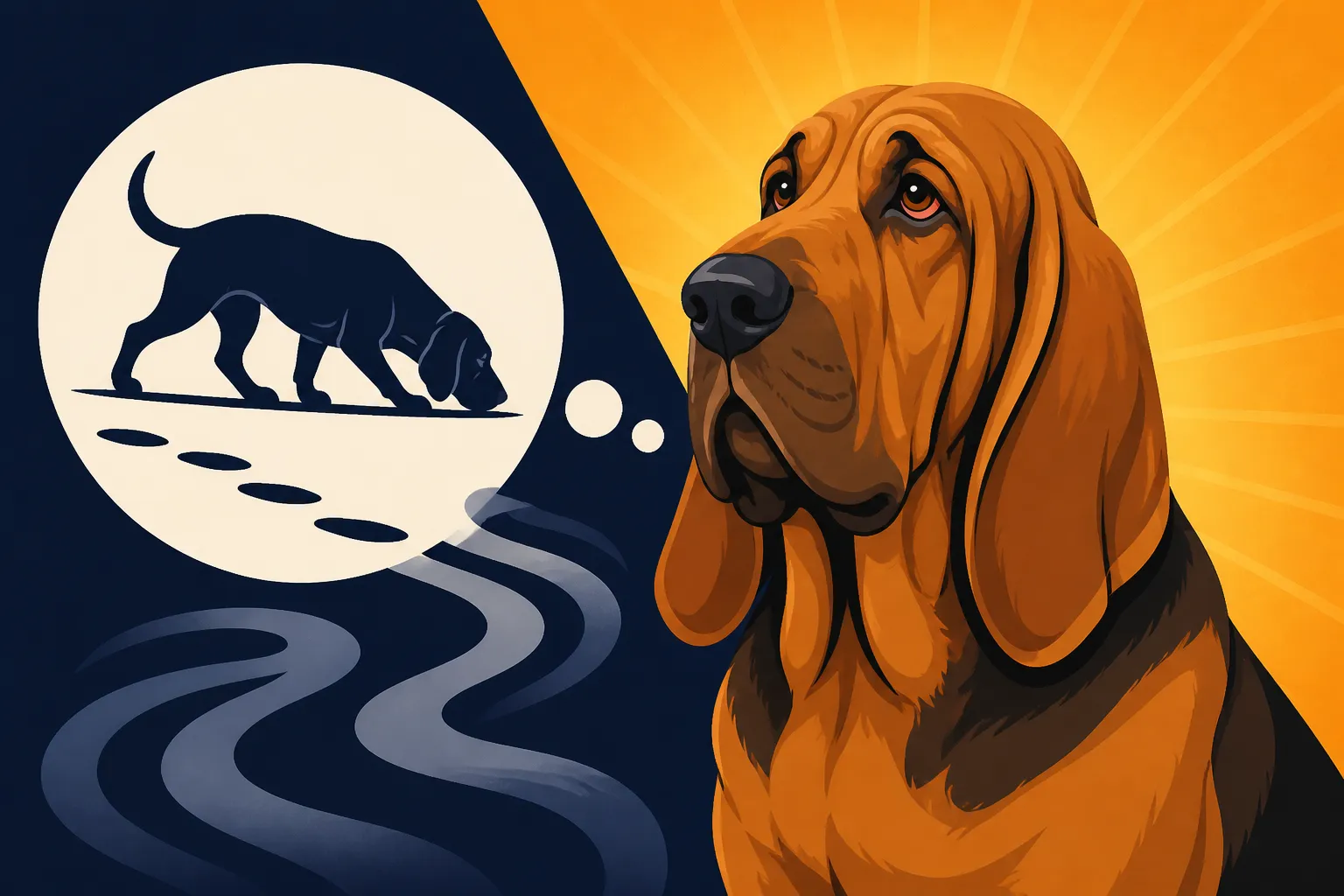
What the Name Bloodhound Actually Means
If you've ever stopped to ponder the name "Bloodhound," you're not alone. It conjures up vivid, sometimes unsettling, images, and it’s a name that has certainly led to more than a few misunderstandings about these incredible dogs. For many, the first thought jumps to tracking blood, perhaps even a hound trained for something rather grisly, which couldn't be further from the truth. This comprehensive guide will peel back the layers of history and language to reveal the true, fascinating meaning behind the Bloodhound's distinctive name, debunking myths and celebrating their genuine character.
Unpacking the "Blood" in Bloodhound
When we hear "Bloodhound," it's easy to immediately assume the "blood" refers to tracking. After all, these dogs are renowned for their tracking abilities, often associated with serious cases and search and rescue efforts. However, the origin of their name is far more rooted in lineage and purity than in any grim pursuit of blood trails. It speaks to a time when canine breeding was becoming more formalized, and the concept of a "pure" or "blooded" animal held significant weight.
The "Blooded Hound" Theory: A Purebred Lineage
The most widely accepted and historically accurate theory behind the name "Bloodhound" stems from the term "blooded hound," meaning a hound of pure or noble blood. Think of phrases like "full-blooded" or "blue-blooded" when referring to aristocracy or an animal with an unmixed pedigree. In the context of medieval hunting dogs, having a "blooded" animal meant it came from a well-documented and esteemed lineage, one carefully bred for specific traits without dilution from other types of hounds. This was crucial for hunters and landowners who relied on their dogs for precise work, whether it was trailing game or protecting property.
This distinction wasn't just about status; it was a practical marker of quality. A "blooded" hound promised predictable performance, consistent temperament, and the preservation of highly valued characteristics over generations. It meant you were getting a dog that was known to excel at its job, a true specialist. This emphasis on pure breeding also links back to the monasteries that were instrumental in developing the breed, where meticulous records and selective breeding practices were paramount. The Abbey of Saint Hubert Bred the Bloodhound's Ancestor is a fascinating read on this very topic, illustrating how early breeders focused on maintaining an unadulterated line.
Dispelling the Myth: Not About Tracking Blood
It’s a persistent misconception, isn't it? The idea that "Bloodhound" means they track blood. The truth is, while a Bloodhound's nose is so phenomenally sensitive it can detect even the faintest scent signature, including microscopic skin cells or odors associated with human presence, they are not specifically trained or named for tracking blood itself. Their unparalleled ability lies in following a specific individual's unique scent, a skill that has earned them a singular place in legal proceedings. The Bloodhound Is the Only Dog Whose Evidence Stands in Court because of this incredible talent, not because they’re following a gruesome blood trail.
This misunderstanding often leads people to believe that Bloodhounds are fierce or aggressive, when in fact, their temperament is famously gentle and mild. They are devoted companions, often quite clumsy and affectionate, a far cry from the formidable "blood-tracker" image many people might initially conjure. When they're out working, they're focused on the individual scent, not on the nature of what's been shed. Their drive is to find, not to confront or harm.
Historical Context: When "Blooded" Meant Quality
To truly grasp the meaning, we need to step back into the historical setting where these magnificent dogs originated. In medieval Europe, particularly among the nobility and in monastic communities, hunting was more than just a sport; it was an integral part of life, a source of food, and a display of prestige. Having a pack of hounds that were "blooded"—meaning purebred and of documented ancestry—was a testament to one's wealth, dedication, and skill in animal husbandry.
These were the elite hunting dogs, carefully protected and bred to maintain their superior scenting abilities. They weren't just any hound; they were the Blood hounds, signifying their esteemed, unmixed heritage. This careful management of their lineage helped ensure that the qualities that made them exceptional trackers were passed down consistently. It also highlighted a commitment to breeding for purpose, cultivating specific attributes over generations rather than simply crossing dogs indiscriminately. The breeders understood that preserving the "blood" of the line was critical to preserving its capabilities.
A Journey Through Etymology: Tracing the Name's Roots
The English language is a wonderfully complex tapestry woven from various linguistic threads, and the name "Bloodhound" is no exception. Its journey through time reflects the historical interplay of cultures and the evolving understanding of canine roles. Delving into its etymology helps us appreciate not just the name, but the long and storied history of the breed itself.
Anglo-Norman Origins and Early Usage
The term "Bloodhound" is believed to have made its way into English from Anglo-Norman French, a dialect of Old French spoken in England after the Norman Conquest of 1066. The word "blood" itself has ancient Germanic roots, but its specific application to the concept of lineage and purity in dogs likely solidified under Norman influence, where heraldry and noble lines were paramount. Early records, dating back to the 14th century, show variations of the name like "blood hounde" or "blooded hund," often used to describe hounds of excellent breeding.
These early references emphasized the dog's pure lineage, distinguishing them from common or mixed-breed hunting dogs. They were the specialized tools of kings and clergy, held in high regard for their unwavering dedication to a scent. The Anglo-Norman aristocracy placed a significant value on maintaining "pure blood" in their animals, just as they did in their own families, to ensure the continuation of desirable traits and abilities. This period cemented the idea that a "Bloodhound" was a dog of superior stock, meticulously selected and bred for its specific gifts.
Old English Influence: Hounds of Renown
While the "blood" part of the name might have Anglo-Norman connections, the "hound" component is deeply rooted in Old English. The word "hund" was a general term for a dog in Old English, often specifically referring to hunting dogs. Over time, "hund" evolved into "hound," a word that still carries the connotation of a dog bred for hunting, particularly by scent. So, when the two terms merged, "blood hound" truly came to mean a "purebred hunting dog."
The English, even before the Normans, had their own tradition of scent hounds, but the introduction of the superior "Chien de Saint Hubert" from continental Europe, brought over by Norman invaders and later, by the monks of Saint Hubert, elevated the standard. The combination of the English language's established word for a hunting dog ("hound") with the descriptor of pure lineage ("blood") created a powerful and fitting name for this exceptional breed. It was a name that instantly communicated their elite status and their primary function as tireless trackers.
The Evolution of Language and Canine Terminology
Language is a living thing, constantly evolving. Words shift in meaning, and sometimes, new interpretations emerge that overshadow the original intent. For the Bloodhound, the literal meaning of "tracking blood" gained traction over centuries, perhaps fueled by dramatic tales and the sheer impressiveness of their scenting ability. It's a natural leap for the human mind to connect "blood" with "tracking" when confronted with a dog of such prowess.
However, understanding the historical linguistic context helps us appreciate the true elegance and precision of the original name. It wasn't about the object of the trail, but the quality of the tracker. It’s a testament to the enduring respect for pedigree and specialized breeding that characterized canine development centuries ago. The name became a shorthand for excellence, a badge of honor for a breed whose pure lineage ensured their unparalleled skill.
The Legacy of Saint Hubert: A Sacred Connection
You can't talk about the Bloodhound's origins without mentioning the significant role of the Abbey of Saint Hubert. It's a story steeped in medieval history, religious devotion, and a meticulous approach to animal husbandry that set the standard for what would become the Bloodhound we know today.
The Chien de Saint Hubert: The Bloodhound's Ancestor
The Bloodhound traces its ancestry directly back to the "Chien de Saint Hubert," a type of large, black-and-tan scent hound meticulously bred at the Abbey of Saint Hubert in the Ardennes forest, now part of Belgium. These hounds were renowned for their extraordinary scenting capabilities and were considered so exceptional that they were traditionally presented as gifts to European royalty. This act of gifting underscored their value and the prestige associated with owning them.
The monks of Saint Hubert were devout and dedicated to their craft, viewing the breeding of these hounds as a sacred duty. Their goal was to create a hound with an unmatched nose, a dog that could follow the coldest of trails through dense forests. They focused intensely on maintaining the purity of their lines, making sure that each generation upheld the high standards set by their predecessors. This dedication to selective breeding and preserving the "blood" of the line directly informed the meaning of the Bloodhound's name. Which Country the Bloodhound Comes From delves deeper into these geographical and historical roots.
Monastic Breeding and the Pursuit of Purity
The monastic environment provided the ideal conditions for developing a specialized breed like the Chien de Saint Hubert. Monks had the time, discipline, and resources to engage in careful, long-term breeding programs. They kept detailed records of their hounds, tracking parentage, temperament, and hunting prowess. This wasn't haphazard breeding; it was a deliberate, almost scientific, approach long before modern genetics.
Their pursuit of "purity" wasn't just aesthetic; it was functional. They believed that by maintaining an unmixed lineage, they could consistently produce hounds with superior scenting abilities, stamina, and the calm, persistent demeanor necessary for successful tracking. This commitment to "blooded" stock ensured that the traits most valuable for their purpose—hunting wild game and, later, tracking people—were consistently passed down. It's truly incredible to think about the foresight and dedication involved in shaping such a specialized animal centuries ago.
How the Saint Hubert Hound Reached England
The influence of the Chien de Saint Hubert spread beyond the Ardennes through gifts to royalty and, significantly, through the Norman Conquest. William the Conqueror is often credited with bringing these superior scent hounds to England, where they intermingled with existing native hounds. This infusion of new blood (pun intended!) revitalized the English hound lines and further cemented the reputation of these purebred trackers. Over time, English breeders continued to refine these dogs, developing the breed we now recognize as the Bloodhound.
The selective breeding continued, with a focus on preserving and enhancing their legendary nose. While the English Bloodhound evolved slightly differently from its continental ancestors, the core principles of pure breeding and exceptional scenting ability remained central. The name "Bloodhound" thus carried with it the echo of centuries of dedicated breeding, a nod to its pure origins and its unbroken line back to the esteemed kennels of Saint Hubert. It's a living testament to a legacy of meticulous animal husbandry and a profound understanding of canine capabilities.
Beyond the Name: The Bloodhound's Unmatched Scenting Ability
Regardless of how its name came to be, the Bloodhound's most defining characteristic, the one that makes it truly legendary, is its nose. It's not just a good nose; it's arguably the best in the canine world, capable of feats that seem almost supernatural to us mere humans. Understanding this incredible physiological advantage helps us appreciate why this breed holds such a unique place in history and law enforcement.
The Physiology Behind the Peerless Nose
What makes a Bloodhound's nose so extraordinary? It boils down to sheer biological horsepower. A Bloodhound possesses an estimated 300 million olfactory receptors, compared to roughly 6 million in humans. This massive difference is like comparing a basic calculator to a supercomputer. Their brain also dedicates a disproportionately large area to processing these scent inputs, further enhancing their ability to analyze and interpret odors.
Beyond the number of receptors, the Bloodhound's physical structure plays a critical role. Their long, pendulous ears, often referred to as "leathers," actually sweep scent particles from the ground up towards their nose, concentrating the scent cone around their muzzle. This ingenious design essentially acts like a natural funnel, maximizing the amount of scent available for them to process. Furthermore, their abundance of loose skin and deep wrinkles on the face also help to trap and hold scent particles, keeping them near the nose for continuous analysis. Why a Bloodhound's Ears Sweep Scent Toward Its Nose offers a deeper dive into this fascinating adaptation.
How a Bloodhound's Anatomy Enhances Scent Work
It's not just the ears, either. That distinctive wrinkled face and dewlap (the loose skin under their chin) aren't just for show; they serve a purpose in scent work. As the Bloodhound moves, these folds and wrinkles create air currents that help funnel scent from the environment towards their nostrils. Imagine the constant, subtle micro-currents generated as they lower their head to the ground, concentrating those precious scent particles.
Their deep-set eyes, combined with the drooping lower lids (ectropion), also help to keep their field of vision somewhat restricted when they are nose-to-the-ground, allowing them to focus almost entirely on the scent trail without visual distractions. This laser focus, combined with their incredible olfactory system and supporting anatomy, allows them to follow trails that are days old, even through complex and contaminated environments. They literally "see" the world through their nose, constructing a detailed map of scent no human could ever perceive.
The Legal Significance of Their Olfactory Prowess
The Bloodhound's scenting ability is so consistently reliable that its findings are admissible as evidence in courts of law in many places. This is a truly unique distinction among all dog breeds. It's not just about finding a missing person; it's about the scientific validity and accuracy of their work. A Bloodhound's trail can lead to arrests, confirm alibis, or locate crucial evidence, standing as a testament to their unwavering dedication and unparalleled skill.
When a Bloodhound handler testifies in court, they're not just recounting a story; they're presenting evidence of an animal's natural ability that has been scientifically recognized for its accuracy. This legal standing underscores the seriousness and precision of their work. It's a reflection of centuries of breeding for an unassailable sense of smell, ensuring that the "blooded" quality of their ancestors translates into irrefutable evidence in modern legal systems. It’s a powerful validation of the breed’s extraordinary capabilities.
Popular Misconceptions and Their Origins
The name "Bloodhound," despite its true meaning rooted in lineage, has unfortunately given rise to several stubborn misconceptions. These myths often paint a picture far removed from the gentle, dedicated dogs Bloodhound owners know and love. It’s important to address these head-on to help others understand the breed accurately.
The Gruesome Image: Tracking Human Blood
As we discussed, the most prevalent misconception is that Bloodhounds are named because they track blood, specifically human blood, and are therefore inherently aggressive or savage. This isn't just inaccurate; it's a harmful stereotype that has dogged the breed for centuries. The truth is, Bloodhounds are not interested in blood; they are interested in the unique scent signature of an individual person. Their motivation is not malicious; it's a strong, innate drive to follow a trail to its source.
This misunderstanding might stem from their historical use in tracking criminals or escaped individuals, where the stakes were high and the narrative often sensationalized. Coupled with their imposing size and somewhat mournful, serious expression, it's easy for an uninitiated observer to jump to conclusions that are far from the truth. They might be serious about their work, but they are not menacing animals looking for confrontation.
Media Portrayals and the "Man-Hunter" Stereotype
Unfortunately, popular culture and media have often exacerbated these misconceptions. From old movies to sensationalized news reports, Bloodhounds have sometimes been depicted as relentless, terrifying "man-hunters," snarling and dragging their handlers through swamps, driven by a primal urge for pursuit. While their relentlessness on a trail is certainly true, the aggressive portrayal is a dramatic embellishment.
Think of fictional portrayals where a pack of baying hounds chases a fugitive. While the baying is characteristic, the implied aggression is usually a narrative device. These depictions contribute to a "boogeyman" image that can make people wary of the breed, despite their inherently docile nature. It’s a challenge Bloodhound enthusiasts constantly face, trying to counter deeply ingrained stereotypes with the reality of these sweet, gentle giants.
Correcting the Narrative: Gentle Giants, Not Aggressors
The reality of the Bloodhound temperament couldn't be more different from these aggressive stereotypes. They are known for being incredibly gentle, patient, and affectionate dogs. They are often wonderful with children and other animals, displaying a calm and tolerant disposition. Their strong scent drive is a specialized talent, not a sign of aggression. When they are working, they are focused, not furious.
Owners will tell you that a Bloodhound's biggest fault is often its clumsiness and its tendency to follow its nose into trouble, not any inherent viciousness. They are not guard dogs, nor are they inclined to protect property or confront intruders aggressively. Their imposing size might act as a deterrent, but their nature is far too amiable for such roles. A Bloodhound in a House With Small Children would highlight their true character in a family setting, showing how they truly are gentle giants. It's a continuous effort to educate the public that their "blood" name refers to their noble lineage, not their intentions.
The Enduring Charm: Why the Name Persists
Despite the occasional confusion and misconception, the name "Bloodhound" has endured for centuries. It's a name with history, gravitas, and an undeniable ring to it. There's a certain magic in a name that carries so much weight, even if its original meaning is often misunderstood.
Tradition and Recognition
One of the main reasons the name persists is tradition. It's the name the breed has been known by for hundreds of years, deeply ingrained in canine history and culture. Changing such a historically significant name would be like trying to rewrite centuries of documented lineage and recognition. The name "Bloodhound" is recognized worldwide, instantly conjuring an image of an unparalleled scent tracker.
Furthermore, within the dog fancy, and particularly among those who work with the breed, the historical meaning of "blooded hound" is well understood and respected. It's a badge of honor, signifying the breed's pure ancestry and the diligent breeding efforts that have preserved its unique talents. This deep respect for tradition ensures the name remains, connecting modern Bloodhounds to their venerable past.
A Naming Convention Rooted in History
The name "Bloodhound" is a direct reflection of a specific historical naming convention that valued pedigree and purity above all else. In a time before formalized breed registries, a descriptive name that emphasized an animal's "blooded" status was a clear indicator of its quality and provenance. It was a functional name, communicating to potential owners or users that this was not a common cur, but a carefully bred specialist.
This historical naming also sets the Bloodhound apart. It’s not just a generic "scent hound" or "tracking dog"; it's the Bloodhound, a name that embodies its unique heritage and unparalleled capabilities. It evokes an image of a serious, dedicated worker, a dog whose very existence is a testament to centuries of selective breeding for a singular, magnificent purpose.
The Breed's Identity Woven into Its Moniker
Ultimately, the name "Bloodhound" has become inextricably linked to the breed's identity. It encapsulates everything that makes these dogs unique: their ancient lineage, their dedicated breeding, and their peerless scenting ability. While the "blood" part of the name might lead some astray, for those who truly know and love the breed, it speaks of purity, purpose, and profound connection to their historical roots.
The name carries the weight of their legal standing, their history with royalty and monks, and their enduring work in search and rescue. It's a name that commands respect and curiosity, often prompting deeper inquiry into the breed's true nature. And for that, it remains a fitting, albeit occasionally misinterpreted, title for these magnificent animals.
The Impact of the Name on Public Perception and Breed Popularity
The name "Bloodhound" has undeniably shaped how the public perceives these dogs, sometimes for better, often for worse. This impact can influence everything from their adoption rates to how people interact with them in public.
Initial Intimidation vs. Reality
For many first-time encounters, the name "Bloodhound" can be quite intimidating. It combines with their large size, distinctive bay, and wrinkled, serious expression to create an initial impression of a formidable, perhaps even dangerous, animal. This can lead to people being hesitant to approach them or even to consider them as family pets. It's a perception that often requires active debunking.
However, the reality for anyone who spends time with a Bloodhound is quite the opposite. They are generally big, goofy, loving dogs who crave affection and attention. Their imposing appearance belies a surprisingly sensitive and gentle soul. This contrast between initial perception and reality is something every Bloodhound owner quickly learns to navigate, often finding themselves explaining their dog's true nature to curious or wary onlookers. Imagine buying pet supplies from Chewy and having a conversation at the checkout about your Bloodhound's gentle nature because someone's intimidated by the name!
Advocacy for the Breed's True Nature
Because of these persistent misconceptions, Bloodhound enthusiasts, breeders, and rescue organizations often find themselves in an ongoing role of advocacy. Their work involves educating the public about the breed's true temperament, its history, and the actual meaning behind its name. This includes highlighting their gentle nature, their suitability as family companions (despite their drool and scent drive!), and their incredible value in search and rescue.
This advocacy is crucial for ensuring that Bloodhounds are understood and appreciated for who they truly are, rather than for the fictionalized versions that sometimes appear in popular culture. It also helps potential owners make informed decisions, ensuring Bloodhounds go to homes that appreciate their unique qualities and are prepared for their specific needs, like consistent ear care (a Bloodhound's ears are a standing infection risk!) and ample opportunities for scent work.
The Importance of Education for Prospective Owners
For anyone considering bringing a Bloodhound into their home, understanding the true meaning of their name and dispelling any lingering myths is paramount. It’s part of doing your homework and ensuring a good match. A prospective owner who believes the "blood" in Bloodhound means they'll have a ferocious guard dog will be sorely mistaken and potentially unprepared for the reality of a big, soft, perpetually sniffing companion.
Instead, understanding their "blooded" lineage emphasizes their purebred qualities, their exceptional nose, and the need to channel that nose into appropriate activities like mantrailing. It also highlights the responsibility that comes with owning a dog with such a deep and storied history. Resources like Chewy can help new owners find specialized items like snoods to keep those long ears clean, or slow feeders to manage meal times for these deep-chested hounds. Educating oneself about the breed's specific needs, temperament, and health concerns, like Bloat Is What Kills Most Bloodhounds, is essential for providing a happy and healthy life for these wonderful dogs.
| Aspect of Name | Common Misconception | True Meaning/Origin |
|---|---|---|
| "Blood" | Tracking blood, aggressive, fierce | Purebred, noble lineage, "of blooded stock" |
| "Hound" | Generic dog | Specific type of dog bred for scent hunting |
| Combined | Dangerous tracker, man-eater | Purebred scent hound, elite tracker |
| Temperament | Aggressive, ferocious | Gentle, docile, affectionate, persistent |
| Purpose | Hunting prey by blood | Tracking individual human scent, search and rescue |
Disclaimer
This article is for general informational purposes only and does not constitute professional advice. Laws, prices and regulations vary by location and change over time. Consult a qualified professional for guidance on your specific situation.