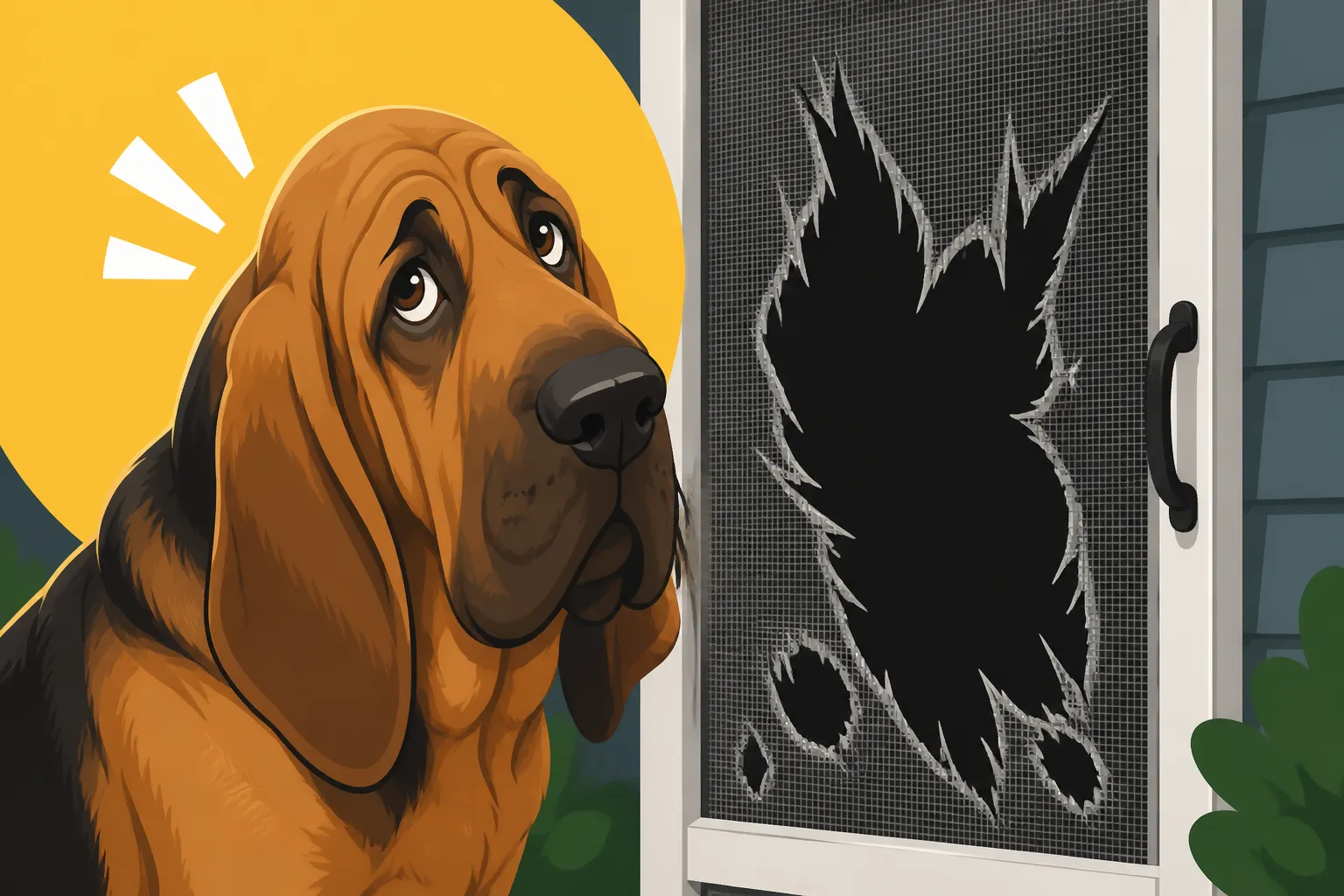
Whether a Bloodhound Ruins a Screen Door
If you've ever owned a Bloodhound, or even spent more than an hour with one, you know the absolute frustration of a screen door that just can't stand up to their particular brand of curiosity and sheer physical presence. It feels like one minute you're enjoying a fresh breeze, and the next, there's a gaping hole, a bent frame, or the whole door is off its tracks because your big, lovable lug decided the outside world was simply too interesting to ignore. This guide is here to help you understand why your Bloodhound might be making a beeline for your screens, how to fortify your home against their destructive tendencies, and what to do when, inevitably, a screen door loses the battle.
The Bloodhound and Your Screen Door: An Inevitable Clash?
Let's be honest, trying to keep a Bloodhound from interacting with a screen door is like trying to convince the ocean not to be wet. It's just who they are, woven into their very being. The delicate mesh of a standard screen door is no match for their powerful noses, their inquisitive nature, or their substantial bodies. This isn't usually malice; it's pure, unadulterated Bloodhound-ness.
Why Screen Doors Become Casualties
Your Bloodhound isn't sitting there plotting the demise of your screen door, though it might feel that way when you're sweeping up torn mesh for the third time this month. What's actually happening is a combination of instinct, intelligence, and often, a little bit of boredom. Think about it: a screen door offers a tantalizing, yet frustratingly thin, barrier to the world outside. They can see, hear, and most importantly, smell everything, but they can't quite get to it. This creates a perfect storm for a screen door disaster. They might push their nose against it to get a better whiff of a squirrel, scratch at it because they want to follow a scent, or simply lean on it because they're a large, heavy dog who doesn't quite grasp the concept of flimsy barriers.
Understanding the Bloodhound's Motivation
Their motivation is almost always tied to their incredible sense of smell and their desire to investigate. A scent carried on the breeze – whether it's a distant deer, a neighborhood cat, or even the faint lingering smell of yesterday's barbecue – is like a siren song to a Bloodhound. They are literally bred for tracking, so to them, a screen door is just a minor inconvenience in the pursuit of information. They might stand on their hind legs to peer over the top, using the door for leverage. How High a Bloodhound Can Reach on Its Back Legs is quite impressive, and that height combined with their weight can easily buckle a standard frame.
Beyond the irresistible call of scent, sometimes it's just sheer exuberance or a lack of understanding. A Bloodhound might see you in the yard and excitedly try to "join" you, forgetting the door is there. Or, if they're left alone for long periods, that screen door can become an outlet for frustration or anxiety. How Long a Bloodhound Copes Alone can vary, but if they're bored or feeling stressed, that flimsy barrier becomes a prime target for digging, pawing, or leaning. It's a way for them to try and escape what they perceive as confinement, or simply to relieve pent-up energy.
Fortifying Your Home: Strategies to Save Your Screens
You don't have to choose between fresh air and an intact screen door, but you do need to be proactive. A standard fiberglass screen won't last. The good news is there are many ways to deter your Bloodhound and make your doors more resilient.
Training and Management: More Than Just "No"
Simply yelling "no!" after the damage is done is usually too late for a Bloodhound. They need consistent, positive reinforcement training before problems arise. Teach them a solid "stay" or "wait" command when approaching doors. Practice having them sit a few feet away from the screen door before you open it to go outside. This teaches impulse control.
One of the most effective management tools, especially for puppies or new rescues, is crate training. Whether Crate Training Suits a Bloodhound Puppy is a question many owners ask, and the answer is yes, absolutely! A comfortable crate can be a safe haven for your Bloodhound when you can't directly supervise them, preventing them from practicing unwanted behaviors like screen destruction.
Beyond direct door training, make sure your Bloodhound is getting enough physical and mental exercise. A tired Bloodhound is a good Bloodhound. If they have too much pent-up energy, that screen door becomes an easy target for their boundless enthusiasm. Consider taking them for a good long walk or, even better, engaging in scent work or trailing exercises. How Much Exercise a Bloodhound Actually Needs goes beyond just a walk around the block; they need purposeful activity that engages their magnificent nose.
Choosing the Right Barrier: Beyond Basic Screens
When it comes to screen doors, you often get what you pay for. The flimsy fiberglass screens that come standard on many homes simply aren't designed for a large, powerful dog. This is where upgrading your materials can make a massive difference.
Here are some options for more dog-resistant screens:
- Pet-Resistant Screening: This material is typically made from vinyl-coated polyester, which is much thicker and stronger than traditional fiberglass. It resists tears and punctures from claws and pushes much better. It's still a screen, so it won't stop a truly determined Bloodhound, but it buys you a lot more time and greatly reduces accidental damage. You can often find this at home improvement stores or online retailers like Chewy, which offers various durable pet products.
- Aluminum Screening: Stronger than fiberglass, aluminum won't tear, but it can dent or crease. It's a step up but still not indestructible against a full-force Bloodhound.
- Steel or Hardware Cloth: This is a more industrial solution, essentially a very fine wire mesh. It's incredibly durable and almost impossible for a dog to tear or push through. However, it significantly obstructs your view and airflow, and aesthetically, it might not be what you want for a screen door. Some people use this to create a lower panel on their screen door, leaving the upper portion with a more traditional screen.
- Security Screen Doors: These are heavy-duty doors, often made with perforated metal or a very strong mesh, set into a robust frame. They are designed to deter human intruders, but they're also fantastic for deterring even the most enthusiastic Bloodhound. They offer good airflow and visibility while being virtually indestructible to a dog. They are a significant investment, but often worth it for peace of mind.
To give you an idea of common screen types, here's a quick comparison:
| Screen Material | Durability (against Bloodhound) | Visibility & Airflow | Cost (relative) | Common Use |
|---|---|---|---|---|
| Fiberglass | Very Low | High | Low | Standard residential screens |
| Aluminum | Low to Medium | Medium | Medium | Standard residential, sometimes pool cages |
| Vinyl-Coated Polyester (Pet-Resistant) | Medium to High | Medium | Medium to High | Recommended for pet owners |
| Hardware Cloth | Very High | Low | Low to Medium | Utility, lower panel reinforcement |
| Security Screen Door | Excellent | Medium to High | Very High | High-security, pet-proof |
Addressing the Root Cause: Exercise and Enrichment
A Bloodhound with an empty afternoon is a Bloodhound looking for a project. And guess what? Your screen door looks like a very interesting project! If your Bloodhound is frequently damaging doors, it's often a sign they're not getting enough appropriate stimulation.
- Physical Exercise: While Bloodhounds aren't marathon runners, they do need consistent, moderate exercise. A couple of good walks a day, or even better, some dedicated time for Mantrailing Is the Answer to a Bloodhound, Not Obedience, will do wonders. Engaging their nose will tire them out mentally in a way a simple walk cannot. A tired Bloodhound is much less likely to be destructive.
- Mental Stimulation: Their brains are built to problem-solve scent puzzles. If they're not using that incredible nose, they'll find other ways to entertain themselves. Puzzle toys, KONGs stuffed with food (you can get great deals on these from Chewy), or even just hiding treats around the house for them to find can provide valuable mental enrichment. This helps prevent boredom, which can lead to destructive behaviors like damaging doors or Whether a Bloodhound Chews Furniture When Bored.
- Supervision: As simple as it sounds, direct supervision is key. If you know your Bloodhound is prone to attacking the screen door, don't leave them unsupervised in a room with one. Close the door, use a baby gate, or put them in their crate. This isn't about punishment; it's about setting them up for success and preventing them from reinforcing a bad habit.
The Aftermath: Repairing and Preventing Future Damage
Even with the best intentions and the most robust prevention, accidents happen. Maybe the mail carrier startled them, or a particularly enticing squirrel just had to be investigated. When your screen door inevitably loses a round, don't despair!
Cost Considerations and What to Expect
The cost of a torn screen can range dramatically depending on the extent of the damage and your chosen solution. A small tear in a standard fiberglass screen might be a few dollars for a patch kit or a roll of new screening if you DIY. If the entire screen needs replacement and you hire someone, it could be considerably more, especially if you're upgrading to pet-resistant materials. For a full security screen door, you're looking at a significant investment, but one that often pays off by preventing repeated damage.
When tallying up the cost, remember to factor in not just the materials, but also your time and potential frustration. Sometimes, paying a bit more upfront for a durable solution or professional installation saves you money (and headaches) in the long run. If your Bloodhound's antics are leading to other chewed items, then What Replacing Chewed Items Costs a Bloodhound Owner can really add up, so addressing the root cause is crucial.
DIY Fixes vs. Professional Help
- DIY Fixes: For small holes or tears in standard fiberglass, patch kits are readily available. For larger sections or full screen replacement, you can buy rolls of screening (including pet-resistant varieties from places like Chewy) and spline, along with a spline roller tool. It's a relatively straightforward process for most standard screen doors, requiring patience more than advanced skills. There are plenty of online tutorials to guide you through it.
- Professional Help: If the door frame itself is bent, the tracks are damaged, or you have a more complex custom screen door, calling a professional is probably your best bet. A local handyman service or a company specializing in window and door repairs can often fix or replace the screen for you, ensuring it's done correctly and securely. For a full security screen door installation, professional help is almost always recommended to ensure proper fit and function.
Long-Term Solutions for a Screen-Door-Savvy Home
Ultimately, preventing your Bloodhound from ruining screen doors is an ongoing commitment. It's about combining intelligent training, appropriate management, and suitable physical barriers.
- Dedicated Pet Door/Run: If your Bloodhound loves to be outside, consider installing a sturdy pet door into a solid exterior door, leading to a secure, fenced yard or dog run. This gives them safe access without involving your screen doors. Just make sure your What a Fenced Yard Costs a Bloodhound Owner budget includes a fence that's truly Bloodhound-proof – they are surprisingly agile and motivated!
- Consistent Training: Keep up with the "wait" and "stay" commands around all doors. Make coming and going a calm, controlled experience. Reward heavily for good behavior. Remember, Why a Bloodhound Ignores a Cue It Knows often comes down to their nose overriding everything else, so make your commands extremely rewarding.
- Mental and Physical Outlet: Never underestimate the power of a tired Bloodhound. Prioritize daily scent work or long, engaging walks. If you work long hours, consider a dog walker or doggy daycare. Whether a Bloodhound Fits Around a Working Day often depends on these vital arrangements. A stimulated Bloodhound is a less destructive Bloodhound, and your screen doors (and sanity) will thank you.
By understanding your Bloodhound's instincts, implementing smart preventive measures, and being prepared for the occasional mishap, you can enjoy both your wonderful companion and a breezy, intact home.
Disclaimer
This article is for general informational purposes only and does not constitute professional advice. Laws, prices and regulations vary by location and change over time. Consult a qualified professional for guidance on your specific situation.