How Deep a Bloodhound’s Ear Canal Runs
Bloodhound ear anatomy features a deep L-shaped canal that traps moisture and creates chronic infection risks requiring regular attention.
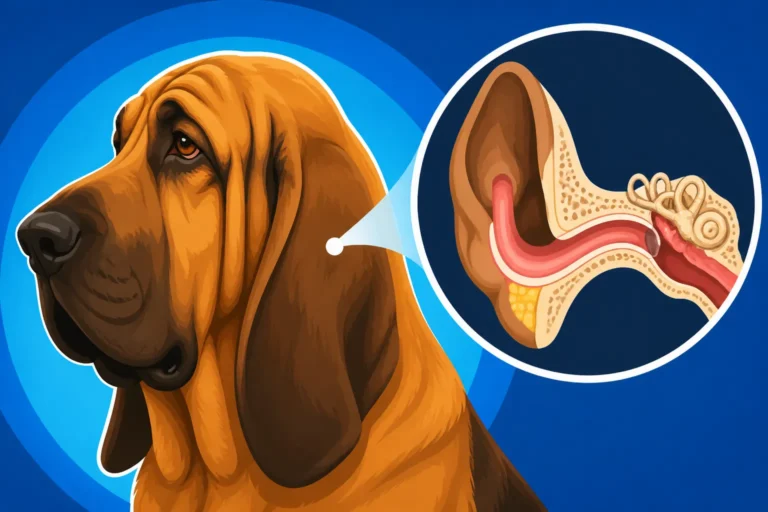
Bloodhound ear anatomy features a deep L-shaped canal that traps moisture and creates chronic infection risks requiring regular attention.
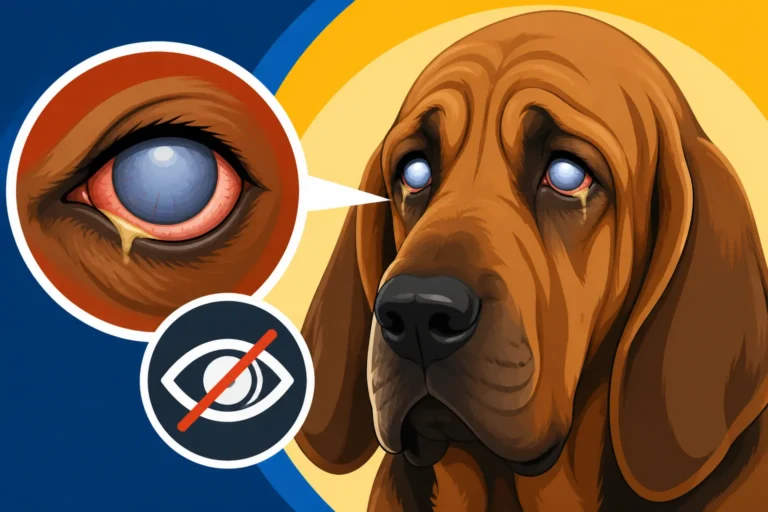
Untreated dry eye causes permanent blindness in Bloodhounds when their immune system attacks tear-producing lacrimal glands.

Bloodhound dry eye requires lifelong daily eye drops because a chronic lack of proper tear lubrication causes severe inflammation.

Bloodhound dry eye signs include chronic inflammation, thick discharge, and reduced tear production caused by genetics and loose eyelids.
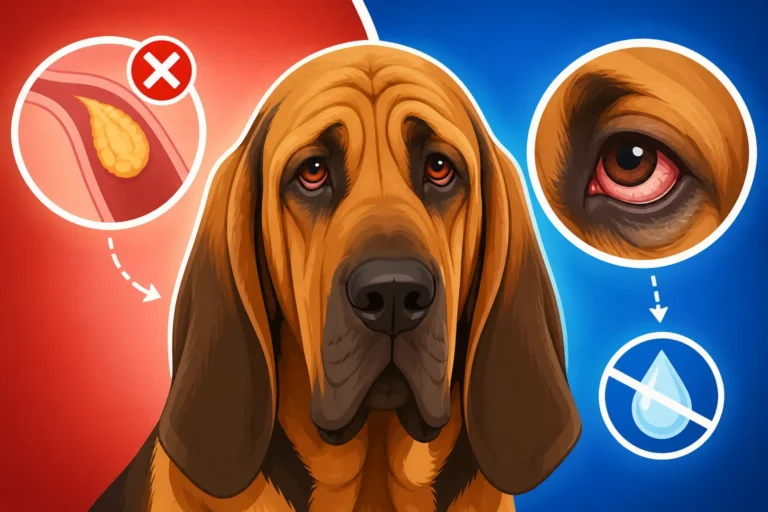
Bloodhound tear gland removal explains why protecting that lacrimal gland is paramount for eye health and tear production.
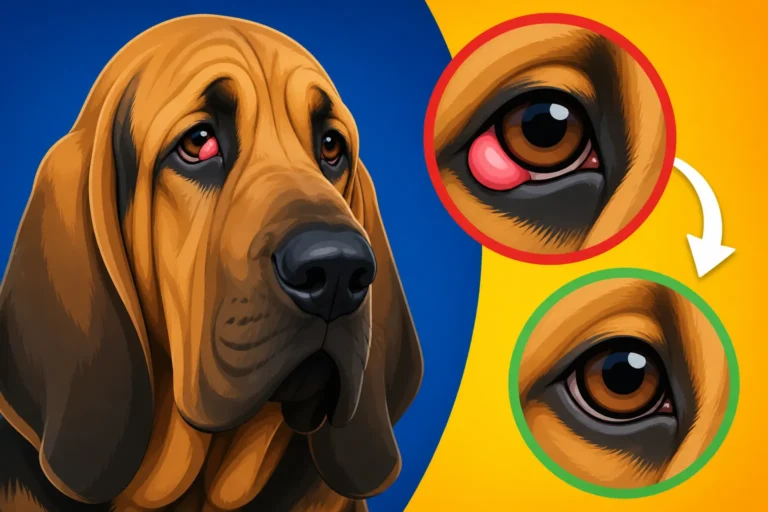
Bloodhound cherry eye recurrence rates and surgical repositioning methods explain the chances of the condition returning after treatment.

Bloodhound cherry eye surgery options, including tucking the prolapsed gland or removing it entirely, impact long-term health.

Bloodhound corneal ulcers involve open sores on the eye surface that require rapid veterinary treatment to prevent permanent damage.
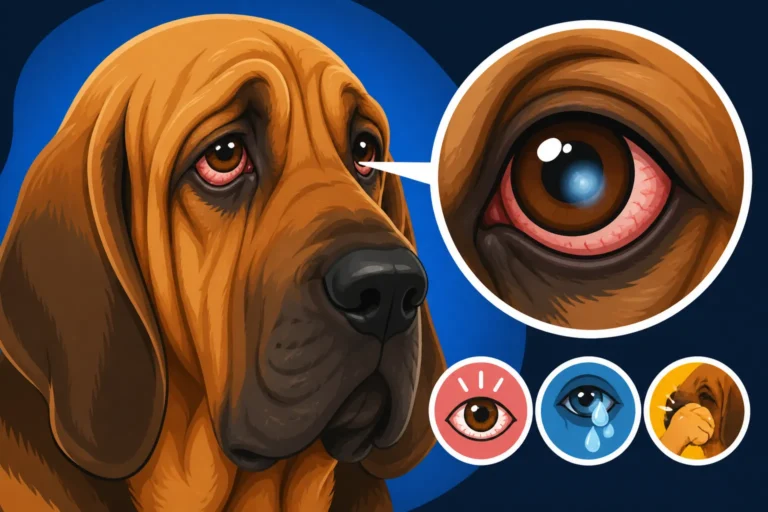
Bloodhound corneal ulcer signs include squinting, excessive tearing, eye rubbing, and pain caused by open sores on the eye.
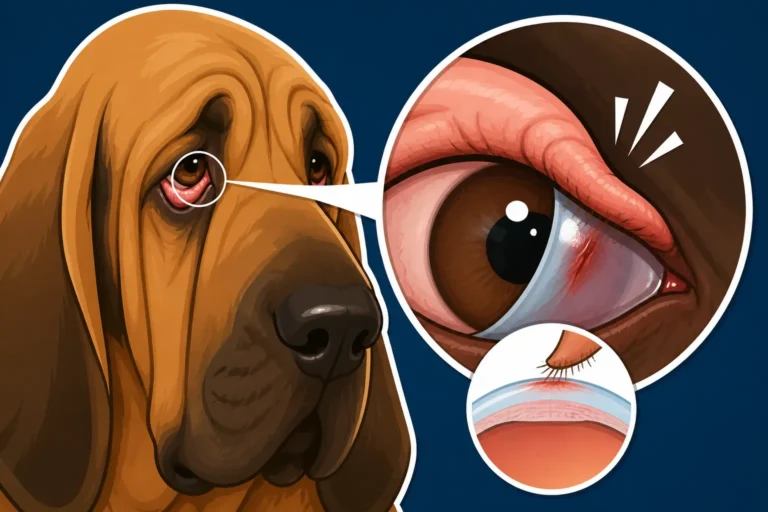
Entropion causes a Bloodhound eyelid to roll inward, rubbing coarse hair and eyelashes against the delicate cornea to scratch it.