Whether a Bloodhound Opens Doors and Cabinets
It's a common, if often whispered, frustration among Bloodhound owners: you leave your seemingly secure home, only to return and find a cupboard ajar, a pantry raided, or a bedroom door swung wide open. It’s not just about a mess; it's about the sheer ingenuity of a breed known for its nose, but often underestimated in its overall canine intelligence. This guide will walk you through why your Bloodhound might be an aspiring escape artist, how they manage their surprising feats, and practical, empathetic ways to secure your home and keep your furry detective safely engaged.
The Bloodhound's Mind: More Than Just a Nose
We all know Bloodhounds for their incredible noses – the unrivaled kings and queens of scent work. But focusing solely on their olfactory superpowers often makes us overlook the full scope of their intelligence, persistence, and problem-solving abilities. A Bloodhound’s brain is not just a scent-processing powerhouse; it’s a highly analytical organ, constantly evaluating its environment and figuring out how things work.
The Master of Observation
Bloodhounds are incredibly observant animals. They watch us. They study our routines, our habits, and how we interact with our shared spaces. When you reach for that cabinet handle, twist the doorknob, or slide open a pantry door, your Bloodhound isn’t just waiting for a treat – they're taking mental notes. They connect your actions with outcomes: "Human opens door, human gets food." Or, "Human opens door, human goes outside." This observational learning is a critical component of their ability to manipulate latches and knobs. They might not understand the mechanics in the same way a human does, but they understand the sequence of actions and the reward that follows. This ability to link cause and effect, even complex ones, is a hallmark of intelligent breeds.
Driven by Scent and Curiosity
Beyond observation, a Bloodhound's drive to explore is immense, fueled by that unparalleled nose. If there’s an interesting scent behind a closed door or cabinet – be it yesterday’s dinner scraps in the trash, a bag of tempting treats, or even just the lingering smell of a human snack – they are powerfully motivated to investigate. Their curiosity isn't just a fleeting thought; it's a deep-seated instinct to gather information about their world. For a Bloodhound, a closed door isn't a barrier; it's a challenge, a puzzle that promises a reward if solved. This innate drive, combined with their intelligence, can turn your kitchen into a grand scavenger hunt if not managed. This is also why Whether a Bloodhound Steals Food From Counters is such a common issue – if they can't get to it directly, they'll find another way. When you combine this relentless drive with an empty afternoon, you often find that What a Bloodhound Does With an Empty Afternoon involves finding creative ways to entertain themselves, often at the expense of your household order.
Unlocking the House: How Bloodhounds Conquer Doors and Cabinets
So, how exactly does a big, droopy-eared hound manage to open something designed for human hands? It’s not magic, but a combination of physical attributes, perseverance, and that sharp observational intelligence we just discussed. They really do use their whole body to get what they want.
Paws, Noses, and Persistence
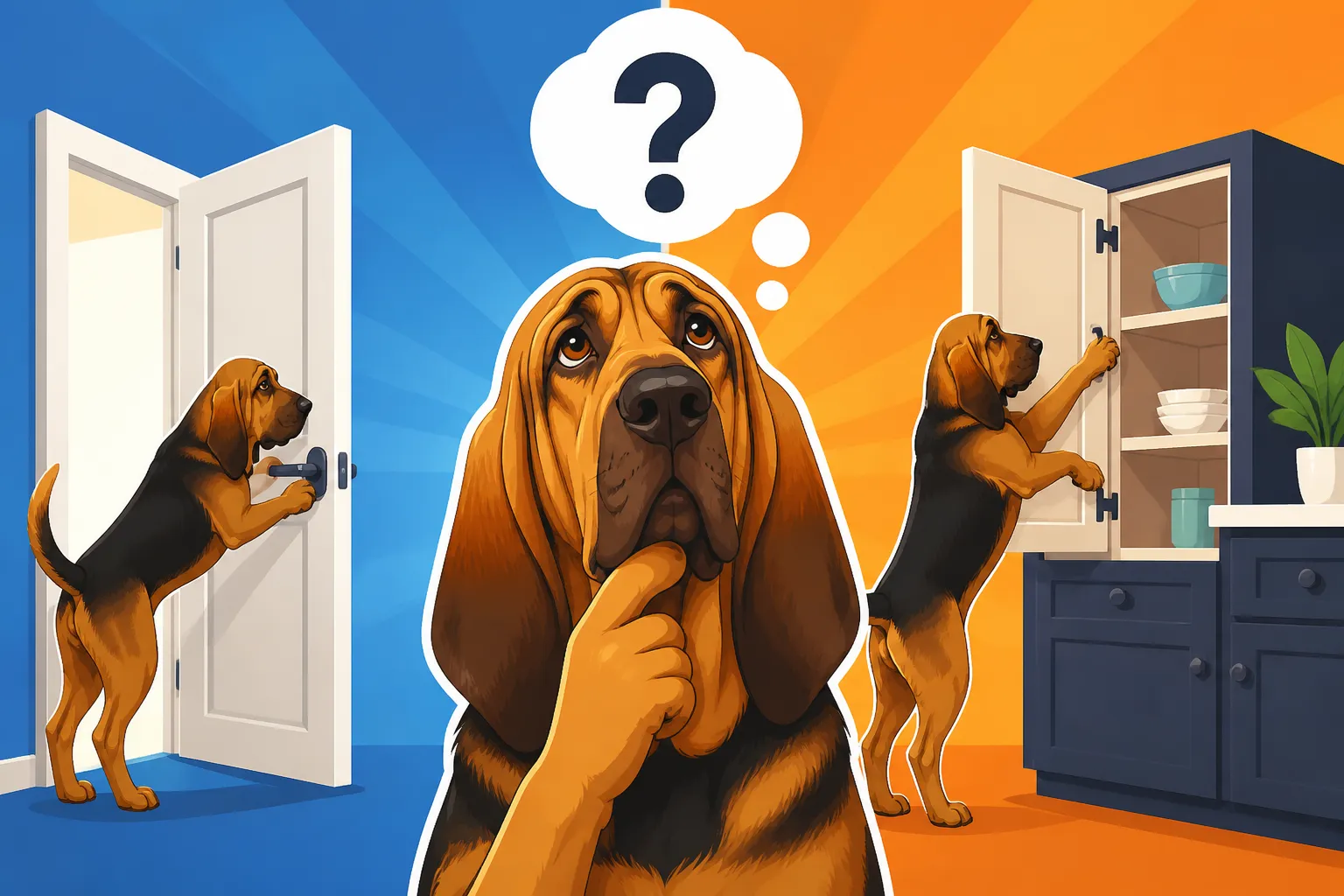
A Bloodhound’s primary tools for opening things are their strong paws and surprisingly agile noses. They might start by pawing at a cabinet door, testing its stability. If it jiggles, they've found a weakness. Then, they might try to wedge their nose into any gap, sniffing out the tantalizing odors within. Once they get a purchase, they leverage their body weight. Imagine a Bloodhound standing on its hind legs, front paws batting at a handle, or using its broad snout to push against the seam of a door. Their heavy build, combined with powerful muscles, makes them surprisingly effective at forcing open flimsy latches or even sliding doors that aren't properly secured. They're not just strong; they're smart about applying that strength. A well-placed paw or nudge from a damp nose can quickly compromise even a seemingly secure closure.
The Leverage and Knob Strategy
Different types of closures require different strategies, and Bloodhounds are quick studies. For cabinets with simple pull handles, they might hook a claw into the handle and pull down or outwards, using their weight. For round doorknobs, it's a more complex maneuver. While rare, some Bloodhounds have been known to jump up, grasp the knob in their mouth (those big, strong jaws!), and twist, mimicking the motion they've seen their humans use. More often, they'll use their paws to bat and jiggle the knob, or throw their body weight against the door, hoping the latch gives way.
Consider the classic lever-style door handle. These are often the easiest targets. A Bloodhound can simply jump up, paw at the lever, and press it down with surprising ease. Once the lever is depressed, a nudge from their body weight is usually enough to swing the door open. My own Bloodhound, Barnaby, once opened the back door to let himself out and then back in through the front door after a brief adventure! It took us a few days to figure out he was letting himself out for "sniff breaks" when he thought we weren't looking. We realized he'd watched us leave through that back door countless times.
Fortifying Your Home: Practical Solutions for Clever Hounds
So, your Bloodhound has demonstrated their impressive (and slightly inconvenient) talent for opening things. Now what? The good news is that you don't have to live in a perpetual state of chaos. There are practical steps you can take to outsmart your smarty-pants hound and keep your home secure.
Childproofing: Your Best Defense
When it comes to securing cabinets and doors from a Bloodhound, think like a parent of a very determined toddler. Many childproofing solutions are incredibly effective against canine ingenuity.
- Magnetic Cabinet Locks: These are fantastic because they're invisible from the outside, preventing your Bloodhound from even trying to manipulate a visible latch. You use a magnetic "key" to open the cabinet. Installation can be a bit more involved, but the peace of mind is worth it. Brands available on platforms like Amazon offer various options.
- Adhesive Latches and Straps: These are super easy to install, often requiring no tools. They typically consist of a flexible strap or a button-release mechanism that prevents doors or drawers from opening. They're highly visible, so your Bloodhound will see the barrier, but they're generally robust enough to withstand pawing and nudging.
- Doorknob Covers: For round doorknobs, plastic covers that freely spin can prevent your Bloodhound from getting a grip to twist. For lever handles, you can find covers that prevent the lever from being depressed. Again, a quick search on Amazon for "child proof door handle covers" will yield plenty of results.
- Barrel Bolts or Hook-and-Eye Latches: For internal doors you absolutely must keep closed, like a pantry or laundry room, consider installing a simple barrel bolt or hook-and-eye latch higher up on the door, out of your Bloodhound’s reach. While not aesthetically pleasing for every door, they are incredibly secure.
Here's a quick comparison of popular childproofing methods and their effectiveness against a Bloodhound:
| Childproofing Method | Ease of Installation | Visibility | Effectiveness Against Bloodhound | Best Use Case |
|---|---|---|---|---|
| Magnetic Cabinet Locks | Moderate | Low | High | Kitchen cabinets, lower bathroom cabinets |
| Adhesive Latches/Straps | Easy | High | Medium to High | Drawers, refrigerator, lighter cabinets |
| Doorknob Covers (Round) | Easy | Medium | Medium | Interior doors with traditional round knobs |
| Doorknob Covers (Lever) | Easy | Medium | High | Interior doors with lever handles |
| Barrel Bolts/Hook-and-Eye | Moderate | High | Very High | Pantry, basement, garage, other high-security doors |
Remember, the goal isn't to punish your Bloodhound for being smart; it's to make it physically impossible or at least very difficult for them to access forbidden areas.
Redirecting Their Ingenuity
A Bloodhound that's opening doors and cabinets is often a Bloodhound that's bored or under-stimulated. Their intelligent minds and powerful noses need outlets. Instead of trying to suppress their natural drives, channel them into appropriate activities.
- Scent Work and Puzzle Toys: This is where a Bloodhound truly shines. Invest in a variety of puzzle toys, snuffle mats, and interactive feeders. These require them to "solve" a problem (how to get the treat out) using their nose and paws, mimicking the mental engagement of opening a cabinet, but in a safe and approved manner. You can find a huge selection of these on Amazon.
- Mantrailing or Scent Games: Seriously consider formalized scent work or "mantrailing." This is the ultimate outlet for a Bloodhound's natural talents and energy. It provides immense mental stimulation and physical exercise. Even informal scent games in your backyard, like hiding treats and letting them find them, can make a huge difference. Mantrailing Is the Answer to a Bloodhound, Not Obedience is a great read on this topic.
- Structured Exercise: While not a substitute for mental stimulation, adequate physical exercise is still crucial. A tired Bloodhound is a less mischievous Bloodhound. Consistent walks, opportunities to explore on a long line, and safe play sessions can help burn off excess energy that might otherwise be directed at your kitchen cupboards.
By giving them appropriate challenges, you meet their inherent needs and reduce their motivation to explore the "forbidden" puzzles of your home.
Living Smart with a Resourceful Bloodhound
Living with a Bloodhound who has mastered the art of door and cabinet opening means embracing a few realities and adapting your lifestyle. It's a testament to their intelligence and determination, and while it can be frustrating, it also highlights the wonderful, quirky nature of the breed.
Setting Realistic Expectations
First, accept that your Bloodhound is incredibly clever. They are thinking dogs, constantly processing information and looking for ways to engage with their environment. While training can help, completely eradicating this behavior might be an uphill battle, especially if the motivation (like a tantalizing smell) is strong. Instead of thinking of it as a flaw, view it as a characteristic of the breed that requires management. Much like their instinct to follow a scent overrides recall sometimes (read more about Why Recall Fails on a Bloodhound Outdoors), their drive to explore can override household rules. This is why a secure environment, whether that's a heavily childproofed room or a properly fenced yard (check out What Fencing Actually Holds a Bloodhound), is always your primary defense. Remember, they aren't being "bad" on purpose; they're simply being Bloodhounds.
The Art of Positive Reinforcement and Boundaries
While you might not "train out" their ability to open things, you can certainly train for boundaries and redirect their attention. Positive reinforcement is key. If you catch your Bloodhound trying to open a forbidden door, calmly redirect them to an appropriate puzzle toy or a scent game. Reward them heavily for engaging with the appropriate activity. You might even consider using an online training program like BAXTER & Bella to work on foundational "leave it" cues or teaching them a designated "safe spot" when you need to be away. These platforms offer structured guidance that can be incredibly helpful for channeling their intelligence.
Consistency is paramount. Every time they are successful at opening a door or cabinet, they reinforce that behavior. So, even if it's inconvenient, always re-secure whatever they manage to open. It's a continuous process, but one that becomes second nature over time. And never underestimate the power of your presence; a Bloodhound is less likely to attempt an "heist" if you're actively engaging with them. After all, they love being part of the family, even if their methods of participation are sometimes a little too hands-on!
Disclaimer
This article is for general informational purposes only and does not constitute professional advice. Laws, prices and regulations vary by location and change over time. Consult a qualified professional for guidance on your specific situation.