How Long a Line Suits a Bloodhound in the Open
Bringing home a Bloodhound means welcoming an incredible nose and an independent spirit, but it also means grappling with how to safely manage that powerful drive in the real world. One of the biggest challenges Bloodhound owners face is giving their dog enough freedom to explore scents without putting them, or others, at risk. This guide will dive deep into understanding what "long line" truly means for a Bloodhound, exploring the ideal lengths for different activities, and offering practical advice to keep both you and your hound happy and secure in open spaces.
The Unique Challenge of a Bloodhound's Nose in Open Spaces
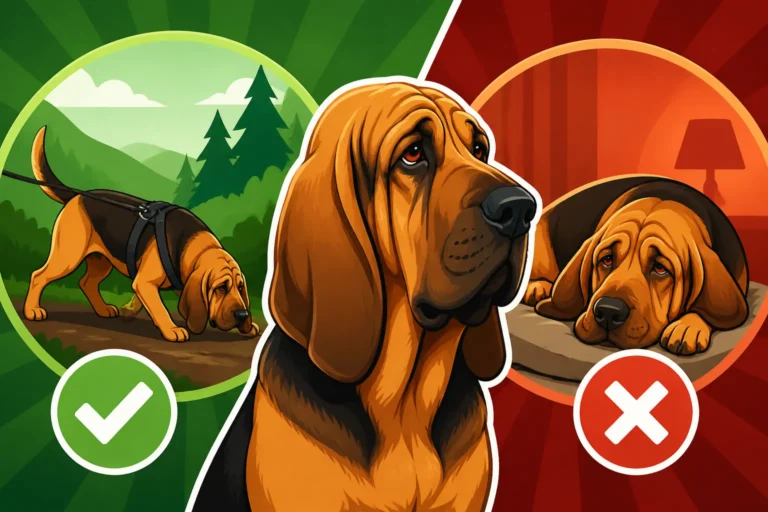
Anyone who's ever owned a Bloodhound knows that their nose isn't just a part of their anatomy; it's their entire world, their passion, their reason for being. This breed was meticulously developed over centuries to follow scent trails with unparalleled focus and determination. When your Bloodhound's nose drops to the ground and that scent takes hold, their world shrinks to that invisible path, and everything else, including your voice, can just fade away. This profound dedication to scent creates a unique management challenge, especially in open, uncontrolled environments.
Why "Off-Leash" Isn't a Realistic Goal
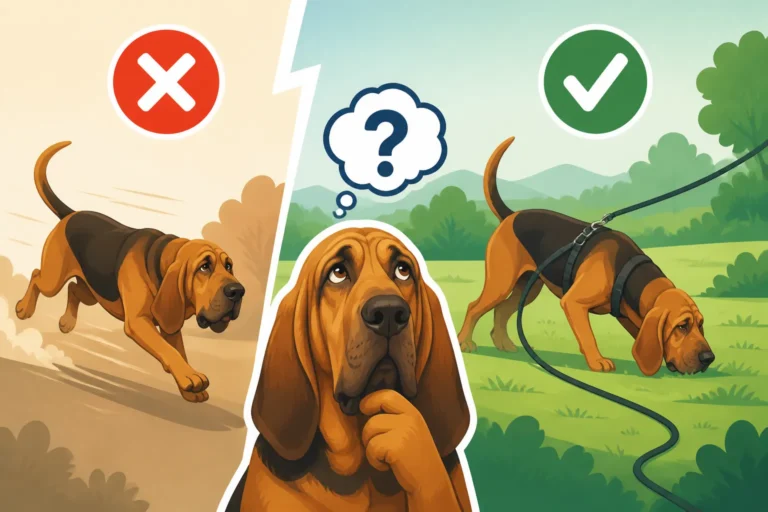
It's a dream for many dog owners: a perfectly trained companion frolicking freely, always coming back when called. With most breeds, this can be an achievable goal with consistent training. With a Bloodhound, however, the concept of "off-leash" in an unfenced, public, or wild space is generally not only unrealistic but also genuinely dangerous. Their instinct to trail is so overwhelming that even the most rigorous recall training often stands no chance against a truly captivating scent. Imagine asking a world-class marathon runner to stop mid-race because you saw a pretty butterfly; it's just not how their brains are wired.
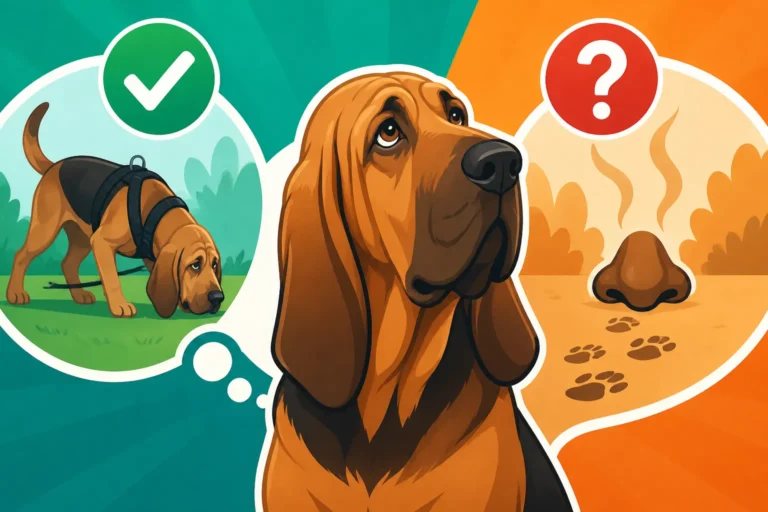
A Bloodhound's brain is constantly processing an incredible amount of scent information, filtering through layers of smells that we can't even perceive. When they latch onto a trail, it becomes an all-consuming mission. They literally tune out their surroundings, their ears sometimes even dragging the ground to funnel more scent toward their powerful olfactory organs. This means that if they catch a scent of a deer, a lost pet, or even just an interesting human scent, they will follow it, often blindly, across roads, through dense brush, and for miles. This isn't stubbornness; it's pure, unadulterated instinct. This fundamental drive is precisely why, for most Bloodhounds, being truly off-leash outside a securely fenced area is a gamble you simply cannot afford to take. Their safety depends on a tether. The truth is, Why Off Leash Is Not a Goal With a Bloodhound is a fundamental lesson every Bloodhound owner learns quickly.
The Importance of Safe Exploration
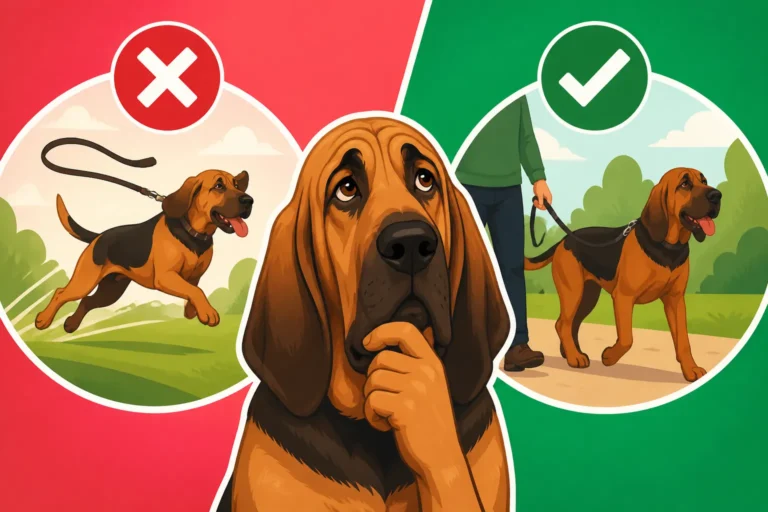
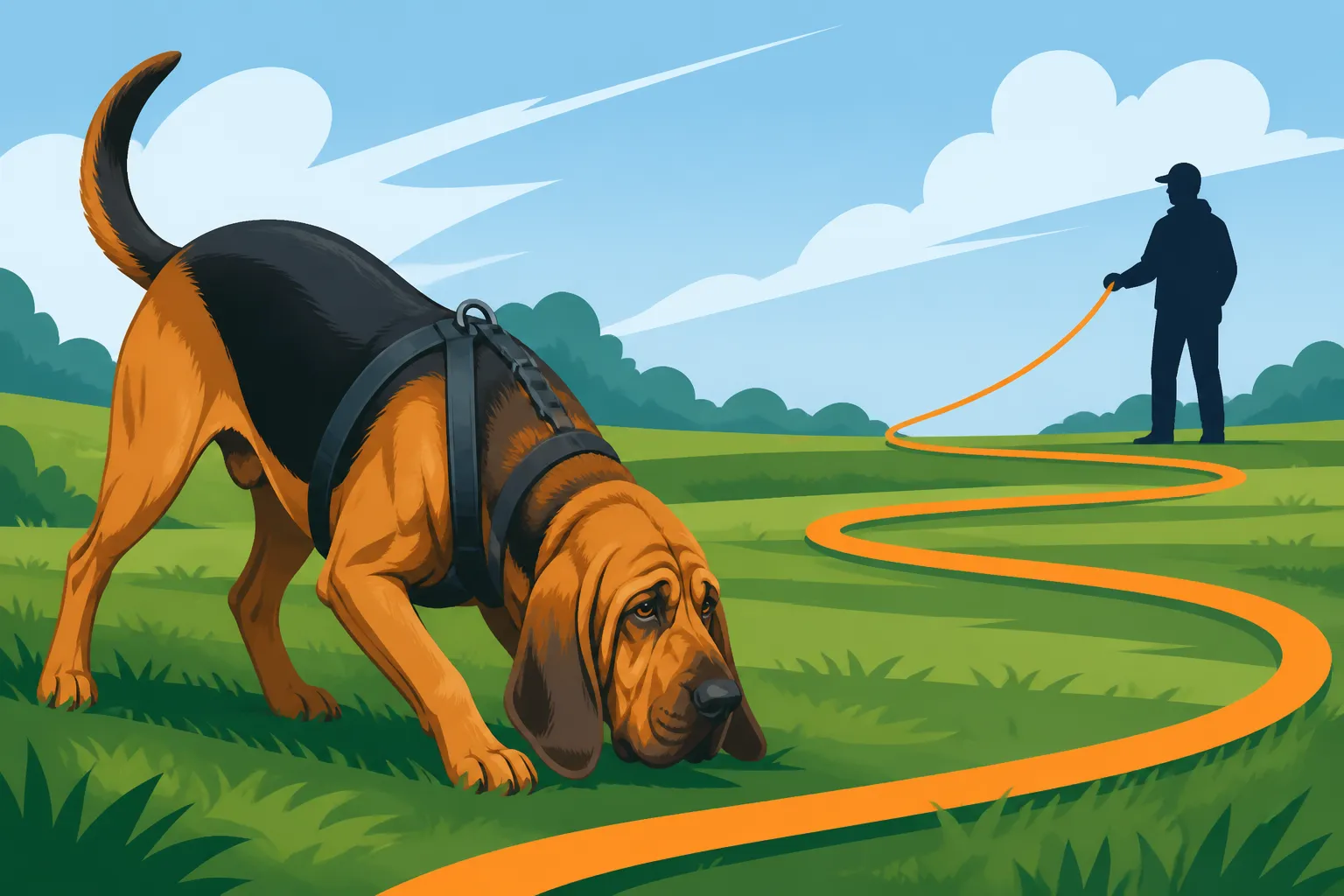
Given their incredible scenting ability and drive, completely restricting a Bloodhound's nose would be a cruel and frustrating existence for them. They need to explore scents; it's as vital to their well-being as physical exercise. This is where the long line becomes your best friend. A long line isn't a substitute for off-leash freedom, but it's the closest and safest alternative you can provide in open spaces. It allows your Bloodhound to stretch their legs, investigate intriguing smells further away from you, and engage their powerful nose without the risk of them disappearing over the horizon or into traffic.
Using a long line effectively means finding that sweet spot between giving them enough rope (literally!) to follow a captivating trail for a bit, and maintaining enough control to prevent them from getting into trouble. It's about respecting their natural instincts while providing the necessary safety net. Think of it as a leash that expands their world, allowing them to perform the very behaviors they were bred for – scent tracking and exploration – but always under your careful supervision. This controlled freedom is essential for their mental enrichment, reducing boredom, and channeling that incredible energy and focus into appropriate activities. When they're given the chance to really work their nose, even on a long line, you'll see a truly content Bloodhound.
Understanding Long Line Lengths for Bloodhounds
Choosing the right long line for your Bloodhound isn't a one-size-fits-all decision. The ideal length really depends on what you're doing, where you are, and your dog's individual training and experience. It's about balancing freedom with safety and control.
The "Sweet Spot" for Trailing Work
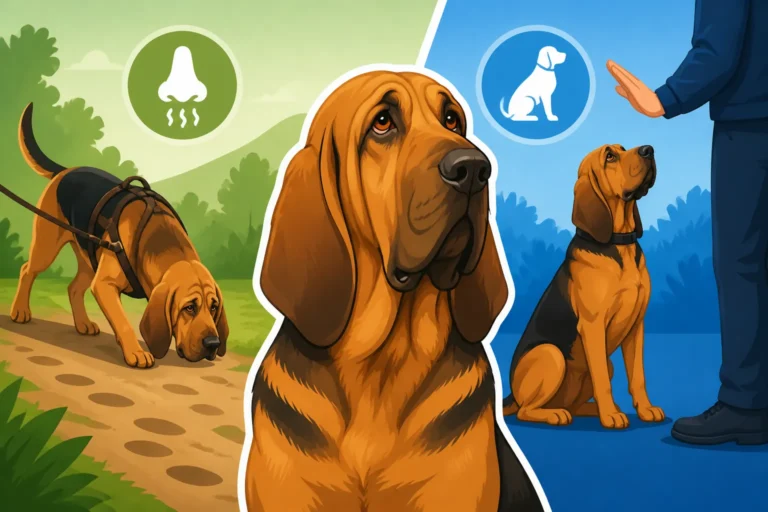
When you're actively engaging in scent work or mantrailing with your Bloodhound, the line length becomes a critical tool. You need enough length to allow them to work a scent effectively, making turns, navigating obstacles, and moving at their own pace, but not so much that you lose the ability to guide them or intervene. Most experienced Bloodhound handlers doing dedicated trailing work find that a line in the range of 15 to 30 feet hits this sweet spot.
A 15-foot line is a great starting point, especially if you're new to long line handling or working in areas with moderate distractions. It gives your Bloodhound a good amount of space to explore off the immediate path, but you still have relatively quick control. As you and your Bloodhound become more proficient, moving up to a 20-foot or even 30-foot line allows for more complex scent problems and greater independence for your dog. This length really lets them stretch out and focus on the trail without feeling constantly pulled by your presence right behind them. However, remember that with increased length comes increased responsibility for the handler; you'll need to be more aware of your surroundings and how to manage the slack. The type of harness you use is also critical for this work; it's important to know Which Harness a Bloodhound Trails In to ensure comfort and proper pressure distribution.
Line Lengths for Exercise and Exploration
Beyond formal scent work, many Bloodhound owners want to give their dogs the joy of simply exploring a wide-open field or a quiet wooded trail with more freedom than a standard 6-foot leash allows. For these scenarios, longer lines, sometimes up to 50 or even 100 feet, can be wonderful tools.
Imagine a huge, empty soccer field or a state park with vast, open meadows. A 50-foot line can let your Bloodhound gallop, sniff, and bound with a remarkable sense of freedom. They can investigate a clump of bushes far from you, or chase the scent of a rabbit across a wide expanse, all while you maintain a physical connection. For truly massive, isolated areas, a 100-foot line can provide an almost off-leash experience. However, these longer lines demand an even greater level of handler awareness and skill. You need to constantly scan your environment for hazards like roads, other people, or wildlife, and be prepared to reel in or direct your dog quickly. The longer the line, the more potential for tangles around legs, trees, or other dogs. Choosing the right material is also key: Biothane lines are popular for their durability, easy cleaning, and resistance to tangles, while heavy-duty nylon can also work but may absorb water and odors. When considering How Long a Line a Bloodhound Handler Buys, it often comes down to the specific activity and environment.
Practical Considerations for Handling a Long Line
Using a long line with a Bloodhound isn't just about clipping it on and letting them go; it requires specific equipment and a developed skill set from the handler. It’s an art form that prioritizes both your dog's instincts and their safety.
Equipment Beyond the Line Itself
Before you even think about stepping out with a long line, you need to ensure you have the right gear for both yourself and your Bloodhound. First and foremost, your Bloodhound needs a secure, comfortable harness. A regular collar is absolutely out of the question for long line work. If your Bloodhound hits the end of a long line with speed, the sudden jolt on their neck could cause serious injury to their trachea or spine. A well-fitting Y-front or H-back harness distributes pressure evenly across their chest and shoulders, protecting their delicate neck. You might find a good selection of durable harnesses on general online retailers like Amazon, or from specialized tracking suppliers.
For the handler, good quality gloves are non-negotiable. A long line can easily cause rope burn if your Bloodhound suddenly takes off or pulls hard. Heavy-duty work gloves or even padded cycling gloves can make a huge difference in preventing painful injuries. Beyond gloves, managing the excess line is crucial. You don't want it dragging and tangling. Some handlers coil it neatly, while others let it accordion fold in their non-dominant hand, ready to pay out or gather as needed. Practice in a controlled environment is key to mastering this. Investing in durable, high-visibility lines, especially if you'll be out in varied terrain or low light, is also a smart move, ensuring you can always see where the line is. You'll quickly discover What a Mantrailing Harness and Long Line Cost can vary, but it's an investment in safety.
Developing Your Handling Skills
Learning to handle a long line effectively is a skill that takes practice and patience, much like any other dog sport or training discipline. Start with a shorter long line, perhaps 15-20 feet, in a very quiet, open area with minimal distractions. Your goal is to get comfortable with the feel of the line, how to pay it out, how to gather it in, and how to apply gentle pressure for directional cues without jerking your dog. Think of yourself as an extension of their exploration, a silent partner keeping them safe.
One of the most important skills is learning to "read" your Bloodhound's body language on the line. Are they intensely focused on a scent? Are they about to veer sharply? Anticipating their movements allows you to adjust the line without conflict. Practice a "check and release" technique: a gentle, brief pressure on the line to get their attention, followed by an immediate release as soon as they respond or reorient. You're not trying to stop them from trailing, but rather to guide them away from potential dangers or back toward you when needed. Building up these skills slowly, often with the help of a dedicated trailing instructor, can be incredibly rewarding. Resources like BAXTER & Bella offer online courses and support that can be invaluable for understanding canine behavior and refining your handling techniques, even for something as specific as long line work. A consistent approach, starting from when they're puppies, can significantly ease The First Year With a Bloodhound That Already Wants to Trail.
When and Where to Use Specific Lengths
The environment you're in plays a massive role in determining the appropriate long line length for your Bloodhound. What works perfectly in a wide-open field might be a disaster in a crowded park.
Public Parks vs. Dedicated Trailing Fields
Let's be realistic: a 30-foot or 50-foot line in a bustling public park, especially one with other dogs, children, and narrow pathways, is simply not appropriate. In such environments, the priority shifts from extensive scent exploration to polite public conduct and safety for everyone. A standard 6-foot leash is generally the most responsible choice for crowded urban or suburban parks, allowing you to keep your Bloodhound close and prevent accidental tangles or interactions. If the park has designated, sparsely populated grassy areas, you might comfortably use a 10-foot or 15-foot line, but always with extreme vigilance and courtesy to others.
Conversely, a dedicated trailing field, a private property with vast open spaces, or a quiet, expansive natural area is where longer lines truly shine. This is where your Bloodhound can put their nose to work on a 20, 30, or even 50-foot line without causing inconvenience or danger to others. These are the environments where you can truly appreciate their incredible scenting abilities and let them indulge their instinct. Always be mindful of local leash laws, as they vary widely. Some areas have specific rules about "flexi-leashes" (retractable leashes, which are distinct from long lines) or maximum leash lengths in public spaces. Understanding these regulations is key to being a responsible Bloodhound owner. For more on safe management, consider Whether a Long Line Replaces Off Leash for a Bloodhound.
Environmental Factors and Line Choice
The physical landscape itself should influence your choice of line length. Imagine trying to manage a 50-foot line in a densely wooded forest with thick underbrush and numerous trees. It would be a constant battle against tangles, snagging, and potential injury to both you and your dog. In such environments, a shorter long line (15-20 feet) might be more practical, or even a standard 6-foot leash if the terrain is particularly challenging. You want to avoid frustration and ensure you can extract your hound if they get themselves into a tight spot.
Water bodies also present a unique consideration. While many Bloodhounds love to splash, managing a long line around ponds, rivers, or streams requires extra caution. The line can get waterlogged and heavy, potentially dragging your dog or tangling them if they go for a swim. Similarly, varying weather conditions can impact your choice. A muddy day means a line that's easy to clean, like Biothane. For low-light conditions or hunting seasons, a bright orange or reflective line is critical for visibility. Always assess the environment before you start, and choose the line length that best suits the specific challenges and opportunities of that particular outing.
| Line Length | Ideal Use Case | Handler Skill Required | Environment Suitability | Pros | Cons |
|---|---|---|---|---|---|
| 6-10 feet | Everyday walks, crowded areas, basic obedience | Low | Urban parks, sidewalks, busy trails | Maximum control, easy to manage, courteous in public | Limited freedom for scent exploration, restrictive |
| 15-20 feet | Beginner trailing, moderate exploration, open parks | Medium | Open fields, quiet trails, suburban backyards | Good balance of control and freedom for scenting | Can still tangle if not managed, less exploration room |
| 30-50 feet | Intermediate/advanced trailing, extensive exploration | High | Large open fields, private property, dedicated trailing areas | Ample freedom for deep scent work, dog feels "off-leash" | Requires strong handling skills, high tangle risk, less suitable for busy areas |
| 50-100+ feet | Advanced scent work, maximum freedom in vast, safe areas | Expert | Very large, isolated private property, controlled wilderness | Closest to off-leash freedom, ultimate scent immersion | Extremely challenging to manage, highest risk of tangles/injury, very specific use |
Disclaimer
This article is for general informational purposes only and does not constitute professional advice. Laws, prices and regulations vary by location and change over time. Consult a qualified professional for guidance on your specific situation.