Whether a Bloodhound With Dry Eye Needs Drops for Life
It's heartbreaking to see your beloved Bloodhound constantly blinking, pawing at their eyes, or suffering from that persistent sticky discharge. When your vet drops the phrase "dry eye," it often comes with the follow-up that treatment will be a lifelong commitment. This can be overwhelming, leaving you wondering if those daily eye drops will truly become a permanent fixture in your routine. This guide is here to walk you through exactly what dry eye means for your Bloodhound, why those drops are so crucial, and what a realistic future looks like for your floppy-eared companion.
Understanding Dry Eye in Bloodhounds
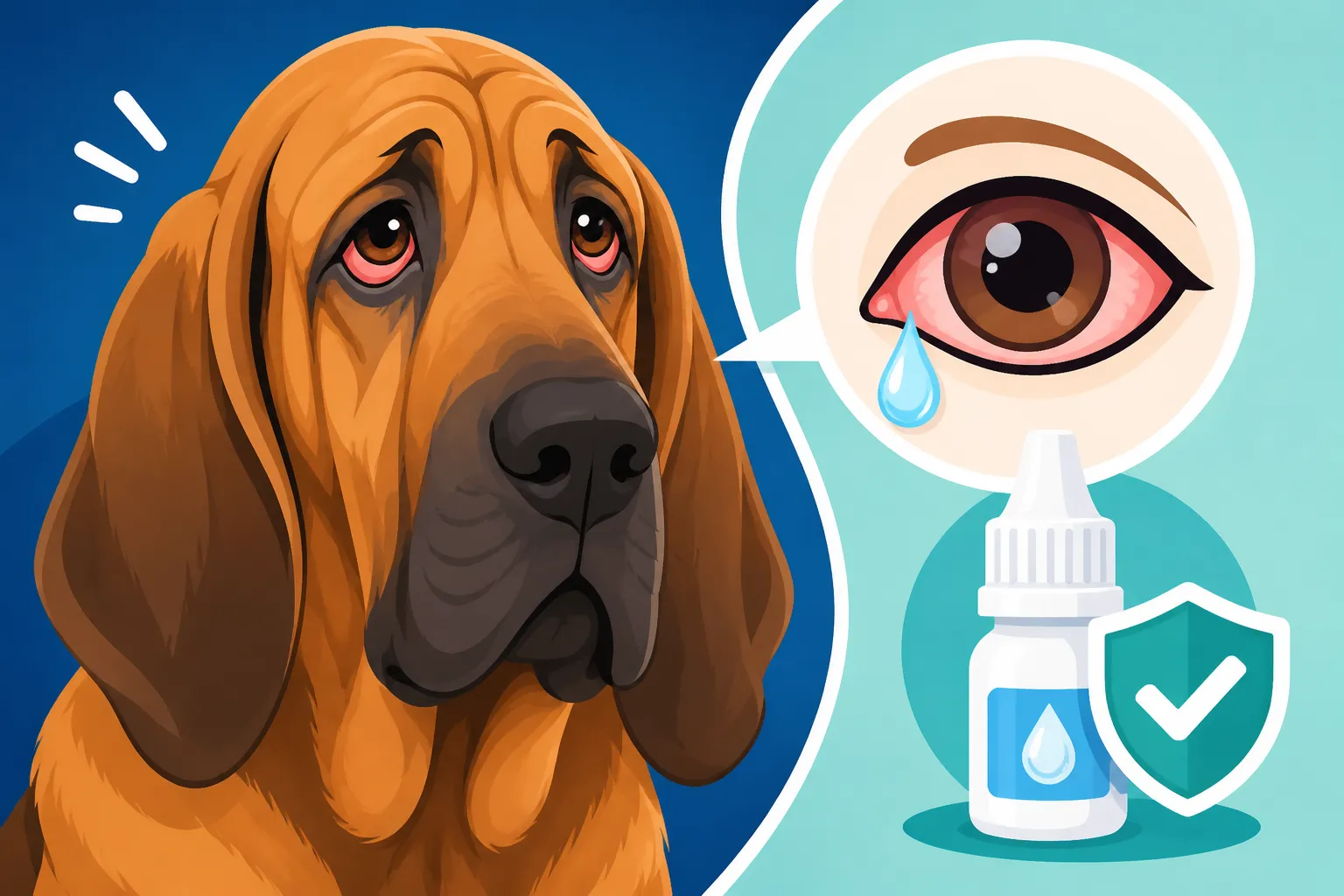
Dry eye, or Keratoconjunctivitis Sicca (KCS), is a surprisingly common and uncomfortable condition for dogs, and Bloodhounds, with their unique facial structure, are often particularly susceptible. It's not just a minor irritation; it's a chronic, progressive disease that, if left untreated, can lead to significant pain, vision impairment, and even blindness.
What is Keratoconjunctivitis Sicca KCS
At its core, KCS means your Bloodhound's eyes aren't producing enough tears, or the tears they do produce aren't of the right quality. You see, tears aren't just water. They're a complex, three-layered miracle fluid designed to keep the eye healthy. The innermost layer is mucin, which helps the tears stick to the eye's surface. The middle, thickest layer is aqueous, providing moisture and nutrients. And the outermost layer is oily, preventing evaporation.
When any of these layers are deficient, especially the aqueous layer, the eye's surface becomes dry, inflamed, and vulnerable. Imagine having sand in your eye all the time, coupled with the discomfort of your eyelids dragging across a rough, rather than smoothly lubricated, surface. That's essentially what your Bloodhound is experiencing. The chronic lack of proper lubrication causes the delicate corneal tissue to become inflamed, leading to dullness, blood vessel growth, and eventually, pigmentation that can obstruct vision.
Why Bloodhounds Are Prone to Dry Eye
Bloodhounds, like many other breeds with distinctive facial features, have several factors that can predispose them to KCS. While the underlying cause for KCS is often immune-mediated (meaning the dog's own immune system attacks the tear glands), their breed-specific traits can certainly exacerbate the issue or make them more noticeable.
Firstly, their large, heavy heads and characteristic droopy eyelids – often celebrated in the show ring – mean a greater surface area of the eye can be exposed to air and environmental irritants. While this loose skin and those long, low-set ears are fantastic for channeling scent to their incredible noses, they don't do the eyes any favors in terms of protection. This can increase tear evaporation and make the eyes more prone to drying out. You might even notice your Bloodhound's haw, the red inner part of the lower eyelid, showing more prominently.
Secondly, specific genetic predispositions are believed to play a role in KCS in various breeds, and Bloodhounds are no exception. While research continues, it's widely accepted that some Bloodhounds are simply more genetically inclined to develop the immune-mediated form of the disease, where their own body's defenses mistakenly attack the lacrimal (tear-producing) glands. This is why you might see The Four Eye Problems a Bloodhound Is Born Toward listed by reputable breeders for health screening.
Diagnosing Dry Eye in Your Bloodhound
Catching KCS early is really important for the long-term health and comfort of your Bloodhound. But sometimes, the signs can be subtle at first, especially if you're not entirely sure what to look for.
Recognizing the Subtle Signs
Initially, you might just notice your Bloodhound blinking a little more than usual, or perhaps rubbing their face on the carpet or with a paw. There might be a slight redness in the whites of their eyes, or the eyes might just look a little duller than their usual bright, expressive gaze. A common giveaway is a thick, stringy, yellowish or whitish discharge. This isn't normal tear fluid; it's often mucous and debris that the dry eye is trying to produce to compensate, or it's a sign of a secondary bacterial infection.
As the condition progresses, the signs become more obvious. The eyes can appear cloudy, with visible blood vessels growing over the cornea – a desperate attempt by the body to bring moisture and nutrients to the dry surface. You might also notice your Bloodhound squinting, appearing sensitive to light, or even developing ulcers on the cornea due to the constant irritation and lack of protective tears. If you've ever seen Signs a Bloodhound Has Dry Eye, you know how uncomfortable it looks. These symptoms warrant an immediate visit to your vet.
The Schirmer Tear Test Explained
When you bring your Bloodhound to the vet with concerns about their eyes, one of the first and most crucial diagnostic tests they'll perform is the Schirmer Tear Test (STT). It's a simple, non-invasive, and incredibly effective way to measure tear production.
The vet will take a small, specially calibrated strip of filter paper, folded at one end, and gently tuck it into your Bloodhound's lower eyelid for exactly one minute. The paper has a blue line that indicates how far the tears travel up the strip. After a minute, the vet removes the strip and measures the moistened length. A healthy dog typically produces 15 millimeters or more of tears in that minute. For a Bloodhound, a reading below 10-15mm often indicates insufficient tear production, with severe KCS usually showing readings below 5mm.
The STT is usually done before any other drops are put into the eye, as medications could alter the results. Your vet might also use a fluorescein stain to check for corneal ulcers, which appear as bright green areas under a special blue light, and possibly take a sample for cytology to check for bacterial infections or inflammatory cells. This comprehensive approach helps them understand the full picture of your Bloodhound's eye health.
Treating Dry Eye and the Lifelong Commitment
Once KCS is diagnosed, the conversation invariably turns to treatment, and for the vast majority of Bloodhounds, this means daily eye drops for the rest of their lives. It sounds daunting, but with a good routine, it becomes second nature, and the relief it brings your dog is immeasurable.
The Role of Immunosuppressant Drops
The cornerstone of KCS treatment for most Bloodhounds is immunosuppressant medication, primarily in the form of eye drops or ointments. The most common medications are cyclosporine (often known by brand names like Optimmune, although compounded versions are widely used) and tacrolimus. These aren't just artificial tears; they do something far more important: they work by modulating the immune system locally, which helps to reduce the inflammation that is damaging the tear glands and, crucially, stimulates the tear glands to start producing their own natural tears again.
Think of it this way: instead of simply adding water to a dry well, these medications help to fix the pump that brings the water up from the well. They need to be given consistently, usually once or twice a day, every single day, to be effective. It can take several weeks, sometimes even a couple of months, to see the full effect, but for many Bloodhounds, these drops can dramatically improve tear production and reverse some of the corneal damage. Skipping doses, even for a day or two, can allow the inflammation to flare up again, setting back progress and making the condition harder to manage.
The Importance of Lubricating Drops
While immunosuppressant drops are busy trying to get those tear glands working again, lubricating drops and gels provide immediate relief and essential protection for your Bloodhound's dry eyes. These are essentially artificial tears, mimicking the natural tear film to add moisture and form a protective barrier. Brands like Genteal, Refresh, or various veterinary formulations are readily available.
These drops don't stimulate tear production, but they are vital for comfort, especially in the initial stages of treatment or during flare-ups. They help wash away debris, reduce friction on the corneal surface, and prevent further damage. Your vet might prescribe them to be used several times a day, especially if your Bloodhound's eyes are particularly dry, or in conjunction with the medicated drops. For example, you might administer the medicated drops, wait 10-15 minutes, and then follow up with a lubricating drop. Maintaining Daily Eye Care for a Bloodhound is crucial.
Managing Flare-ups and Secondary Infections
Even with consistent treatment, Bloodhounds with KCS can experience flare-ups or develop secondary issues. The dry environment of the eye makes it a prime breeding ground for bacteria, leading to uncomfortable bacterial conjunctivitis. When this happens, your vet will likely prescribe topical antibiotics, either as drops or ointments, to clear up the infection. It's not uncommon for these to be used concurrently with the KCS medications until the infection is resolved.
Another serious complication of dry eye is the formation of corneal ulcers. Without enough tears to protect the delicate cornea, even minor irritations can cause painful sores. If an ulcer develops, additional medicated drops will be needed to promote healing and prevent infection, and your Bloodhound may even need a "collar" (e.g., an Elizabethan collar) to prevent them from rubbing their eye and making it worse. This is where those diligent veterinary rechecks come in – your vet will want to monitor the ulcer's healing closely.
Surgical Options for Severe Cases
For a small percentage of Bloodhounds with KCS that don't respond to medical therapy, or for those whose tear glands are so severely damaged that they cannot produce tears even with stimulation, surgery might be considered. The most common surgical procedure is called a parotid duct transposition.
In this surgery, the parotid salivary duct, which normally carries saliva from a gland near the ear to the mouth, is redirected to open into the lower eyelid. The idea is that saliva, which is mostly water, can then act as a substitute for tears. While this might sound like a miracle cure, it's not without its challenges. Saliva is not tears; it has different enzymes and mineral content that can sometimes irritate the eye, leading to calcium deposits or mineral crusting on the cornea. It also needs to be kept clean, often with regular flushing. This procedure is generally considered a last resort and requires a highly skilled veterinary ophthalmologist, and even then, long-term success varies. It also means Eyelid Surgery Is the Bill Bloodhound Owners Do Not Expect can be quite costly.
Living with a Bloodhound That Has Dry Eye
The reality of KCS is that it's a chronic condition, much like diabetes or thyroid disease, that requires ongoing management. But don't let that discourage you; with proper care, most Bloodhounds with dry eye can live full, comfortable lives.
Establishing a Consistent Daily Routine
The single most important factor in managing KCS effectively is consistency. Your Bloodhound needs their drops, usually once or twice a day, every single day, without fail. Missing doses allows the underlying inflammation to flare up, which can cause discomfort and make it harder to get the condition back under control. It's a commitment, but it quickly becomes part of your daily rhythm, just like feeding or walking them.
To make it easier, try to associate drop time with something positive, like a favorite treat or a snuggle session. Gently lift their upper eyelid, create a small pocket in the lower lid, and deposit the drop. If using an ointment, a small bead along the lower lid margin is usually sufficient. Remember to wash your hands before and after, and try to avoid touching the eye with the dropper tip to prevent contamination. If your Bloodhound is initially resistant, working with a partner might help, with one person gently holding the head while the other administers the drops.
The Cost and Practicalities of Lifelong Care
Let's be real – lifelong medication adds up. The cost of KCS drops can vary significantly depending on the medication (cyclosporine or tacrolimus), whether it's a brand name like Optimmune or a compounded generic, and where you purchase it. What a Bloodhound's Eye Drops Cost Each Year can be a significant line item in your budget. You might find better prices at online veterinary pharmacies or through compounding pharmacies, but always ensure you're getting it from a reputable source with a valid prescription from your vet.
Beyond the medication, there will be ongoing veterinary check-ups to monitor tear production (via repeat Schirmer Tear Tests) and corneal health. Initially, these might be every few weeks, then every few months, and eventually, many Bloodhounds can transition to annual or semi-annual checks once stable. It’s important to budget for these visits, as they ensure the treatment remains effective and catch any potential complications early. This is where pet insurance, like plans from Healthy Paws, can truly be a lifesaver, helping to offset the ongoing costs of medication and veterinary care for chronic conditions once the waiting period is met and if the condition isn't pre-existing. It's definitely worth considering Whether Pet Insurance Is Worth It on a Bloodhound to manage these expenses.
Prognosis and Quality of Life
The good news is that with dedicated, consistent treatment, the prognosis for most Bloodhounds with KCS is excellent. The drops significantly reduce inflammation, stimulate tear production, and protect the cornea, leading to a comfortable and healthy quality of life. For many, the eyes return to looking bright and clear, and the uncomfortable symptoms disappear entirely.
However, it's crucial to understand that KCS is rarely "cured." It's managed. If treatment stops, the inflammation and tear deficiency will almost certainly return. This is why those drops are for life. The alternative, unfortunately, is quite grim: chronic pain, corneal scarring, and eventually, Whether a Bloodhound Goes Blind From Untreated Dry Eye. But that doesn't have to be your Bloodhound's future. With your commitment, you can ensure your beloved companion sees clearly and lives comfortably for many happy years.
Comparing Dry Eye Treatment Options
Here’s a quick overview of the main types of drops used for KCS in Bloodhounds:
| Drop Type | Primary Function | Common Examples | Administration Frequency | Key Takeaway |
|---|---|---|---|---|
| Immunosuppressants | Stimulates natural tear production; reduces inflammation. | Cyclosporine (e.g., Optimmune), Tacrolimus | 1-2 times daily | Crucial for long-term management; treats the underlying cause. |
| Lubricating Drops | Provides immediate moisture and protection; washes debris. | Artificial tears, gels (e.g., Genteal, Refresh) | Multiple times daily (as needed) | Provides comfort and prevents damage; supportive therapy, not a cure. |
| Antibiotics | Treats secondary bacterial infections. | Neomycin, Polymyxin B, Tobramycin | Varies (usually 2-4 times daily) | Used temporarily to clear infections; not a long-term KCS treatment. |
| Anti-inflammatories | Reduces inflammation during severe flare-ups (e.g., steroids) | Dexamethasone, Prednisolone | Varies (usually short-term) | Used carefully under vet supervision; can worsen ulcers if not used correctly. |
Disclaimer
The information provided in this guide is for general educational purposes only and should not be considered a substitute for professional veterinary advice. Always consult with a qualified veterinarian for any health concerns or before making any decisions about your Bloodhound's medical care. Every dog is an individual, and treatment plans should be tailored to their specific needs.