Whether a Bloodhound’s Muzzle Grays Early
A Bloodhound’s dark muzzle can develop silver hairs before the rest of the coat changes, and that can look startling when it happens while your dog still seems young and energetic. In many cases, gradual graying is a normal pigment change. This guide explains what may be ordinary, what deserves a closer look, and how to tell coat color changes from changes in the skin.
Why a Bloodhound’s Muzzle May Turn Gray
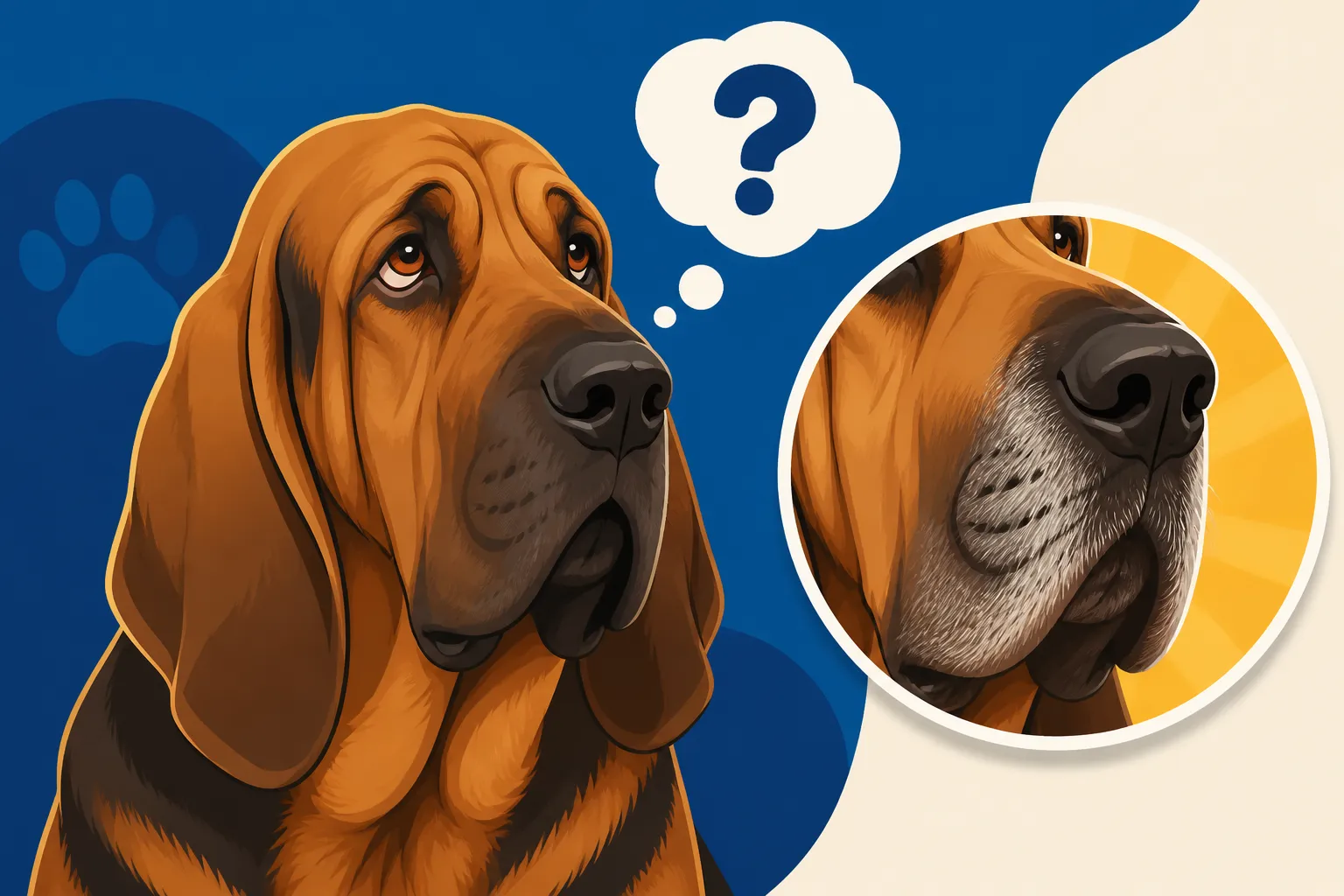
Bloodhound owners often notice silver or white hairs first around the chin, lips, and front of the muzzle. Because the face is so expressive—and because the breed’s coloring can make the change stand out—those hairs may seem to appear all at once, even when the change has been gradual.
Normal coat color changes with age
Aging can reduce pigment in newly growing hairs. The change may begin around the muzzle and chin, then become more noticeable over time. It doesn’t necessarily mean your dog is suddenly old or unwell. Dogs, like people, can show visible signs of aging at different ages, and one dog may gray earlier than another with a similar background.
A few pale hairs are not the same as a coat-wide change. If the skin looks healthy and your Bloodhound is eating, moving, and behaving normally, gradual graying is often a cosmetic change rather than a warning sign. It may still be worth pointing out at a routine veterinary visit, especially if you are unsure whether you are seeing gray hair, a skin-color change, or both.
There is no reliable calendar for when every Bloodhound should start graying. A dog can develop a silver chin while remaining playful and active, while another may keep a dark muzzle much longer. For a broader look at how aging can show up in the breed, see The Age a Bloodhound Is Considered Senior and What Changes in a Bloodhound at Six.
Bloodhound coloring can make it look more dramatic
Bloodhounds come in recognized coat colors and patterns that include black and tan, liver and tan, and red. On a darker muzzle, even a small scattering of pale hairs can create a sharp contrast. On a lighter red coat, the same number of gray hairs may be harder to notice. For more on the breed’s coat variations, see The Colors a Bloodhound Comes In.
The shape of the face can also draw your eye to the change. A Bloodhound’s muzzle, lips, and folds frame the nose and mouth, so a few new hairs around the chin may stand out more than similar changes on a less distinctive face. That visual effect can make normal coat aging feel sudden.
Early graying is not a diagnosis
The word “early” can be worrying, but it does not identify a cause by itself. A young-looking Bloodhound with a graying muzzle may simply have a natural variation in coat pigmentation. Age, inherited traits, and individual differences can all play a role in when gray hairs become visible.
Some research involving dogs has found associations between premature graying and behavioral traits such as fearfulness or impulsivity. An association does not show that stress directly causes a dog’s muzzle to gray, and it cannot explain an individual Bloodhound’s coat change on its own. A gray muzzle is not proof that your dog is anxious, has been mistreated, or is experiencing a health problem.
How to Tell Gray Hair From a Skin Problem
A useful first step is to part the coat gently and look at the skin underneath. Gray hair is a change in the hair’s color; a skin problem may involve redness, swelling, sores, scabs, odor, or discomfort. Those details can help you decide whether to simply keep an eye on the change or contact your veterinarian.
Look at the pattern and the pace
Slow, even changes—such as a few pale hairs on the chin that gradually become more noticeable—are generally less concerning than a sudden patch of hair loss or a sharply defined area of changed skin color. Take a clear photo in similar lighting every few weeks if you are trying to judge whether the change is spreading. Everyday lighting can make a dark coat look lighter or more silver than it really is.
You can also note where the change appears: the muzzle, lips, nose, around the eyes, or elsewhere on the body. Is the hair still present and smooth, or is there thinning? Does the skin look comfortable, or does your dog pull away when you touch it? A brief record of those observations can make a veterinary conversation more useful.
Watch for signs beyond color
Call your veterinarian for guidance if the color change comes with any of the following:
- Redness, swelling, warmth, or tenderness
- Crusting, sores, bleeding, or open skin
- Persistent itching, rubbing, or pawing at the face
- Hair loss or a bald patch
- A new or strong odor, especially in a skin fold
- Sudden changes in appetite, energy, or general behavior
A Bloodhound’s folds can trap moisture and debris, so irritation near the muzzle or lips may deserve attention even if the change first looked like graying. Learn where moisture can collect in Where a Bloodhound's Folds Trap Moisture First, and review Signs a Bloodhound's Fold Has Become Infected if you notice odor, soreness, or discharge.
Distinguish pale fur from a change in skin pigment
The hair may become gray while the skin underneath stays its usual color. By contrast, some pigment conditions affect the skin itself, making areas of the nose, lips, or face look lighter or mottled. Inflammation, injury, and other skin conditions can also alter appearance. It is difficult to identify the cause from color alone, especially on a folded face.
Avoid scraping, scrubbing, or applying human skin products to investigate. If the skin is irritated, extra cleaning can make it more uncomfortable. A veterinarian can examine the hair and skin, ask about the timing, and decide whether testing or treatment is appropriate.
| What you notice | What it may suggest | Sensible next step |
|---|---|---|
| A few silver hairs appearing gradually, with healthy-looking skin | Normal variation or age-related graying | Photograph the area and mention it at a routine visit |
| A sudden pale patch, especially if the skin also looks different | Pigment change, irritation, or another skin issue | Contact your veterinarian for advice |
| Gray or pale fur with redness, sores, odor, or discomfort | Possible inflammation or infection | Arrange a veterinary assessment |
| Graying alongside low energy, appetite changes, or other new symptoms | A change that should be assessed in the context of overall health | Call your veterinarian rather than assuming it is just aging |
What You Can Do at Home
If your Bloodhound has a few gray hairs and otherwise seems well, you do not need to treat the color itself. The practical goal is to monitor the change, keep the face comfortable, and avoid turning normal grooming into a source of irritation.
Keep a simple record
Take a photo in natural, even light and repeat it periodically from a similar angle. Write down when you first noticed the hairs and whether the area has changed. This is especially helpful if you see the dog every day: gradual changes can be hard to judge from memory.
Note any changes in behavior or skin condition as well. For example, a silver chin with no itching is different from a pale patch that appears while your dog is rubbing its face on the carpet. If you keep grooming supplies or a pet-care notebook at home, a small cleanup kit can make observation easier. Chewy is one place some owners use to find routine pet-care supplies, but choose items based on your veterinarian’s advice and your dog’s needs.
Clean gently, without trying to reverse the color
Gray hair cannot be safely “treated” back to its original shade with a home remedy. Do not use hair dye, whitening products, essential oils, or human facial cleansers on your dog. These products may irritate the skin, and a dog can lick residue from its muzzle.
If food or drool collects around the lips, wipe only when needed with a soft, clean cloth and dry the area gently. Avoid repeated scrubbing. A Bloodhound’s face has folds that may need routine care, but the right approach depends on the dog’s skin and any existing irritation. If you need basic supplies for wiping and drying, Chewy may be a convenient retailer to check; follow your veterinarian’s instructions on what is suitable for your dog’s face.
Keep the rest of the aging picture in view
Muzzle color alone cannot tell you how well a Bloodhound is aging. Mobility, appetite, sleep, hearing, vision, dental comfort, and willingness to participate in usual activities give a fuller picture. If your dog is entering middle age or later, routine checkups can help you discuss changes as they arise. How Long a Bloodhound Lives offers more context on lifespan, but an individual dog’s health cannot be judged by age or coat color alone.
If the gray hairs are harmless but make you notice your dog’s face more closely, that attention can still be useful. You may spot a sore, a change in a fold, or a new lump earlier than you otherwise would. The important thing is not to mistake ordinary silver hairs for a diagnosis—or to dismiss other symptoms just because graying can be normal.
When to Ask a Veterinarian
A routine appointment is a reasonable place to mention slow, isolated graying when your dog is otherwise acting normally. You can bring a photo and explain when you first noticed the change. Your veterinarian can check whether the hairs and skin look healthy and help you decide whether monitoring is enough.
Seek advice sooner for rapid or uncomfortable changes
Contact your veterinarian if a patch changes quickly, if the skin becomes sore or inflamed, or if your dog repeatedly scratches or rubs the area. Also seek advice if the change appears alongside other new symptoms, such as reduced appetite or unusual tiredness. These signs do not automatically point to a serious condition, but they are a reason to look beyond coat color.
If a facial fold smells bad, looks red, or seems painful, mention those details specifically. In a Bloodhound, a problem in a fold can be easy to overlook beneath loose skin. It is better to ask about a persistent skin change than to try multiple cleaners or creams without a diagnosis.
Prepare useful details for the visit
Before the appointment, note when the graying started, whether it is spreading, and whether the hair or skin seems different. Mention any itching, licking, rubbing, recent injury, or new grooming products. If you have photos from earlier months, bring them or show them on your phone.
Your veterinarian may decide that no treatment is needed, or may recommend examining the skin more closely if the pattern or symptoms suggest something other than ordinary graying. That decision depends on the full picture—not simply on whether the muzzle looks silver.
Don’t assume every gray muzzle signals old age
A graying muzzle can be one small visible change in a dog that is otherwise doing well. It can also be a prompt to look carefully at the skin and overall health. Those two ideas fit together: you can take the change seriously enough to observe it without treating it as an emergency by default.
If your Bloodhound’s skin is comfortable, the change is gradual, and daily habits are unchanged, keep a record and bring it up at the next routine visit. If the area is irritated, changing quickly, or accompanied by other symptoms, call sooner. A careful look—and, when needed, a veterinary examination—is more useful than guessing from color alone.
Disclaimer
This article is for general informational purposes only and does not constitute professional advice. Laws, prices and regulations vary by location and change over time. Consult a qualified professional for guidance on your specific situation.