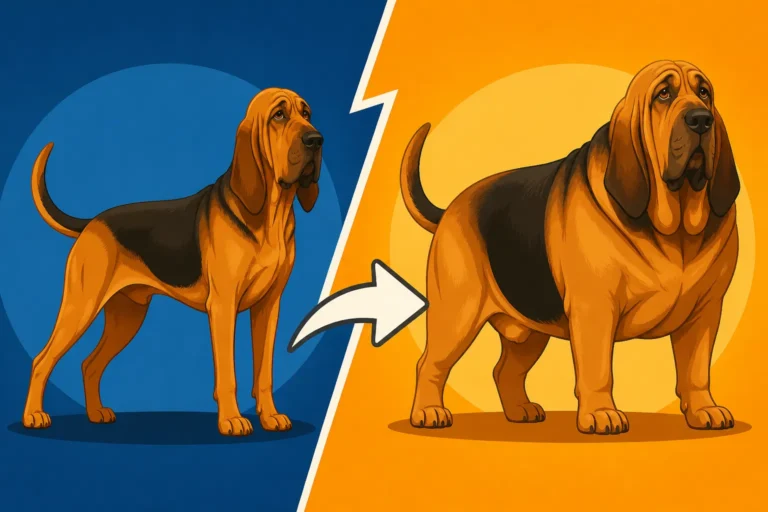
Whether the Bloodhound’s Reputation Was Damaged by Fiction
A bloodhound’s image as a relentless tracker of fugitives owes a great deal to fiction, especially stories that used the dog to create fear and drama. That portrayal did not come from nowhere, but it often blurred real tracking work with racialized myths. This guide looks at how fiction shaped the breed’s reputation, what history supports, and why the distinction matters.
How fiction shaped the bloodhound’s reputation
The bloodhound became a symbol, not just a working dog
Bloodhounds are famous for following human scent, and that real ability made them easy characters for writers to use. A dog on a trail creates instant suspense: readers can imagine someone being pursued, a hiding place being discovered, or danger drawing closer with every page. Fiction could heighten those moments by making the dog seem almost unstoppable.
But a dramatic character can quickly become a stereotype. In popular stories, the bloodhound was often presented as savage, bloodthirsty, or fixated on attacking the person it tracked. That image is different from the work of a trained scent hound, whose task is to follow an odor and whose behavior depends on training, handling, and circumstances. Tracking a person does not automatically mean attacking them.
This association also shaped the way people understood the breed’s name. “Bloodhound” does not mean a dog that tracks blood; the name is commonly explained in relation to the breed’s carefully maintained lineage. The history behind What the Name Bloodhound Actually Means helps separate the name’s origins from the fearful image fiction attached to it.
Why the image was so easy to remember
Fiction often relies on recognizable shortcuts. A bloodhound’s loose skin, long ears, deep voice, and determined tracking style make it visually distinctive. Those traits work well in a scene where a writer wants readers to recognize a pursuing dog immediately, even if the portrayal exaggerates what the animal would do in real life.
The result is a picture that can stick longer than the facts. Someone who has never met a bloodhound may encounter the breed first in a novel, film, or illustration. If every portrayal suggests an aggressive animal hunting a person, that fictional scene can become their baseline assumption. Actual encounters—with a calm dog sniffing a trail or greeting a visitor—may not match the image at all.
That gap is especially important because a dog’s job and temperament are not the same thing. A breed may be selected for scenting ability without being naturally hostile to people. For a fuller look at the difference between reputation and ordinary behavior, see Whether the Bloodhound Is Actually Gentle.
The role of race and history in the bloodhound stereotype
How stories connected bloodhounds with the pursuit of enslaved people
The most damaging version of the bloodhound image is tied to stories about enslaved people escaping captivity in the United States. Bloodhounds were sometimes used in pursuit and search contexts, and the possibility of a dog following a human scent gave the image a basis that audiences could recognize. But fiction and popular accounts frequently intensified that association, presenting the dogs as instruments of terror and turning the pursuit into a racialized spectacle.
This was not a neutral storytelling choice. A dog portrayed as relentlessly chasing an enslaved person could reinforce the power structure behind the pursuit, making violence appear inevitable or even natural. It could also encourage readers to think of the bloodhound as a weapon rather than an animal trained and directed by people. The history is complex, and it should not be reduced either to “it was all fiction” or to “every story accurately describes what happened.” Whether Bloodhounds Were Used to Track Enslaved People explores that historical distinction.
The consequences lasted beyond any one story. Once the breed became shorthand for pursuit, later references could invoke the same fears without explaining the history behind them. That shorthand shaped public perception of the animal and, in some settings, obscured the human choices involved in training, directing, and using dogs.
What Uncle Tom’s Cabin contributed to the image
Harriet Beecher Stowe’s Uncle Tom’s Cabin helped make the bloodhound a powerful symbol in nineteenth-century anti-slavery storytelling. The novel and its many stage adaptations included pursuit scenes in which bloodhounds intensified the danger faced by enslaved characters. For audiences, the dogs’ presence made the threat feel immediate and physical.
The story’s emotional force helped spread the image well beyond readers of the book. Stage productions, illustrations, political debate, and later popular culture circulated versions of the same scene. Over time, the association could be remembered more vividly than the details of the historical circumstances. A fictional scene might be treated as if it were a complete record of how bloodhounds were used, when it was actually one piece of a much larger and contested history.
It is also worth recognizing that Uncle Tom’s Cabin was an influential anti-slavery work, while its bloodhound imagery could still contribute to a lasting stereotype about the breed. A work can challenge one injustice and at the same time leave behind imagery that is later simplified or misused. For a closer look at this tension, read Whether Uncle Tom's Cabin Misrepresented the Bloodhound.
| Fictional image | What it encourages people to assume | A more careful distinction |
|---|---|---|
| The bloodhound as a bloodthirsty pursuer | The dog tracks in order to attack | Scent tracking and aggression are not the same behavior |
| The bloodhound as an unstoppable force | A trail is always followed successfully | Conditions, training, scent age, and handling affect a track |
| The bloodhound as a symbol of racial terror | The breed itself explains the history | People chose how dogs were trained and used |
| The bloodhound as a comic or dramatic prop | Its behavior is predictable on cue | Individual dogs respond differently, and fiction simplifies animal behavior |
How much of the reputation is fact and how much is fiction
Real tracking ability does not prove every story
Bloodhounds have a well-known ability to follow human scent, but a real ability is not proof that every fictional chase happened as depicted. A dog’s success depends on many things: the scent available, the environment, weather, the time elapsed, the handler’s skill, and competing odors. A story that turns tracking into certainty removes the practical limits that come with real work.
Fiction also tends to leave out the handler. A dog does not decide independently to pursue a person in the way a human character might. In working situations, people select, train, direct, and manage the animal. Removing those choices from the story can make the dog appear to be the source of the danger, when the dog is acting within a human-designed situation.
This distinction applies to other depictions of tracking, too. In a crime story, a bloodhound may seem to identify a person with perfect accuracy or follow a trail across any obstacle. Real scent work is more complicated, and an indication from a dog is not a magical or infallible answer. The breed’s abilities are impressive, but they should not be confused with certainty or proof in every circumstance.
The breed’s history is broader than the stereotype
Bloodhounds have a long history as scent hounds, and their work has changed across settings and eras. Their ancestry is often linked with European hounds, while the modern breed developed through a longer history of selection and use. Which Country the Bloodhound Comes From provides context for that background, which is much wider than the American fiction that fixed the breed in one role.
The breed has also been associated with finding people, not merely pursuing them. Search work can involve locating someone who is lost or missing, with a handler interpreting the dog’s behavior and managing the search. That does not erase the painful history of bloodhounds being used in pursuit, but it does show why a single stereotype cannot explain every dog, every handler, or every use of the breed.
The timeline matters as well. Bloodhounds did not begin as a fictional symbol, and their association with human scent work developed across a range of practical contexts. When Bloodhounds Began Trailing People Instead of Game helps put that shift in perspective. History is more useful when it distinguishes the breed’s capabilities from the different purposes people have put those capabilities to.
What the reputation means for bloodhounds today
Fictional portrayals can affect real dogs and owners
A person who expects a bloodhound to be aggressive may approach one nervously or avoid the breed altogether. That reaction can be frustrating for owners, particularly when their dog is gentle but conspicuous: its size, droopy features, deep bay, and intense interest in scent can make it seem intimidating to someone unfamiliar with the breed.
The stereotype can also create unrealistic expectations in the other direction. Someone may assume a bloodhound will automatically track anything, obey instantly when called, or perform like a dog in a movie. In real life, scent work requires training, a suitable environment, and careful handling. A dog following an odor may be focused on the trail rather than on the person trying to redirect it. The Bloodhound's Nose Outvotes Its Handler explains why that familiar mismatch between expectation and behavior can happen.
For owners, a useful response is simple but not always easy: describe what the dog is actually doing instead of arguing with the fictional image. “He’s following a scent, not looking for someone to attack” is more informative than saying the stereotype is ridiculous. A calm explanation can help a nervous neighbor understand the dog in front of them, rather than the character they remember from a story.
How to talk about the history without repeating the myth
When discussing the bloodhound’s reputation, it helps to hold two facts together: the breed has a genuine scent-tracking ability, and people have used that ability in different ways, including in deeply harmful contexts. Ignoring the historical connection can make the stereotype seem baseless. Treating the stereotype as the whole truth, on the other hand, repeats the fiction’s simplification.
It is also worth being precise about what a story shows. Was it describing a real event, adapting a common belief, or heightening a scene for drama? Did it portray the dog as an independent villain, or did it show the person directing the pursuit? Those questions help readers notice how storytelling assigns responsibility and shapes sympathy.
The bloodhound’s reputation was damaged not simply because fiction invented a tracking ability, but because popular stories often used that real ability in a narrow, exaggerated, and racially charged way. Understanding that history lets us discuss the past honestly without treating every bloodhound as a symbol of it. The breed is an animal; the meaning attached to it has been made and remade by people.
Disclaimer
This article is for general informational purposes only and does not constitute professional advice. Laws, prices and regulations vary by location and change over time. Consult a qualified professional for guidance on your specific situation.