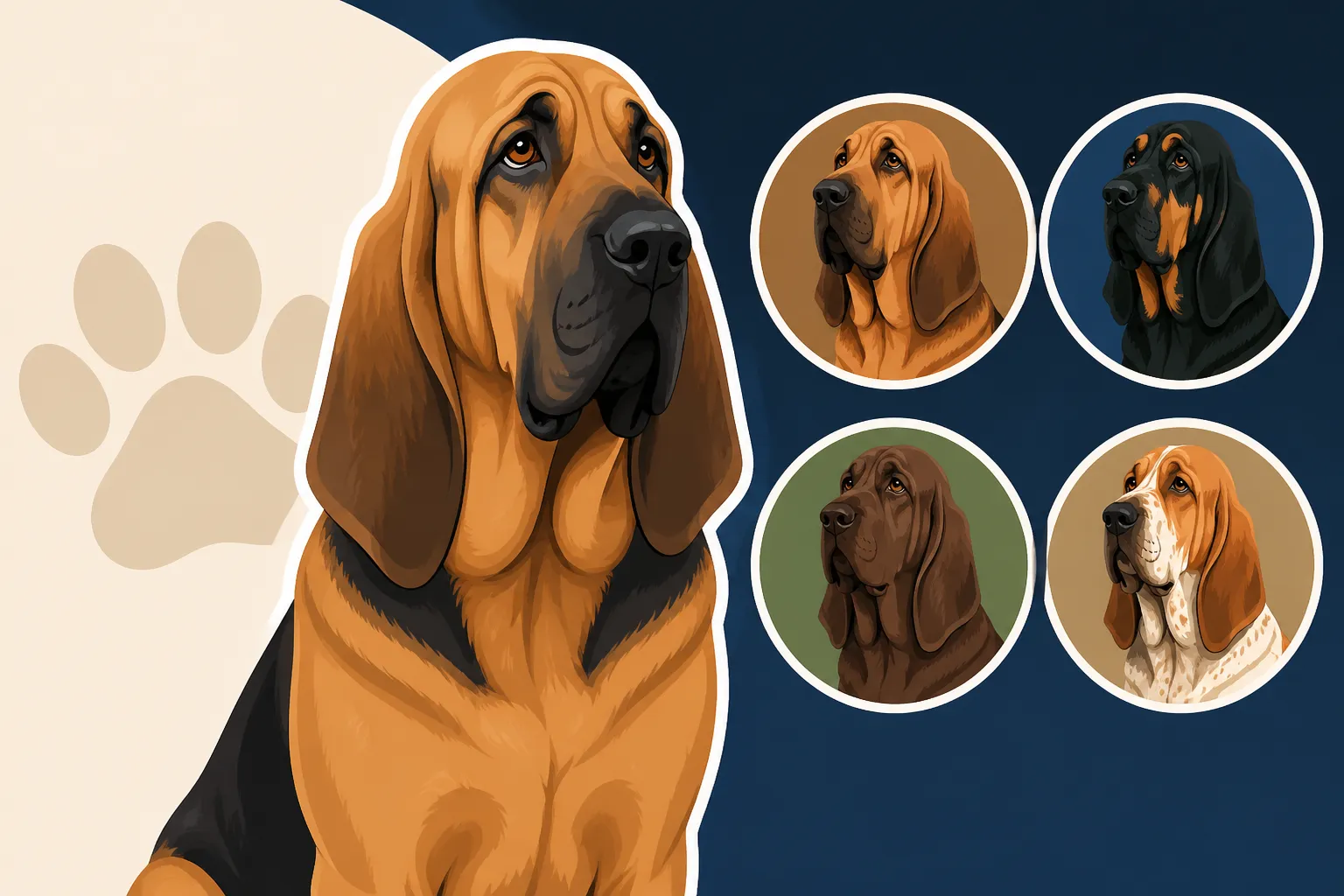
Which Colors the Bloodhound Standard Allows
One of the first things that draws many of us to a specific dog breed is their look, and Bloodhounds are no exception with their distinctive wrinkles and long, pendulous ears. But when you start looking into bringing a Bloodhound into your home, you might quickly realize there's a bit of confusion around what colors are considered "official" or "standard." This guide is here to clear up that mystery, detailing exactly which coat colors and markings are recognized by the breed standard and giving you a deeper understanding of why these distinctions matter.
Understanding the Bloodhound Breed Standard for Color
Navigating the world of purebred dogs means understanding breed standards, and color is a big part of that. It’s not just about aesthetics; it’s about preserving the historical look and characteristics that define a Bloodhound.
Why a Breed Standard Exists for Color
Breed standards are essentially the blueprint for what a purebred dog of a specific breed should look like, act like, and even move like. For color, the standard helps maintain a consistent appearance across generations, which is vital for breed identification and integrity. Imagine if every Bloodhound came in a rainbow of colors – it would be much harder to recognize them as the distinct, noble hounds we know and love. These standards also reflect the historical development of the breed. Early breeders had certain ideals for their dogs, and those ideals, including coat color, were codified over time. It’s a way of honoring the breed’s lineage and ensuring that future generations continue to embody those foundational traits. Without a standard, the breed could dilute and lose its unique visual signature, making it difficult to differentiate from other large scenthounds.
The American Kennel Club AKC Standard Overview
The American Kennel Club (AKC) is the primary registry for purebred dogs in the United States, and their breed standard for the Bloodhound is the authoritative guide many breeders and owners follow. When it comes to color, the AKC standard is quite specific, yet allows for a bit of variation within defined parameters. The standard exists to describe the ideal specimen, not just to dictate what colors are "allowed" for registration. While a dog of a non-standard color might still be a purebred Bloodhound, its divergence from the standard could affect its eligibility for conformation shows or its desirability among breeders aiming to produce show-quality dogs. The standard typically lists the primary accepted colors and any acceptable markings, as well as specific descriptions of how these colors should appear on the dog.
The Three Primary Accepted Bloodhound Colors
When you look at the AKC standard, you'll find that Bloodhounds primarily come in three main color combinations. These are the classic looks that have been recognized for generations, each with its own subtle variations.
Black and Tan
Perhaps the most iconic Bloodhound color, black and tan is instantly recognizable. This combination features a deep, rich black on the back, sides, and typically on the top of the head and ears. The "tan" refers to the reddish or fawn markings that appear in specific areas. You'll typically find these tan points on the muzzle, over the eyes (giving them that characteristic "four-eyed" look), on the chest, on the legs, and under the tail. The contrast between the dark black and the warm tan is striking and often highlights the Bloodhound's expressive face and sturdy build. It’s a classic combination that has long been associated with the breed's working heritage, providing a functional camouflage in varied environments while also presenting a distinguished appearance.
The depth of the black can vary from an almost charcoal shade to a very dense, jet black. Similarly, the tan can range from a light cream or fawn to a deeper, richer red-tan. These variations are all acceptable within the standard, contributing to the individual beauty of each dog. Sometimes, the tan points might appear muted on a very young puppy, but they typically deepen as the puppy matures. Owners of black and tan Bloodhounds often remark on how the sunlight catches the tan, making it glow. It's truly a beautiful and enduring color pattern for the breed.
Liver and Tan
The liver and tan combination is another beautiful and accepted color for Bloodhounds, offering a softer, warmer alternative to the black and tan. In this pattern, the dominant dark color is not black, but rather a rich, deep brown, often referred to as "liver." Just like with black and tan, the tan markings appear in the same characteristic places: on the muzzle, above the eyes, on the chest, and on the legs. The liver color itself can vary from a lighter chocolate shade to a very dark, almost black-brown, creating a lovely contrast with the tan points. If you've ever seen a liver and tan Bloodhound, you'll know they have a unique warmth to their overall appearance. The nose leather and eye rims on a liver and tan Bloodhound will also be brown, rather than black, which further defines this color. What a Liver and Tan Bloodhound Looks Like provides an even more detailed description of this specific coloring.
The liver and tan Bloodhound often possesses a slightly less severe look than their black and tan counterparts, which some owners find appealing. The combination of the deep brown and the tan points gives them an earthy, rustic charm. Again, the intensity of both the liver and the tan can vary, with some dogs exhibiting very dark liver coats and others having a lighter, more milk-chocolate hue. These variations are perfectly acceptable under the breed standard, as long as the distribution of colors follows the specified pattern. Seeing these hounds in person, you truly appreciate the subtle beauty and distinct character that the liver and tan coloring brings to the breed.
Red
The third primary color allowed in the Bloodhound breed standard is red. This isn't just a slight variation of the tan in the other combinations; "red" refers to a self-colored dog, meaning the entire coat is predominantly one shade of red, with very minimal or no black or liver markings. The red can range quite dramatically, from a light, almost fawn or sandy color to a deep, rich mahogany or even a reddish-brown. It’s a stunning color that emphasizes the Bloodhound's powerful build and impressive presence. Sometimes, a red Bloodhound might have darker shading around the ears or down the back, but the overall impression is that of a solid red dog. What a Red Bloodhound Is Standard gives a more in-depth look at what to expect from a red Bloodhound.
The beauty of a red Bloodhound lies in its simplicity and the way the color can shift and deepen depending on the light. A lighter red might almost look golden in the sunshine, while a darker red can appear quite dramatic and intense. Like all Bloodhounds, their loose skin and distinctive wrinkles are prominent, and the red coat color often highlights the deep folds and expressive face beautifully. Owners of red Bloodhounds often appreciate the striking, bold look of their dogs. It’s important to remember that even within the "red" category, there's a spectrum, and all shades within that range are considered equally valid according to the breed standard, as long as they aren't diluted or show unaccepted markings.
Understanding "Ticking" and White Markings
Beyond the main colors, Bloodhounds can also display specific patterns and markings that are accepted within the breed standard. These aren't separate colors but rather ways the primary colors are expressed.
The Role of Ticking in Bloodhound Colors
Ticking refers to small, isolated spots of color on areas of white fur. It's like tiny flecks of paint sprinkled across a white canvas. In Bloodhounds, ticking typically appears on the white portions of the coat, most commonly on the feet and chest. These flecks will be the same color as the dog's main coat, so a black and tan Bloodhound with ticking would have black flecks on its white areas, and a red Bloodhound would have red flecks. Ticking is completely normal and accepted within the breed standard. It's not considered a fault and simply adds another layer of uniqueness to a Bloodhound's appearance. Think of it as nature's subtle artwork.
It's common to see ticking more pronounced on Bloodhounds that have some white markings, which we'll discuss next. These small spots are distinct from large patches of color and contribute to the rich tapestry of acceptable Bloodhound coats. The presence or absence of ticking doesn't impact the dog's health or working ability, but it does add to their visual diversity. For owners, it's just another charming detail to appreciate about their beloved hound. Whether a Bloodhound Can Have White Markings touches on this in more detail.
Accepted White Markings and Their Placement
While Bloodhounds are primarily solid-colored or bi-colored, the breed standard does allow for some white markings. These markings are typically quite limited in size and placement. The most common and accepted areas for white are on the chest, known as a "star" or "blaze," and on the tips of the toes. Sometimes, you might see a small amount of white on the tip of the tail as well. These small patches of white are generally considered acceptable and do not detract from a dog's conformation qualities in the show ring. They are often minor and don't cover large areas of the body.
However, the standard is clear that excessive white is considered a fault. This means large areas of white that extend beyond the chest, feet, or tail tip are not desired. For example, a Bloodhound with a white collar, white up the legs past the hocks or elbows, or a white belly blaze that runs the length of its underside would typically be considered to have excessive white. The idea is that the Bloodhound should largely be colored according to its primary black and tan, liver and tan, or red pattern, with only minor white accents. These guidelines help maintain the breed's traditional appearance and prevent patterns that might deviate too far from the established look.
Disallowed Colors and Markings: What to Watch Out For
Just as there are accepted colors and markings, there are also those that fall outside the breed standard. These deviations are important for prospective owners and breeders to understand, especially if they have intentions of showing or breeding their Bloodhound.
Why Solid Black Is Not Standard
While a black and tan Bloodhound has a substantial amount of black, a truly solid black Bloodhound is not accepted by the breed standard. The key defining characteristic of a black and tan Bloodhound is the presence of those distinct tan markings on the muzzle, over the eyes, on the chest, and on the legs. Without these tan points, the dog would be considered solid black, which is a disqualifying fault in the show ring. The standard specifically calls for a "black and tan" combination, meaning both colors must be present and correctly distributed. Whether a Bloodhound Can Be Solid Black delves into this nuance further.
The absence of tan points typically indicates a different genetic makeup than what is desired for the Bloodhound breed. While a solid black Bloodhound might still be a perfectly healthy and wonderful companion, it simply doesn't conform to the established visual identity that defines the breed. For those interested in conformation showing, understanding this distinction is crucial. It’s a reminder that breed standards are quite precise about what constitutes the ideal representation of the breed.
Other Unaccepted Color Variations
Beyond solid black, there are several other color variations that are not accepted by the Bloodhound breed standard. These might include dilute colors like blue or Isabella (a dilute liver), or any other color not explicitly mentioned as black and tan, liver and tan, or red. For example, a "blue" Bloodhound, which would be a greyish dilution of black, would fall outside the standard. Similarly, a dog with an all-white coat, or a piebald pattern (large, irregular patches of color and white), would also be considered non-standard. These colors often arise from recessive genes that are not part of the established Bloodhound genetic pool for coat color.
Sometimes, unscrupulous breeders might market these unusual colors as "rare" or "unique" to fetch a higher price. However, within the purebred world, "rare" often simply means "non-standard." It's essential for prospective owners to be aware of these deviations. While a non-standard color doesn't necessarily mean the dog is unhealthy or not a purebred, it does mean it wouldn't be eligible for conformation shows and may not be registered as such by major kennel clubs. Always refer back to the official breed standard to verify acceptable colors.
Implications of Non-Standard Colors for Breeding and Showing
The implications of a non-standard color or marking can be significant, particularly for those involved in breeding or showing Bloodhounds. A dog with a color or marking pattern that falls outside the breed standard would be disqualified from conformation events. These shows are designed to evaluate dogs against the ideal breed standard, and color is a fundamental part of that assessment. This doesn't mean the dog is any less of a Bloodhound in terms of temperament or working ability, but it simply wouldn't meet the aesthetic criteria for judging.
For breeders, producing non-standard colors can be problematic because it indicates a deviation from the desired genetic lines. Responsible breeders strive to produce puppies that conform as closely as possible to the breed standard in all aspects, including color, health, and temperament. While a non-standard colored Bloodhound can make a fantastic pet, it would not be a suitable candidate for a responsible breeding program focused on preserving the breed's established traits. When choosing a puppy, discussing color and markings with a reputable breeder, and understanding the parents' lineage, can help ensure you know what to expect. What a Bloodhound Puppy Costs in 2026 can be a useful read for new owners.
The Evolution of Color Preferences and Genetics
Breed standards, including those for color, aren't always static. While the core colors for Bloodhounds have been consistent for a long time, understanding the historical context and the genetics behind these colors can offer fascinating insights into the breed.
Historical Perspective on Bloodhound Colors
Tracing back through history, the Bloodhound's primary colors – black and tan, liver and tan, and red – appear to have been part of the breed's makeup for centuries. Early depictions and written accounts of the "Chien de Saint Hubert," the Bloodhound's ancestor, often describe dogs matching these descriptions. The focus in those times was almost entirely on their incredible scenting ability and their utility as trailing hounds, rather than their specific coat color. What the Name Bloodhound Actually Means gives more context to the breed's origins. However, certain color patterns might have been favored for their visibility or simply because they were most common within the foundational stock. The durability and distinctiveness of these colors might have also played a role in their consistent recognition.
It's likely that early breeders weren't specifically trying to produce, say, a "red" Bloodhound over a "black and tan" one, but rather focusing on maintaining the keen nose and sturdy build necessary for long days on the trail. The colors that became standard were those that naturally occurred and persisted in the most effective working lines. Over time, as the breed was refined and formal standards were developed, these prevalent colors were codified. This historical continuity in color helps to reinforce the breed's identity and visual heritage.
The Genetics Behind Bloodhound Coat Colors
Understanding the genetics of Bloodhound coat colors can seem complex, but at its most basic, it involves several genes interacting to produce the recognized patterns. The three main colors (black, liver, red) are primarily determined by genes that dictate the type and distribution of pigment. For example, a specific gene determines whether a dog can produce black pigment. If a dog inherits two copies of a recessive allele at this locus, it will instead produce brown (liver) pigment. The "tan" points in black and tan or liver and tan Bloodhounds are controlled by another set of genes that dictate where these colors are expressed on the dog's body. These genes determine the pattern of "points" over the eyes, on the muzzle, and on the legs.
The red color is often produced by a different genetic pathway where the agouti gene (which controls the distribution of black and yellow/red pigment) might play a role, allowing for an all-over red coat. Ticking and white markings are controlled by separate genes as well. It's a fascinating interplay of inherited traits. For most owners, understanding every genetic detail isn't necessary, but knowing that these colors are genetically determined helps appreciate why some variations are common and others are not. A reputable breeder will understand these genetics and can often predict Whether a Bloodhound Puppy's Color Changes as it grows, or what colors to expect from a specific pairing.
What to Ask a Breeder About Puppy Colors
When you're looking for a Bloodhound puppy, especially if you have a preference for a certain color or are interested in showing, it's perfectly reasonable and encouraged to discuss coat colors with your prospective breeder. A responsible breeder will be transparent about the colors they typically produce and which colors are present in the puppy's lineage. You can ask to see the parents and previous litters, if possible, to get an idea of the consistency in their breeding program. Don't be shy about asking about the specific shades of tan or red, or the prevalence of ticking.
You might also inquire about any non-standard colors that might appear in their lines, even if rarely. A good breeder will explain the genetics behind the colors they produce and discuss whether a particular color variation might affect a puppy's show potential. For most pet owners, the specific shade of red or the exact intensity of tan might not be critical, but knowing that your puppy's color is consistent with the breed standard can be reassuring. Remember, a breeder focused on health and temperament will prioritize those aspects above color, but a reputable one will also adhere to the breed standard for appearance. Whether a show bred Bloodhound puppy costs more (What a Show Bred Bloodhound Puppy Costs) is also a good question to ask, as show quality often includes adherence to specific color standards.
Living with a Bloodhound: Color is Only Skin Deep
Ultimately, while breed standards for color are important for preserving the historical look of the Bloodhound, the color of their coat is just one aspect of these magnificent animals. Their incredible temperament and unique needs transcend mere aesthetics.
Color and Your Bloodhound's Health
It's a common misconception that certain coat colors are inherently healthier or unhealthier than others within a breed. For Bloodhounds, there is generally no direct correlation between their accepted coat colors (black and tan, liver and tan, red) and their overall health. A red Bloodhound is just as likely to be healthy as a black and tan one, provided both come from responsible breeding lines. The crucial factors for a Bloodhound's health are responsible breeding practices, genetic screening for common breed ailments, and excellent care from their owners. Issues like Why a Bloodhound Dies Younger Than Its Size Predicts or The Four Eye Problems a Bloodhound Is Born Toward are far more important to consider than coat color when assessing a puppy's future health.
What truly matters is that a Bloodhound comes from parents who have undergone appropriate health testing, that they receive proper nutrition, regular veterinary care, and plenty of mental and physical stimulation. Don't let a preference for a specific color overshadow the importance of choosing a healthy puppy from a breeder who prioritizes genetic soundness and temperament above all else. A dog of a non-standard color can be just as healthy as a standard-colored one, but it's the breeding behind the dog that makes the difference, not the hue of its coat.
Grooming and Coat Care Across Colors
Regardless of whether your Bloodhound is black and tan, liver and tan, or red, their basic grooming needs remain largely the same. Bloodhounds have a short, dense, and somewhat coarse coat that is surprisingly easy to maintain when it comes to brushing. They are moderate to heavy shedders, so regular brushing with a hound mitt or a rubber curry brush is essential to remove loose hair and keep their coat healthy and shiny. Which Brush Suits a Bloodhound's Short Coat can give you good tips on this. Beyond their coat, the more demanding aspects of Bloodhound grooming involve their unique features: their long, pendulous ears, their deep facial wrinkles, and their droopy eyes.
All Bloodhounds, regardless of color, will require diligent ear cleaning to prevent infections, regular wrinkle wiping to avoid skin fold dermatitis, and routine eye checks. Their short coat doesn't offer the challenges of a long-haired breed, but those signature features definitely make up for it! You'll want to have a good supply of ear cleaner, gentle wipes, and perhaps some eye wash on hand. Many owners find great selections for these types of supplies on sites like Chewy, making it easy to keep up with their hound's specific needs.
Embracing Your Bloodhound's Unique Look
While the breed standard defines the ideal Bloodhound appearance, every single dog is an individual with its own charm and personality. Whether your Bloodhound is a deep red, a striking black and tan, or a warm liver and tan, what truly makes them special is their incredible nose, their gentle disposition, and their unwavering loyalty. Their color is just one part of the beautiful package. Don't get too caught up in the nuances of exact shades or markings; instead, focus on the bond you build with your hound. Whether the Bloodhound Standard Asks for a Sad Expression is a fun read that talks about their unique facial appearance, which is far more defining than mere color.
What truly matters is that your Bloodhound is a happy, healthy, and well-adjusted member of your family. Their impressive trailing ability, their calm demeanor indoors, and their affectionate nature are the traits that truly define them as a breed, far more than whether their tan points are a light fawn or a rich mahogany. Embrace your Bloodhound for who they are, wrinkles, slobber, baying, and all – their color is simply the beautiful wrapper.
Here’s a quick overview of Bloodhound colors:
| Color Combination | Description | Acceptable Markings | Notes |
|---|---|---|---|
| Black and Tan | Rich black on back, sides, head top; tan points on muzzle, eyes, chest, legs. | Minimal white on chest, feet, tail tip; ticking (black flecks) on white areas. | Classic, iconic Bloodhound look. Nose and eye rims are black. |
| Liver and Tan | Deep brown (liver) on back, sides, head top; tan points on muzzle, eyes, chest, legs. | Minimal white on chest, feet, tail tip; ticking (liver flecks) on white areas. | Warmer appearance than black and tan. Nose and eye rims are brown. |
| Red | Self-colored, ranging from light fawn to deep mahogany; minimal to no black/liver. | Minimal white on chest, feet, tail tip; ticking (red flecks) on white areas. | Bold, uniform color. Nose and eye rims are black. |
| Disallowed | Solid black (no tan points), blue (dilute black), Isabella (dilute liver), excessive white markings. | N/A | Disqualifying in conformation shows. Does not affect pet quality or health. |
Disclaimer
This article is for general informational purposes only and does not constitute professional advice. Laws, prices and regulations vary by location and change over time. Consult a qualified professional for guidance on your specific situation.