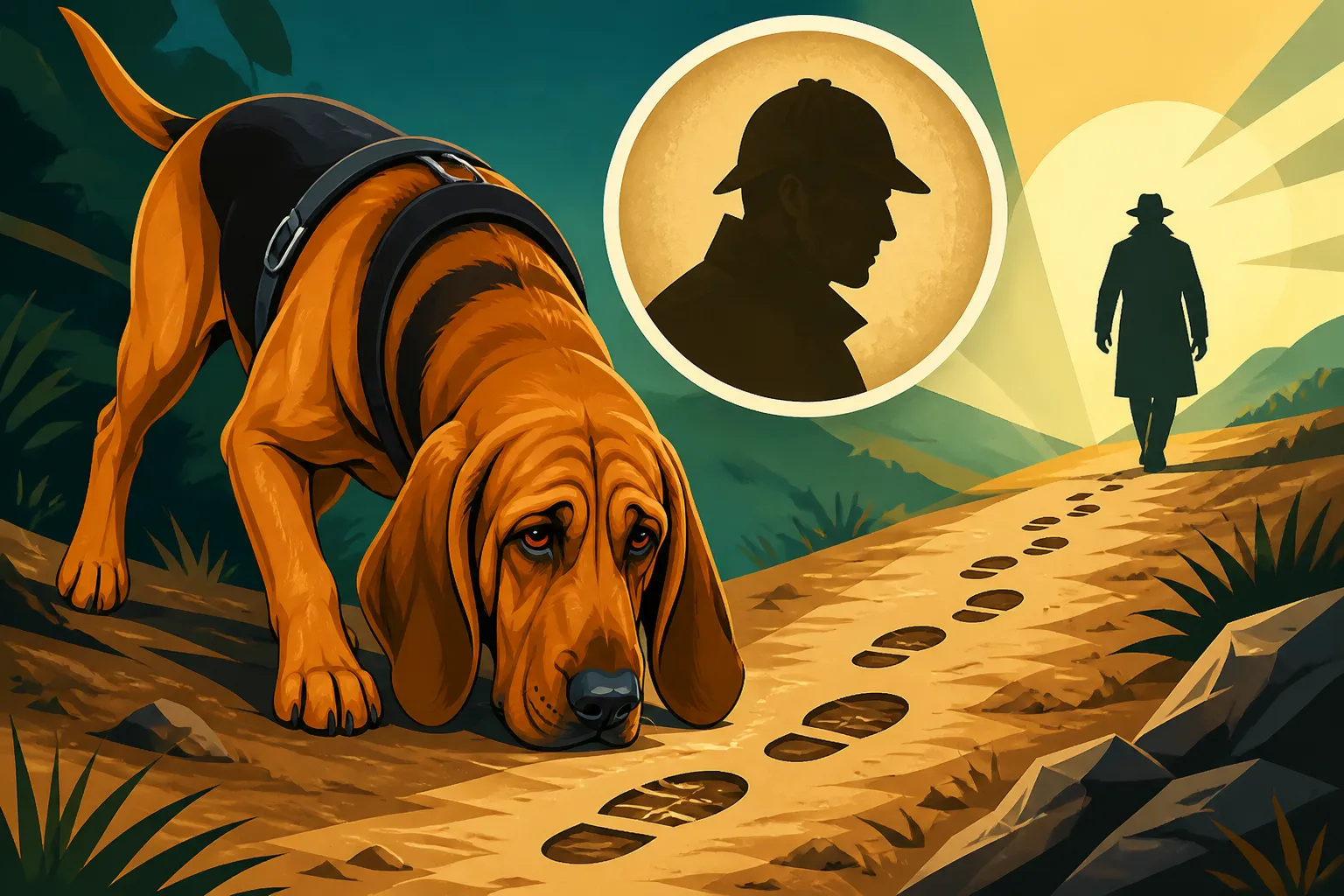
How Old a Trail Nick Carter Followed
As Bloodhound enthusiasts, we often hear tales of their incredible noses, but it can be really hard to wrap our heads around just how good they truly are. Most people struggle to believe that a dog could follow a trail hours, let alone days, after someone has passed through. This guide will dive deep into the legendary Bloodhound, Nick Carter, and explore the astounding age of the trails he was known to follow, helping us understand the science and the myth behind these tracking marvels.
The Legend of Nick Carter and His Unrivaled Nose
When we talk about the history of trailing and the legal recognition of canine evidence, one name inevitably rises to the top: Nick Carter. He wasn't just any Bloodhound; he was a living legend whose feats set a benchmark for what these incredible dogs could achieve. For many of us, the idea of a dog following a track laid even a few hours ago feels like something out of a movie, but Nick Carter pushed those boundaries in ways that still astound researchers and handlers today.
Who Was Nick Carter?
Nick Carter was a male Bloodhound born in 1900, owned and trained by the famous Bloodhound handler, G.H. "Gus" Ragsdale, of Calhoun, Georgia. Together, they formed an unstoppable team that became renowned across America for their ability to locate missing persons and track down criminals. Nick Carter wasn't just working in rural areas; he was put to the test in bustling towns and varied terrains, proving time and again that his nose was a force of nature. His reputation wasn't built on a few lucky finds but on a consistent record of success that often made headlines, earning him a place in legal history. If you're curious about his background, there's a lot more to learn about Who Owned the Bloodhound Nick Carter.
What made Nick Carter so special wasn't just his training, but his innate drive and exceptional olfactory capabilities, which even for a Bloodhound, were extraordinary. He was an ambassador for the breed, demonstrating that these "dogs of pure blood" were not just majestic hounds but invaluable tools for justice and public safety. His legacy continues to inspire Bloodhound handlers and trainers to this day, pushing them to understand and nurture the incredible potential within each of these scenting dynamos.
Why His Trails Stood Out
The cases Nick Carter tackled were often complex and challenging, involving difficult terrain, varied weather conditions, and, crucially, significant time delays. These weren't fresh tracks laid moments before; these were often trails that had "gone cold" by conventional standards. He was frequently called upon when other search methods had failed, and the hope of finding someone seemed to dwindle with every passing hour. This is where the almost mythical quality of his work emerged.
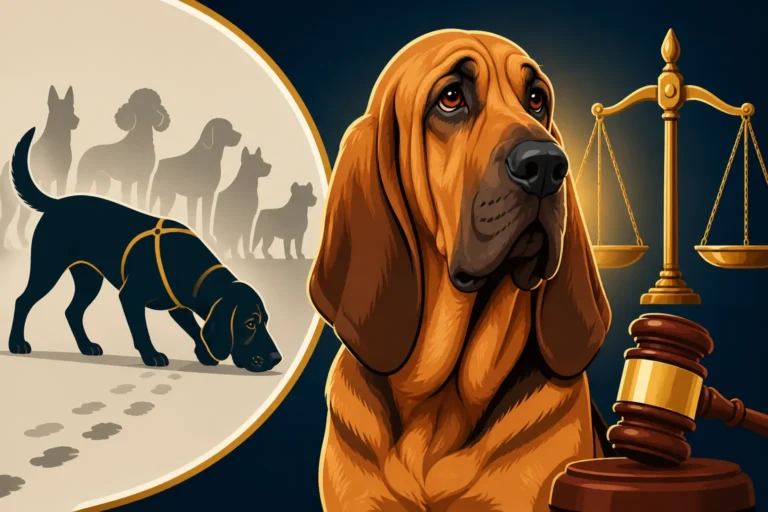
His ability to pick up and follow trails that were hours, or even days, old was what truly made him legendary. Imagine the frustration of a search party, combing through an area, finding no trace, only for Nick Carter to arrive and unerringly follow a subtle scent line that human senses couldn't even perceive. This wasn't just about finding a person; it was about proving the enduring nature of human scent and the Bloodhound's astonishing capacity to interpret it. His work was pivotal in establishing the Bloodhound's credibility as a reliable and legally admissible form of evidence in courtrooms, a distinction few other breeds share.
Understanding Scent and Its Persistence
To truly appreciate Nick Carter's feats, we need to understand a bit about scent itself. It's not just a simple smell, but a complex tapestry of volatile organic compounds that continually emanate from everything around us, especially from people. Our frustration often comes from how quickly we lose a scent, making it hard to grasp how a dog can follow one for so long.
The Nature of Human Scent
Human scent is a unique fingerprint, a constantly shed mixture of skin cells (epithelial cells), sweat, hormones, bacteria, and various other microscopic particles. Every single step we take, every brush against a surface, every moment we spend in an area, we are literally shedding our unique biological signature. Think of it as a constant, invisible rain of personal data. This "scent cone" or "scent picture" is incredibly rich and complex, varying slightly from person to person.
What a Bloodhound is actually smelling on a trail isn't just one single compound, but this entire complex cocktail of biological markers. Even as some components dissipate, others cling to the environment, embedding themselves into the ground, vegetation, and even air currents. The sheer volume and variety of these particles mean that even if one aspect of the scent degrades, there are countless others for the Bloodhound's nose to latch onto. This is why a Bloodhound can separate one person's scent from a crowd, because each person's signature is distinct enough for their incredibly sensitive nose to differentiate.
Environmental Factors Affecting Scent
The longevity and integrity of a scent trail are heavily influenced by the environment. This is where human logic often fails us because we can't perceive these subtle changes. For a Bloodhound, every environmental factor is either a help or a hindrance.
| Factor | Impact on Scent Trail |
|---|---|
| Wind | Can disperse scent, spread it out, or move it off the actual path, making it harder to follow a linear trail. |
| Rain | Washes away scent particles from surfaces, especially hard ones. However, damp ground can trap scent, preserving it. |
| Heat | Increases evaporation of volatile compounds, making scent dissipate faster. Can also amplify some odors. |
| Humidity | Often helps preserve scent by keeping it from drying out and dispersing too quickly. |
| Sunlight | UV radiation can break down organic scent compounds over time. |
| Surface | Porous (soil, grass): Holds scent longer as it penetrates the material. Hard (asphalt, concrete): Scent dissipates faster, but particles can still cling. |
| Vegetation | Plants can "catch" and hold scent particles, acting as scent traps, but also create obstacles for tracking. |
| Contamination | Other human or animal scents, exhaust fumes, etc., can obscure the target scent, making discrimination harder. |
Understanding these factors is crucial when trying to estimate how old a trail a Bloodhound can follow. A cool, humid day with minimal wind and porous ground cover might preserve a trail for much longer than a hot, windy, dry day on asphalt. Nick Carter's handlers understood these dynamics and knew how to work with (or against) the conditions.
The Bloodhound's Biological Advantage
It's one thing to understand scent; it's another to understand the biological marvel that is the Bloodhound's nose. These dogs aren't just "good" at smelling; they are purpose-built scenting machines, designed through centuries of selective breeding to do one thing exceptionally well: follow a trail.
An Unparalleled Olfactory System
The Bloodhound's nose is not just big; it's a finely tuned, incredibly complex organ. Estimates suggest a Bloodhound possesses around 300 million olfactory receptors in its nose, compared to a human's paltry 5-6 million. This isn't just about numbers; it's about the sheer surface area of the olfactory epithelium, the part of the nose responsible for detecting odors. Their nasal passages are designed to direct air through a complex labyrinth of turbinates, maximizing contact with these receptors. This immense capacity allows them to detect odors at concentrations that are literally undetectable to humans. If you're fascinated by the numbers, delve into How Many Scent Receptors a Bloodhound Has.
But it's not just the nose itself; it's the brain behind it. A significant portion of a Bloodhound's brain is dedicated to processing scent information, far more than in other breeds or humans. This means they're not just detecting scent; they're analyzing it, filtering out background noise, and creating a detailed "scent map" in their minds. They can distinguish between different layers of scent, prioritizing the specific human scent they're tasked with finding, even in an area where dozens or hundreds of other people have passed.
Physical Adaptations for Scent Work
Beyond the internal mechanics of their nose, Bloodhounds have several unique physical traits that enhance their trailing abilities. These features, often seen as quaint or even problematic for owners (like the drool!), are actually crucial adaptations for their work.
First, consider their long, pendulous ears. These aren't just for show. As a Bloodhound moves, its heavy, low-slung ears actually sweep the ground, stirring up scent particles and directing them towards its nose. It's like having built-in scent-scoops, ensuring that every available scent molecule is presented to their superior olfactory system. This sweeping action helps maintain a consistent flow of air, carrying scent upwards into their nostrils. This is a fascinating aspect of their anatomy, and you can learn more about Whether a Bloodhound's Ears Sweep Scent Toward Its Nose.
Then there's the loose, wrinkled skin, particularly around their head and neck. This excess skin, combined with their characteristic dewlap, creates folds that can effectively trap and hold scent particles close to the nose, preventing them from dispersing too quickly. Imagine these folds as miniature scent reservoirs, giving the Bloodhound an advantage, especially when working slowly and deliberately. The way a Bloodhound's head is shaped, with its deep muzzle and prominent brow, is all geared towards optimizing their scenting capabilities, making them true specialists in their field.
The Incredible Feats of Nick Carter's Work
The legends surrounding Nick Carter are not just tall tales; they are often rooted in meticulously documented accounts that highlighted his uncanny ability to follow even the most challenging, aged trails. His work wasn't just impressive; it shifted perceptions and established new standards.
Records and Documented Trails
While pinpointing an exact "oldest trail" for Nick Carter can be tricky due to the nature of historical record-keeping, his fame stemmed from regularly following trails that were 24 to 48 hours old. In an era before modern forensic techniques, this was an astonishing achievement. Imagine a missing person case where a child wandered off two days prior, and after frantic searching, Nick Carter was brought in. His ability to then pick up that cold trail and follow it, sometimes for miles, through diverse environments like crowded towns, quiet forests, or even across streams, was truly groundbreaking.
One particularly famous case involved tracking a man who had escaped jail and was found several days later, miles away, thanks to Nick Carter's relentless pursuit. This wasn't a case of a dog getting lucky; it was a methodical, persistent follow-up on a scent that had been left behind long before. His success rate in these challenging scenarios was what cemented his reputation. These trails weren't just old; they were often contaminated by other foot traffic, disturbed by weather, or laid over different surfaces, yet Nick Carter persevered. For handlers today, understanding How Old a Trail a Bloodhound Can Follow is still a critical part of their training and assessment, and Nick Carter set the bar.
The "Impossible" Trails
Nick Carter was often called upon for cases that seemed impossible. These were situations where the trail was not only old but also crossed rivers, went through urban areas with heavy pedestrian and vehicle traffic, or was affected by significant weather changes. These "impossible" trails are where his intelligence and dedication truly shone.
For example, there are accounts of him following a trail where the person had supposedly crossed a river, and Nick Carter would indicate the crossing point, often continuing the trail on the other side. This showcases his ability to understand how scent disperses and settles, even across water barriers. He wasn't just following a direct line; he was interpreting a complex scent picture that had been influenced by environmental dynamics. These challenges make it clear that his success was not merely a biological advantage, but also a testament to exceptional training and the deep bond and understanding between him and Gus Ragsdale. These trials also highlighted the importance of his work being admissible in court, as his finds frequently led to convictions, and his handler often testified about the trail. Whether a Bloodhound's Find Holds Up in Court is a fascinating topic in itself, largely pioneered by the precedent set by dogs like Nick Carter.
The Challenge of Trailing Aged Scents
While Bloodhounds are phenomenal, even for them, trailing aged scents presents significant challenges. It’s not as simple as flipping a switch; the longer a scent is left undisturbed, the more factors begin to work against its integrity.
Degradation Over Time
Scent, like everything else, is subject to the relentless march of time and the forces of nature. The volatile organic compounds that make up a human scent signature don't last forever. They evaporate, break down due to UV light, or are washed away by precipitation. Think of it like a photograph slowly fading in the sun or ink smudging with rain; the image is still there, but it becomes less distinct, less vibrant, and harder to discern from the background.
The rate of degradation depends heavily on the factors we discussed earlier: temperature, humidity, wind, and the surface material. A scent laid on cool, damp soil under a canopy of trees might persist for days, while the same scent on hot, dry asphalt in direct sunlight could be almost entirely gone within hours. The Bloodhound has to work harder, using its incredible sensitivity to detect fainter and more scattered scent particles. This is why handlers often talk about "patchwork" trailing on older scents, where the dog might pick up a piece here, lose it, and then pick it up again further along. It's a testament to their persistence and their unique ability to piece together a fragmented scent picture.
Factors That Make Old Trails Harder
Beyond natural degradation, several factors actively complicate the work of trailing an old scent, making it exponentially harder even for a Bloodhound.
One major hurdle is contamination. Imagine a busy street in a town; every person walking by, every car driving past, every animal scurrying through, leaves its own scent. After a day or two, an area can be saturated with countless competing odors. For a Bloodhound tasked with finding one specific person's scent, it's like trying to find a single, unique thread in a massive, tangled ball of yarn. It requires immense focus and the ability to filter out all extraneous information. A brand like Chewy, for instance, might offer a variety of specific treats or toys that could be used as high-value rewards to keep a Bloodhound focused during these mentally taxing searches, though historically, Nick Carter would have had simpler motivators!
Another significant factor is weather variability. A trail laid on a warm, sunny morning might then be hit by an afternoon thunderstorm, followed by a windy evening. Each change in weather drastically alters the scent picture, making it a dynamic, constantly evolving puzzle for the Bloodhound. They need to understand how scent drifts, how it washes, and how it settles, effectively reconstructing the sequence of environmental events to piece together the original path. This requires not just an incredible nose, but also an astute, intelligent mind to interpret the fading and changing cues.
Modern Bloodhound Trailing and Comparison to Nick Carter
While Nick Carter worked over a century ago, his legacy continues to influence modern Bloodhound training and deployment. Today's Bloodhounds benefit from advancements in training techniques, equipment, and a deeper scientific understanding of canine olfaction, but the core principles remain the same.
Current Capabilities
Modern Bloodhounds, trained by dedicated professionals for search and rescue or law enforcement, regularly follow trails that are many hours old. In ideal conditions – meaning good ground cover, minimal wind, and moderate temperatures – some well-trained Bloodhounds can even work trails that are 72 hours or more in age. While it’s not an everyday occurrence, and certainly not guaranteed, the potential is there.
Today's handlers often utilize tools and resources that Ragsdale could only dream of. GPS tracking for the handler, specific training aids to hone scent discrimination, and a greater understanding of canine psychology all contribute to better outcomes. However, the fundamental biological advantage of the Bloodhound's nose remains the primary driver of success. We understand more now about What a Bloodhound Is Actually Smelling on a Trail and can tailor training to specific scent scenarios, leveraging their natural abilities. Handlers might consult resources found on sites like Chewy for specialized gear or nutritional support to keep their working dogs in peak condition for these demanding tasks.
The Legacy of Nick Carter
Nick Carter's impact extends far beyond his individual finds. He helped cement the Bloodhound's reputation as the undisputed king of scent hounds and paved the way for the breed's acceptance in legal proceedings. Before him, the idea of a dog's testimony holding weight in court was largely dismissed. His consistent, demonstrable success provided compelling evidence that a Bloodhound's trail could be a reliable indicator of a person's path.
His work underscored the profound bond and trust required between a Bloodhound and its handler. Gus Ragsdale knew Nick Carter intimately, learning to read every subtle cue, every change in tail carriage, every alteration in pace that indicated the dog was on a scent. This partnership is still the cornerstone of effective Bloodhound trailing today. Modern handlers, whether working for law enforcement or as volunteers in search and rescue, strive to emulate this deep connection and understanding with their own Bloodhounds. Nick Carter taught us that with the right dog, the right training, and the right handler, the "impossible" can become a reality, bridging vast stretches of time to find what was lost. Even today, Bloodhound owners looking for durable training equipment or high-quality food for their working dogs might find themselves browsing sites like Chewy for the best tools to support their hound's natural abilities and honor that legacy.
Disclaimer
This article is for general informational purposes only and does not constitute professional advice. Laws, prices and regulations vary by location and change over time. Consult a qualified professional for guidance on your specific situation.