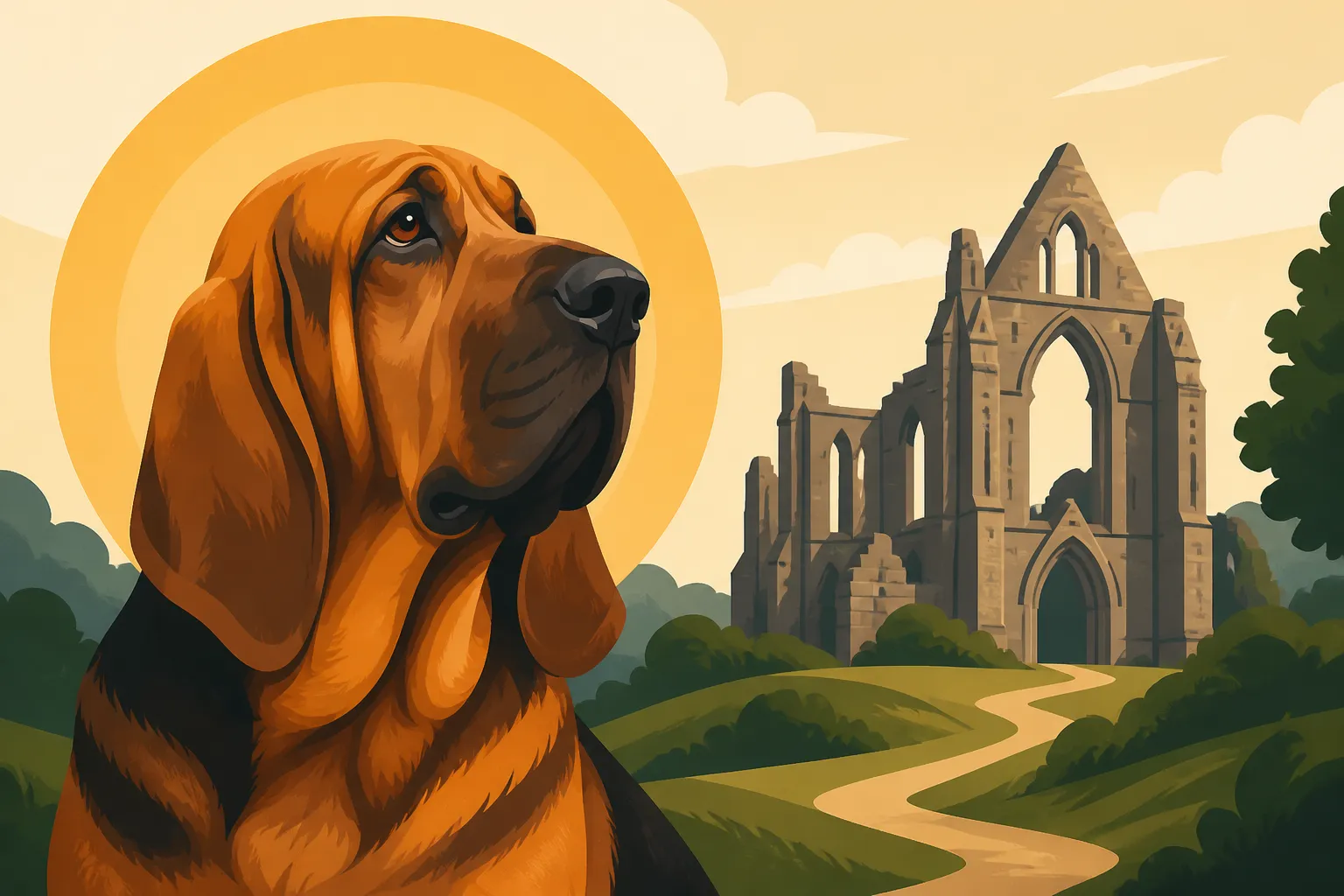
Where the Great Abbey of Saint Hubert Stands
It's easy to get lost in the sheer wonder of a Bloodhound's incredible nose, but have you ever stopped to wonder where this amazing breed actually came from? Many people assume they've always been around, or perhaps their history is shrouded in mystery. However, the Bloodhound boasts a rich, documented lineage tied to a very specific, beautiful, and historically significant location that many modern owners might not even know about. This guide will take you on a journey to discover the ancestral home of the Bloodhound, shedding light on the ancient abbey that played a pivotal role in shaping this magnificent breed.
Tracing the Bloodhound's Ancient Roots
Understanding the Bloodhound means understanding its beginnings. This isn't a breed that popped up a few centuries ago; its history stretches back over a thousand years, intertwining with religious orders and the dense, wild forests of a continent long past. When we talk about the Bloodhound's origins, we're really talking about the dedicated work of monks and a particular region that fostered their development.
The Monastery That Started It All
The story of the Bloodhound, or at least its earliest recognized ancestor, begins in the serene yet industrious setting of a monastery. Imagine a time when vast forests covered much of Europe, teeming with game, and hunting was both a sport for nobility and a means of survival. It was within this context that a specific group of individuals began to meticulously breed hounds for their exceptional scenting abilities. This wasn't a haphazard endeavor; it was a focused, almost scientific pursuit, driven by a need for hounds that could follow a cold trail for miles, regardless of terrain. This dedication led to the development of a hound that was renowned throughout the region, laying the groundwork for the dog we know and love today.
The monks understood the value of selective breeding long before modern genetics became a field of study. They kept careful records, choosing only the best trackers to continue the line, ensuring that the unique olfactory gifts were passed down. This careful stewardship meant that their hounds quickly gained a reputation, not just locally, but across different kingdoms and noble houses, all seeking these superior scent hounds. When the Monks Began Breeding the Bloodhound's Ancestor speaks to this profound history, showing how deeply rooted this breed's development is in ancient monastic practices.
The Saint Behind the Hound
Every great historical lineage often has a figurehead, and for the Bloodhound, that figure is Saint Hubert. He wasn't merely a passive observer; his legend and life became intrinsically linked with the hounds bred at the abbey named after him. Saint Hubert was a nobleman, a hunter whose life took a profound turn after a spiritual experience in the forest. He eventually became the patron saint of hunters, and the abbey founded in his honor became the epicenter for breeding these magnificent tracking dogs.
The connection between Saint Hubert, the abbey, and the hounds is more than just a namesake. It represents a commitment to the art of venery (hunting), coupled with a deep respect for the animals and the environment. The monks carried on Saint Hubert's legacy, refining the hounds to an unparalleled degree. If you're curious about the man himself, you can learn more about Who Saint Hubert Was and how his story became intertwined with the very essence of tracking and the Bloodhound breed. His influence created a standard of excellence that endured for centuries, shaping the breed's reputation as the ultimate trailing dog.
Locating the Abbey of Saint Hubert
So, where exactly is this legendary place where the Bloodhound's story truly began? It’s not a mythical land, but a very real, tangible location with a vibrant history that continues to draw visitors today. Knowing its geographical context helps paint a clearer picture of the environment in which these hounds were perfected.
Nestled in the Ardennes Forest
The Abbey of Saint Hubert is situated in the heart of the Ardennes, a region renowned for its dense forests, rolling hills, and rugged terrain. This area, spanning parts of modern-day Belgium, Luxembourg, and France, provided the perfect proving ground for scent hounds. The varied landscape, with its thick woods, winding rivers, and diverse wildlife, demanded a dog with exceptional stamina, unwavering focus, and an unparalleled nose. It was here, amidst the challenging natural environment, that the monks cultivated the qualities that define the Bloodhound.
The specific location within the Ardennes is in what is now known as Saint-Hubert, Belgium. This town, deeply proud of its heritage, still celebrates its connection to the hounds and the saint. The forest itself is a vast, ancient expanse that would have been far wilder in the medieval period, making the task of trailing all the more critical and the skills of the hounds all the more valuable. The ruggedness of the Ardennes helped forge a dog that was not only adept at trailing but also hardy and resilient. For a deeper understanding of the geographic context, Where the Ardennes Is delves into the details of this historically significant region.
A Modern-Day Pilgrimage Site
Today, the Abbey of Saint Hubert, though no longer an active monastery in the traditional sense, stands as a magnificent basilica, drawing tourists, history buffs, and, of course, Bloodhound enthusiasts from all over the world. It’s a place where you can almost feel the echoes of the past, envisioning the monks and their hounds setting off into the vast wilderness. The town of Saint-Hubert continues to honor its heritage with various festivals and events, often featuring hounds and celebrating the region's hunting traditions.
Visiting the abbey is more than just a sightseeing trip; it's a connection to the living history of the Bloodhound. You can walk the grounds, admire the architecture, and reflect on the thousands of years of dedication that went into creating this incredible breed. For many Bloodhound owners, it's a pilgrimage, a chance to touch the very roots of their beloved companion's lineage. It serves as a powerful reminder that the Bloodhound isn't just a pet; it's a living piece of history, a testament to centuries of careful breeding and tradition.
The Chien de Saint Hubert and Its Legacy
The hounds bred at the Abbey of Saint Hubert were not initially called "Bloodhounds" in the way we use the term today. They were known by a different name, reflecting their origin and the specific purpose for which they were bred. Understanding this original designation helps clarify the breed's early history and its subsequent global spread.
Purpose of the Original Hounds
The original hounds developed by the monks were called the "Chien de Saint Hubert." These dogs were primarily bred for tracking game, particularly deer and boar, through the dense Ardennes forests. Their incredible scenting ability made them invaluable for recovering wounded animals, ensuring that no game was lost. This specialized skill was highly prized, especially by nobility who engaged in grand hunts. The Chien de Saint Hubert became synonymous with perseverance, accuracy, and an unmatched ability to follow a trail.
These dogs weren't just fast; they were relentless. They possessed the kind of deep, resonant bay that could carry across miles of forest, alerting hunters to their progress. Their large, heavily wrinkled heads and long ears, which we recognize in modern Bloodhounds, were all functional attributes, designed to help them gather and hold scent. If you want to dive deeper into their original role, What the Chien de Saint Hubert Was Used For offers more insights into the daily life and work of these ancestral hounds. They were, in essence, the ultimate tracking machines of their era.
How the Breed Reached Other Lands
The reputation of the Chien de Saint Hubert spread far beyond the Ardennes. Noble families and rulers across Europe desired these exceptional hounds for their own hunting parks and estates. As a result, the hounds were exported, gifted, and eventually bred in other countries. It was through these transfers, particularly to England, that the breed began to evolve and solidify into what we now recognize as the Bloodhound.
When these hounds arrived in England, they were maintained and further developed by English breeders, who continued the tradition of selective breeding for scenting prowess. This cross-cultural exchange and adaptation are crucial to understanding the Bloodhound's journey from a regional specialty to a globally recognized breed. The question of How the Bloodhound Reached England is key to understanding this transition, as it marked a significant step in the breed's evolution and popularization. While Belgium still recognizes the direct descendants as the Chien de Saint Hubert, the English line solidified the "Bloodhound" name and characteristics known today.
Distinguishing the Modern Bloodhound from its Ancestor
While the spirit and incredible nose remain, the modern Bloodhound isn't a carbon copy of its ancient ancestor. Like all breeds that have evolved over centuries, there have been subtle shifts in appearance, temperament, and even the specific applications of their trailing talents.
Evolution of Traits and Appearance
The Chien de Saint Hubert likely shared many characteristics with today's Bloodhound, including the profound nose and the loose skin. However, centuries of selective breeding, different environmental pressures, and varying cultural preferences would have led to gradual changes. For instance, the emphasis on conformation in show rings, combined with continuing work as scent hounds, has likely contributed to the distinctive, heavily wrinkled head and deeply folded skin that are hallmarks of the modern Bloodhound. These traits, while sometimes posing specific health challenges like skin fold dermatitis (which requires diligent cleaning – many owners find a good range of specialized wipes and cleaners on platforms like Chewy), are also functional, believed to help collect and funnel scent towards their powerful noses.
Think of it as a continuous refinement process. The basic blueprint was established by the monks, but subsequent generations of breeders in different countries, like England, continued to select for traits they deemed most desirable or effective for their specific needs. This means while the core essence of the breed remains, the specific physical characteristics have been honed and exaggerated over time.
The Enduring Scenting Prowess
Despite any physical evolution, one thing has remained constant and indeed, has been celebrated and enhanced: the Bloodhound's unparalleled scenting ability. Whether it was trailing game in the Ardennes or searching for missing persons in modern cities, the nose of this breed has always been its defining feature. It's this incredible olfactory power that sets the Bloodhound apart, earning it a unique place in both historical records and modern law enforcement.
The sheer volume of scent receptors and the unique structure of their nasal passages mean they can detect and follow incredibly faint and old trails. This genetic predisposition, honed by centuries of breeding, is what makes them such effective trackers. It's why, even today, they are the only breed whose scent evidence is accepted in court, a testament to the reliability of their noses. This consistency in their core ability truly underscores the enduring legacy of the Saint Hubert monks' initial vision. The question of Whether a Bloodhound Beats a German Shepherd on Scent highlights just how specialized and potent the Bloodhound's nose truly is, solidifying its status as the world's premier scent hound.
The Saint Hubert Hound Today
You might be wondering if the original "Chien de Saint Hubert" still exists as a separate entity today, or if it's been completely absorbed into the modern Bloodhound. The answer is a fascinating blend of historical preservation and modern breed recognition.
Recognition and Continued Breeding Efforts
In Belgium, the ancestral land of the Abbey of Saint Hubert, the breed known as the Chien de Saint Hubert is still recognized and bred. While undeniably sharing a common ancestor with the English Bloodhound, it's often considered a distinct lineage, maintained with a focus on preserving the characteristics of the original hounds. This means that while they might look strikingly similar to the Bloodhound we see in America or the UK, there's a conscious effort to adhere to historical standards specific to the Belgian interpretation of the breed.
These breeding efforts are typically undertaken by dedicated enthusiasts who feel a strong connection to their national heritage and the profound history of these dogs. They ensure the line continues, safeguarding a piece of living history that connects directly back to the medieval monastery. This ongoing distinction clarifies the breed's journey and acknowledges the different paths its descendants have taken. If you're curious, Whether the Saint Hubert Hound Still Exists Separately provides more detailed information on this topic.
Preserving the Heritage
The preservation of the Saint Hubert Hound is not just about breeding dogs; it's about safeguarding a cultural and historical legacy. This includes maintaining performance standards for tracking, honoring the historical connection to the Abbey, and educating the public about the breed's unique origins. For those involved, it's a testament to the enduring influence of the monks of Saint Hubert and their vision for the ultimate scent hound.
This commitment to heritage means that events and demonstrations often take place, showcasing the abilities of these hounds in a manner that reflects their historical purpose. It’s a beautiful way to keep the past alive and ensure that future generations can appreciate the depth of the Bloodhound's history. From educational materials to carefully planned breeding programs, the focus is on maintaining the integrity of this ancient and noble line.
Why the Abbey's Location Matters to Bloodhound Owners
For many of us who share our lives with a Bloodhound, understanding their history, and particularly the significance of the Abbey of Saint Hubert, adds another layer of appreciation for these wonderful creatures. It's not just trivia; it enriches the entire ownership experience.
Connecting with History
Knowing that your drooling, lovable companion descends from a lineage meticulously bred by medieval monks in a specific, historical abbey is truly something special. It transforms the mundane aspects of daily care into a connection with centuries of history. When you're wiping down those infamous folds (perhaps with supplies you ordered from Chewy), or carefully cleaning those long ears, you're participating in a routine that has echoes stretching back through time, acknowledging the very characteristics that made their ancestors so remarkable.
This historical connection fosters a deeper respect for the breed's purpose and its journey. It helps owners understand why their Bloodhound is so driven by scent, why off-leash adventures are often a fantasy (because that nose will always outvote the ears!), and why their perseverance is legendary. It’s a reminder that these aren't just dogs; they are living artifacts of a specialized past. The Abbey of Saint Hubert Bred the Bloodhound's Ancestor ties directly into this profound sense of connection, highlighting the direct link between the ancient abbey and your companion.
Understanding the Breed's Purpose
The location of the Abbey of Saint Hubert in the wild, rugged Ardennes forest fundamentally shaped the Bloodhound's purpose. It wasn't a breed developed for companionship in a cozy home (though they excel at that too!) but for intense, demanding work in challenging environments. This understanding helps owners appreciate their Bloodhound's instincts, energy levels, and unique traits. Their incredible endurance, their deep bay, and their seemingly independent nature are all rooted in their history as tireless trackers across vast, untamed landscapes.
This context also explains why activities like mantrailing or scent work are so deeply fulfilling for Bloodhounds today. You're not just training a dog; you're tapping into a thousand years of genetic programming. Providing outlets for their innate scenting drive is not just good for their physical health but absolutely vital for their mental well-being. It's about honoring the breed's original purpose and allowing them to express the incredible abilities that were so carefully cultivated at that ancient abbey in the Ardennes.
Here's a quick comparison of the ancestral Chien de Saint Hubert and the modern Bloodhound:
| Feature | Chien de Saint Hubert (Ancestral) | Modern Bloodhound (Contemporary) |
|---|---|---|
| Origin Point | Abbey of Saint Hubert, Ardennes (Belgium) | Primarily England (development) |
| Primary Purpose | Tracking large game (deer, boar) | Trailing humans (missing persons, fugitives) |
| Appearance | Large, powerful, deep bay; likely less exaggerated skin than modern variety | Very large, heavy bone, profuse loose skin, profound wrinkles, long ears; powerful bay |
| Temperament | Persistent, focused, independent tracker | Persistent, focused, gentle, amiable, independent tracker |
| Key Trait | Unparalleled scenting ability | Unparalleled scenting ability (legally admissible) |
| Current Status | Recognized in Belgium as a distinct breed | Recognized globally, often by AKC/KC standards |
This article is for general informational purposes only and does not constitute professional advice. Laws, prices and regulations vary by location and change over time. Consult a qualified professional for guidance on your specific situation.