Whether a Bloodhound Policy Caps Bloat
It’s a terrifying thought for any Bloodhound owner: that sudden, life-threatening emergency known as bloat. We all know how quickly it can strike, and how devastatingly expensive the emergency surgery can be. The financial burden adds another layer of terror to an already horrifying situation, leading many of us to wonder if our beloved hound's pet insurance policy will actually stand by us when it matters most, or if there's some hidden cap that leaves us scrambling. This guide is here to shed light on how pet insurance typically handles bloat and whether your policy might cap the coverage for this critical condition.
Understanding the Beast: Gastric Dilatation-Volvulus (Bloat)
Bloat, or Gastric Dilatation-Volvulus (GDV), isn't just an upset stomach; it's a rapidly progressing, life-threatening condition that occurs when a dog's stomach fills with gas, food, or fluid and then twists, cutting off both ends. For Bloodhounds, with their deep, narrow chests, the risk is alarmingly high. It's a medical emergency that requires immediate veterinary intervention, often within minutes, if your dog is to have any chance of survival. Bloat Is What Kills Most Bloodhounds
The Mechanics of Bloat in Bloodhounds
Imagine your Bloodhound, with its majestic, deep chest. That anatomical feature, while striking, actually creates a cavernous space where the stomach can distend and then flip. The ligaments that hold the stomach in place can stretch, making it easier for the stomach to twist on its axis. When this twisting happens, it traps gas, food, and fluids inside, leading to intense pressure and pain. Blood flow to the stomach and other organs is severely compromised, causing irreversible damage in a very short time. It's a brutal condition, and every second counts. Why a Bloodhound's Chest Shape Causes Bloat
The signs can be subtle at first, then progress rapidly. You might see your Bloodhound pacing, trying to vomit but producing nothing, drooling excessively, or acting restless. Their abdomen might appear swollen or taut to the touch. This isn't something you can wait out; it's a sprint to the nearest emergency veterinary clinic. Learning to recognize Signs a Bloodhound Is Bloating can literally be the difference between life and death.
Why Bloat is a Veterinary Emergency
When a Bloodhound's stomach twists, it's not just discomfort; it's a systemic crisis. The pressure from the distended stomach can compromise the diaphragm, making breathing difficult. The lack of blood flow can lead to tissue death in the stomach wall, and toxins can be released into the bloodstream, leading to shock. The spleen can also be pulled into the twist, requiring its removal. Without immediate surgery to untwist the stomach (detorsion) and often a gastropexy (tacking the stomach to the abdominal wall to prevent future twists), the outcome is almost always fatal. How Fast Bloat Kills a Bloodhound is measured in hours, not days.
This is why we stress the urgency. There’s no home remedy, no wait-and-see option. It’s an immediate dash to the vet, often in the middle of the night, where your Bloodhound will need a team of professionals to stabilize them and perform complex, life-saving surgery.
The Staggering Cost of Bloat Treatment
Let's be blunt: treating bloat is incredibly expensive. It's not a simple office visit; it's an emergency surgery, often requiring overnight hospitalization, specialized monitoring, and extensive post-operative care. This is where the real worry sets in for many Bloodhound owners, as the bill can quickly climb into the thousands.
Breaking Down the Bloat Bill
When your Bloodhound goes in for emergency bloat surgery, you’re looking at a multi-faceted bill. First, there's the emergency consultation fee, which is often higher outside regular business hours. Then, the diagnostics – X-rays to confirm GDV, blood work to assess organ function and overall health. Stabilization efforts often involve IV fluids, pain medication, and sometimes even oxygen therapy. The surgery itself is a major procedure, requiring general anesthesia, skilled surgeons, and surgical assistants. What Emergency Bloat Surgery Costs on a Bloodhound includes the surgeon's fees, anesthesia time, and all the supplies used in the operating room.
But it doesn't stop there. Post-operative care is critical. Your Bloodhound will likely need to stay in intensive care for several days, receiving continuous monitoring, pain management, more IV fluids, and careful nutritional support. What a Bloodhound's Night in Intensive Care Costs can easily add hundreds, if not a thousand or more, to the total bill, depending on the clinic and the specific needs of your dog. There may also be follow-up appointments, additional medications, and special dietary instructions as they recover. All these factors add up, making it one of the most financially draining emergencies a pet owner can face.
The Value of Preventive Gastropexy
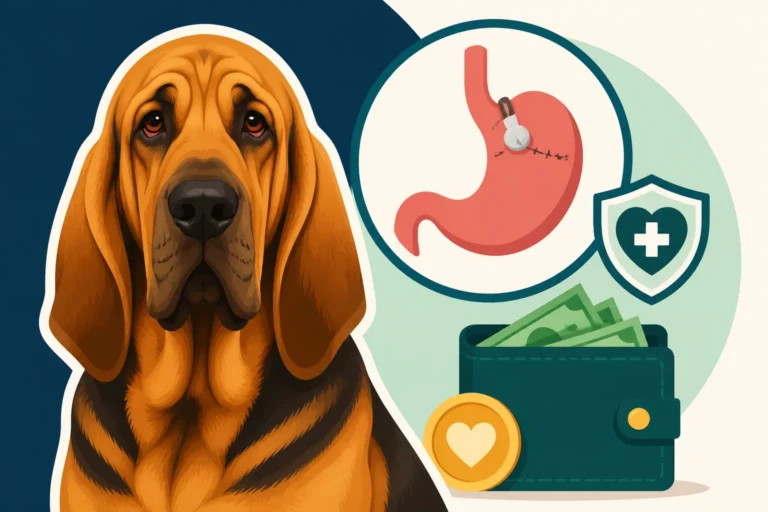
Given the high risk and astronomical cost of emergency bloat surgery, many Bloodhound owners, and indeed veterinarians, advocate for a preventive measure called gastropexy. This elective surgery involves surgically attaching the stomach to the abdominal wall, preventing it from twisting in the future. It doesn't prevent the stomach from filling with gas (dilatation), but it does prevent the deadly twist (volvulus). The Gastropexy Decision Every Bloodhound Owner Faces is a serious one, but it can literally save a life and prevent massive emergency bills.
A preventive gastropexy is significantly less expensive than emergency bloat surgery because it’s a planned procedure. It can often be done laparoscopically, which is less invasive and has a faster recovery time, and sometimes it can even be scheduled concurrently with a spay or neuter. While it's still a surgery with its own costs, What a Preventive Gastropexy Costs on a Bloodhound is typically a fraction of the emergency price. For owners who choose this route, it offers immense peace of mind.
How Pet Insurance Generally Works for Emergencies
Navigating pet insurance can feel like trying to solve a Bloodhound-level scent puzzle. There are so many terms, so many policy types, and so many caveats. Understanding the basics is key to knowing what to expect when a crisis like bloat hits.
Deductibles, Reimbursement Rates, and Annual Limits
Most pet insurance policies operate with a deductible, which is the amount you pay out-of-pocket before your insurance starts covering costs. This might be a per-incident deductible or an annual deductible, depending on your plan. After you meet your deductible, the insurance company will reimburse you a certain percentage of the covered veterinary expenses, known as the reimbursement rate. Common rates range from 70% to 90%. So, if your reimbursement rate is 80% and your bill is $5,000 (after deductible), the insurance would pay $4,000.
Then there are annual limits. This is the maximum amount your insurance company will pay out in covered expenses during your policy year. Some policies have very high annual limits, like $10,000, $20,000, or even unlimited. Other policies might have lower limits. It's crucial to understand these three numbers for any policy you consider. Many companies, such as Healthy Paws, are known for offering high or unlimited annual limits, which can be a huge comfort for breeds prone to expensive emergencies like Bloodhounds.
Exclusions and Waiting Periods
Every pet insurance policy comes with exclusions, which are conditions or treatments that the policy will not cover. Pre-existing conditions are almost always excluded, meaning if your Bloodhound had symptoms or was diagnosed with an illness before you enrolled or during the waiting period, that illness won't be covered. This is why it's so important to insure your Bloodhound as early as possible, ideally when they are a puppy.
Waiting periods are also standard. This is a specific amount of time after your policy's effective date during which certain conditions are not covered. For accidents, waiting periods are often short (a few days), but for illnesses, they can be 14-30 days. Some policies have even longer waiting periods for orthopedic conditions like hip dysplasia. It's critical to review these waiting periods carefully, especially for high-risk conditions like bloat, to ensure your Bloodhound is covered when you expect them to be. Make sure you read the fine print before signing up.
Specifics of Bloat Coverage in Pet Insurance Policies
Now, let's get down to the nitty-gritty: how pet insurance policies specifically address bloat, and whether those dreaded caps come into play. This is where understanding your policy's terms truly matters.
Does Pet Insurance Cover Emergency Bloat Surgery?
Generally speaking, yes, most comprehensive pet insurance policies will cover emergency bloat surgery (GDV) as an unexpected illness or accident, provided the condition is not pre-existing and occurs after your policy's waiting period. This is precisely the kind of unforeseen, high-cost emergency that pet insurance is designed for. The expenses covered typically include the emergency exam, diagnostics (X-rays, bloodwork), the surgical procedure itself (detorsion and gastropexy if performed during the emergency), anesthesia, hospitalization, medications, and post-operative care.
However, the extent of this coverage will always be subject to your policy's deductible, reimbursement rate, and overall annual limit. If your policy has a $5,000 annual limit and your bloat surgery bill comes to $8,000, you would be responsible for the remaining $3,000 (plus your deductible and any co-pay). This is why choosing a policy with a high or unlimited annual limit is often recommended for Bloodhound owners.
Caps and Limits on Bloat-Related Claims
This is the big question: do policies cap bloat coverage? While most reputable pet insurance companies do not have specific, separate caps solely for bloat (meaning it doesn't have a lower limit than other conditions), the overall annual limit of your policy will certainly apply. So, if your policy has a $10,000 annual limit, and your Bloodhound has $8,000 in bloat-related expenses, that $8,000 counts towards your $10,000 limit for the year. If another emergency or illness happens later in the same policy year, you would only have $2,000 remaining in coverage.
Some older or more basic policies might have lower annual limits that could feel like a cap when a condition as expensive as bloat strikes. For instance, a policy with a $3,000 annual limit would effectively cap bloat coverage if the surgery costs $6,000. It's not a bloat-specific cap, but an overall policy limitation that becomes very apparent during such an expensive event. Always check the overall annual maximum payout. Companies like Healthy Paws are popular for their comprehensive coverage with high or unlimited annual limits, giving owners more confidence in facing such expenses. Whether a Bloodhound Policy Caps Bloat really comes down to the terms of your specific policy's overall limits.
Coverage for Preventive Gastropexy
This is where things can get a bit tricky and vary more widely between providers. Some pet insurance companies do not cover preventive gastropexy because it is an elective, scheduled procedure rather than an emergency. They see it as a choice made by the owner, not a response to an unforeseen illness. This means that if you proactively have your Bloodhound's stomach tacked to prevent bloat, you might be paying for that procedure entirely out of pocket. Whether a Gastropexy Is Covered by Insurance is a question you absolutely must ask your insurance provider directly.
However, some progressive policies, or those with optional "wellness" riders, might offer some coverage for elective procedures like a preventive gastropexy. Given the breed-specific risk for Bloodhounds, it’s worth inquiring if any part of the procedure could be covered under a wellness plan or if a specific rider addresses preventive surgeries. If it's done during an emergency bloat surgery, the gastropexy part of the procedure is usually covered, as it's considered part of the necessary life-saving intervention. But for a planned, elective procedure, coverage is less common and warrants direct confirmation with your insurer.
Choosing the Right Insurance Policy for Your Bloodhound
Picking pet insurance for a Bloodhound isn't a decision to take lightly. Given their unique health challenges and potential for costly emergencies like bloat, you need a policy that truly offers robust protection.
Evaluating Policy Features for a High-Risk Breed
When insuring a Bloodhound, you're not just looking for basic coverage. You need to scrutinize policies for several key features. High annual limits are paramount – ideally, unlimited, or at least a very substantial amount like $15,000 or $20,000. As we discussed, bloat surgery alone can easily hit the five-figure mark, and that's just one potential incident. Consider also the reimbursement rate; a higher rate (90%) will save you more money in an emergency than a lower one (70%). Your deductible should be manageable, but remember that a higher deductible usually means lower monthly premiums.
Look into coverage for hereditary and congenital conditions. Bloodhounds are prone to certain eye issues, hip and elbow dysplasia, and heart conditions. While bloat isn't strictly hereditary in the same way, the anatomical predisposition certainly is. You want a policy that doesn't shy away from covering these common breed-specific ailments. Brands like Healthy Paws are often praised for their comprehensive coverage that includes hereditary conditions. What Insuring a Bloodhound Costs Monthly can seem like a lot, but it’s an investment against much larger, unexpected bills.
Reading the Fine Print: The Devil is in the Details
Before committing to any policy, read the entire policy document, not just the summary. Pay close attention to sections on exclusions, waiting periods, and how breed-specific conditions are handled. Specifically, ask about bloat and gastropexy coverage. Don't assume anything. Call the insurance provider and ask direct questions:
- "If my Bloodhound experiences GDV, what specific costs are covered?"
- "Is there a per-incident limit for bloat, or does it fall under the overall annual limit?"
- "What is the waiting period for bloat coverage?"
- "Does your policy cover an elective preventive gastropexy?"
Understanding these details before an emergency strikes is crucial. Many online platforms, like Chewy's pet insurance marketplace, allow you to compare policies side-by-side, which can be a good starting point for detailed research.
Comparing Providers for Bloodhound Needs
It's wise to compare several reputable pet insurance providers. Look for companies known for strong customer service and clear communication, as you’ll need them during stressful times. Beyond the big names, many regional providers offer competitive plans.
Here's a simple comparison table of general pet insurance policy aspects to consider when shopping for your Bloodhound:
| Feature/Policy Aspect | Lower-Tier Policy (Example) | Mid-Tier Policy (Example) | High-Tier/Comprehensive Policy (Example) |
|---|---|---|---|
| Annual Limit | $2,500 – $5,000 | $10,000 – $15,000 | $20,000 – Unlimited |
| Reimbursement Rate | 70% | 80% | 90% |
| Deductible Options | Limited (e.g., $500, $750) | Flexible ($250-$1000) | Very Flexible ($100-$1000+) |
| Waiting Period (Illness) | 30 days | 14-30 days | 14 days (often shorter for accidents) |
| Preventive Gastropexy Coverage | Unlikely to be covered | Possible with wellness rider | More likely with wellness rider/specific policy |
| Hereditary Conditions | May have lower limits | Standard coverage | Comprehensive coverage |
| Customer Support | Standard | Good | Excellent, 24/7 options |
Remember, these are examples. Always get a specific quote and review the policy details for your own Bloodhound. Brands like Healthy Paws are often mentioned in Bloodhound circles for their robust offerings for large breeds prone to conditions like bloat. The Deductible a Bloodhound Owner Should Choose depends on your financial comfort level and how much premium you're willing to pay monthly.
Beyond Insurance: Financial Preparedness for a Bloodhound
While pet insurance is a cornerstone of responsible Bloodhound ownership, it shouldn't be your only financial safety net. A multi-pronged approach to financial preparedness can offer even greater peace of mind.
Building an Emergency Fund
Even with the best insurance policy, you'll still have out-of-pocket expenses: your deductible, your co-pay (the percentage not reimbursed), and any costs that exceed your annual limit. This is why having a dedicated emergency fund for your Bloodhound is so incredibly important. Aim to save several thousand dollars, enough to cover at least one major emergency or a significant portion of an emergency bloat surgery. Whether a Bloodhound Owner Needs an Emergency Fund is not a question, it's a certainty.
This fund acts as your immediate liquidity, allowing you to pay the veterinary clinic upfront (as most require payment at the time of service) while you wait for insurance reimbursement. It also covers any treatments or medications that might not be fully covered by your plan. Think of it as your personal buffer, ensuring that financial concerns never delay critical care for your beloved hound.
Utilizing Health Savings and Flexible Spending Accounts
For those who are employed and have access to them, Health Savings Accounts (HSAs) or Flexible Spending Accounts (FSAs) can sometimes be used for veterinary expenses, depending on your specific plan and IRS regulations. While usually associated with human healthcare, some allow for pet-related medical costs if the pet is considered a "medical dependent." It's worth investigating with your HR department or plan administrator to see if this is an option for you.
Even if they don't cover direct vet bills, using these accounts for your own health expenses frees up other funds that you can then allocate to your Bloodhound's emergency fund. Every little bit of strategic financial planning helps ensure you're ready for whatever your hound throws at you – literally, sometimes!
Proactive Health Management and Budgeting
Beyond reactive measures, proactive health management can help mitigate some costs. Regular veterinary check-ups can catch issues early before they become emergencies. Investing in high-quality nutrition, perhaps from services like Ollie which provides fresh, customized meal plans, can contribute to overall health and potentially reduce instances of diet-related issues, though it won't prevent bloat entirely. Regular exercise appropriate for a growing Bloodhound, The Exercise Limit on a Growing Bloodhound, and diligent hygiene for their ears and folds can prevent infections that lead to costly vet visits.
Budgeting for routine care – annual exams, vaccinations, parasite preventatives (flea, tick, heartworm), and professional grooming if you don't do it yourself – allows you to incorporate these predictable costs into your monthly expenses. When you have a handle on the regular costs, you can better plan for the unexpected. Remember, a healthy Bloodhound is a happier Bloodhound, and often, a less expensive one in the long run.
Disclaimer
This article is for general informational purposes only and does not constitute professional advice. Laws, prices and regulations vary by location and change over time. Consult a qualified professional for guidance on your specific situation.