Why a Bloodhound Ignores a Cue It Knows
It’s a scenario every Bloodhound owner knows well: you call your dog, use a cue they’ve flawlessly performed countless times in the living room, and outdoors, you might as well be talking to a brick wall. It's frustrating, even embarrassing, when your Bloodhound seems to completely ignore you, especially when you know they understand what you’re asking. This comprehensive guide will dive deep into the unique Bloodhound psyche, explaining why your beloved scent hound sometimes acts deaf to your commands, and how you can work with their incredible natural drives to build a more responsive partnership.
The Overpowering Call of the Nose
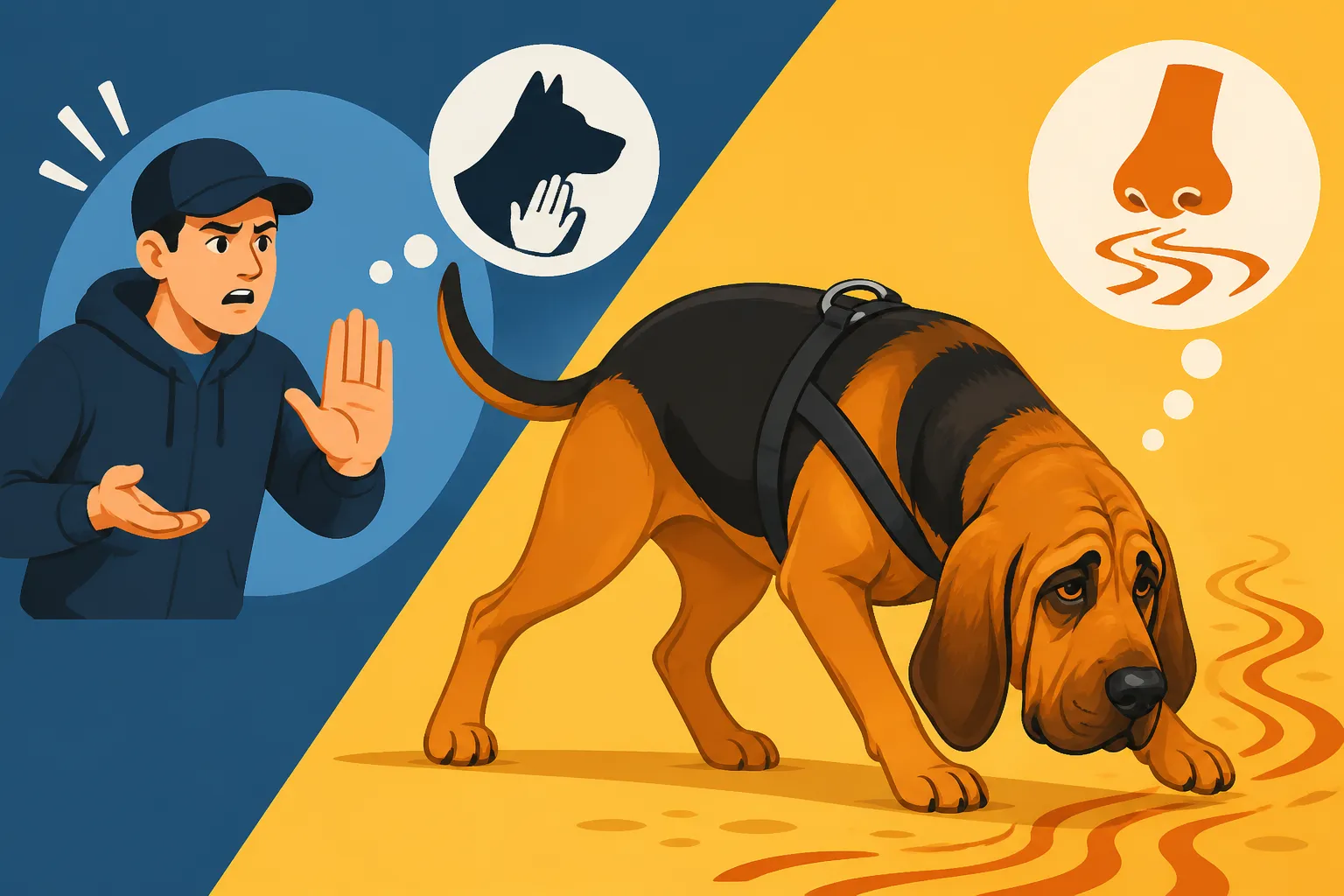
Let's face it, your Bloodhound isn't ignoring you out of malice or defiance. They're simply built differently, with a nose that operates on a whole other level than almost any other creature on the planet. When your Bloodhound "ignores" a cue, it's almost always because something in the environment has triggered that unparalleled scenting drive, making everything else, including your voice, fade into the background.
A World Measured in Scent
Imagine stepping into a concert hall where the music is so loud, so overwhelming, that you can't hear your friend whispering next to you. That's a bit like what happens when a Bloodhound encounters an interesting scent. Their nose isn't just detecting odors; it's constructing a rich, complex narrative of who passed by, when, where they went, and even how they felt. This isn't just a distraction; it's their entire world lighting up with an irresistible story.
Their olfactory system is an absolute marvel, packed with millions more scent receptors than humans have. Their long, pendulous ears don't just look distinctive; they actually help sweep ground-level scents up towards their nose, creating a highly concentrated "scent cone" that intensifies the experience. When they drop their head and those ears drag along, they are literally immersing themselves in a vibrant, unseen world of information. For them, ignoring that world is like trying to ignore gravity—it's against their very nature.
Scent Drive as a Primary Motivator
For many dog breeds, food, toys, or praise are primary motivators. For a Bloodhound, while they appreciate those things, the act of following a trail and unraveling a scent mystery is often the ultimate reward. This is why traditional obedience, which relies heavily on these more common motivators, can feel like such an uphill battle with a Bloodhound. You might have the tastiest treat in your hand, but if there's a fascinating trail of a squirrel, a delivery driver, or a passing deer, that scent almost always wins.
Understanding this fundamental truth is the first step to managing their "selective hearing." It’s not a behavioral flaw on their part; it’s an intrinsic, powerful drive. Trying to suppress it completely is not only futile but can also be detrimental to their well-being. Instead, we need to learn how to harness and redirect this drive, or at least how to compete with it effectively. This often means embracing activities like Mantrailing Is the Answer to a Bloodhound, Not Obedience, which leans into their natural talents rather than fighting them.
The Bloodhound Brain: Not Stubborn, But Single-Minded
It's easy to label a Bloodhound as stubborn when they don't do what you ask, especially when you know they've mastered the cue in a less distracting environment. However, "stubborn" implies a conscious choice to defy, and that's rarely the case with these incredible hounds. Their brains are wired for a specific purpose, and when that purpose is activated, it tends to override other processes.
Focus vs. Defiance
When a Bloodhound is "on scent," their focus is absolute. It's a hyper-focused state where the entire world shrinks to the minutiae of odor particles and the direction of the trail. This isn't them thinking, "I heard mom, but I don't feel like coming." It's more like their brain has entered a different operating mode where your verbal cues are simply not registering as important input compared to the flood of olfactory data. They are utterly consumed by the task their genetics prepared them for.
This intense focus is what makes them such exceptional tracking dogs, capable of following trails for miles, even days later, over varied terrain. But it's also what makes them a challenge in a suburban park. It's not defiance; it's an unwavering commitment to their most powerful sense. They aren't trying to be difficult; they are simply being a Bloodhound.
The Learning Curve of Generalization
Dogs don't automatically generalize commands from one environment to another. A "sit" in your quiet living room is a completely different challenge than a "sit" next to a bustling schoolyard or a freshly scent-marked lamppost. For a Bloodhound, the difference is even more profound because of the sensory overload of the outdoor world. They might perform a perfect sit in the kitchen, but the moment a compelling scent hits their nose outside, that cue may as well be in a foreign language.
To truly "know" a cue, a Bloodhound needs to practice it consistently in a wide array of environments, gradually increasing distractions. This process, known as generalization, is vital. It takes patience and understanding that just because they performed it once, doesn't mean they can perform it anywhere. Building up to reliable outdoor cues means creating a hierarchy of distractions, starting very low and slowly adding more complexity.
Training Challenges: When a Bloodhound "Forgets"
The frustration of a Bloodhound seemingly forgetting a well-known cue can be disheartening. You put in the work, they learned it, and then suddenly, it's gone. This isn't a lapse in memory, but often a result of context, distraction, and the sheer power of their primary drive.
The Impact of Environmental Distractions
Think about the sheer number of distractions a Bloodhound encounters on a walk. There's the faint scent of a rabbit that darted across the path hours ago, the lingering aroma of someone's discarded sandwich, the layered history of every dog that has peed on that tree. Each one of these is a story, an unfolding mystery that screams for investigation. Compared to these rich narratives, your simple "come" cue can feel incredibly bland.
The more novel or compelling the scent, the deeper your Bloodhound will dive into it. This is why some cues might work perfectly in your familiar backyard but fall apart completely when you're exploring a new trail at a state park. The sheer volume and intensity of new olfactory information in an unfamiliar place can completely overwhelm their ability to process your requests. It highlights why Why Off Leash Is Not a Goal With a Bloodhound is such a critical concept for responsible ownership.
Cue Fade and Lack of Reinforcement
Sometimes, a cue seems to "fade" not because the Bloodhound forgot it, but because it hasn't been consistently reinforced in increasingly challenging environments. If you only ask for a "sit" when you know your Bloodhound will comply, and then try it when they are heavily distracted without adequate reinforcement for success, the cue loses its power. They learn that in high-distraction environments, the cue is optional, or worse, that it's a precursor to you getting frustrated.
It’s crucial to make sure that every time you give a cue, you're prepared to follow through and ensure success, even if it means physically guiding them or using a strong lure. And the reward for successfully disengaging from an exciting scent to perform your cue needs to be incredibly high-value – think sizzling hot dogs or a favorite squeaky toy, not just a dry biscuit. This consistent, high-value reinforcement in varying contexts is what builds reliability.
| Scenario | Typical Dog Response | Bloodhound Response (Often) | Explanation |
|---|---|---|---|
| "Come!" at the park | Returns for treat/praise | May not acknowledge cue | Overwhelmed by myriad scents, the "story" of the environment is far more compelling than owner's voice. |
| "Stay" near a squirrel | Holds position with effort | Breaks, pursues | Prey drive and the immediate, visual/olfactory stimulus override learned restraint. |
| "Sit" at vet's office | Sits after a moment | Distracted, may need repeat | Novel smells (other animals, antiseptic) create a busy sensory environment, reducing focus on handler. |
| "Leave it" on a dropped food item | Avoids item | Investigates, may consume | The immediate, high-value scent of food on the ground is an intense motivator. |
| "Heel" past a scent post | Walks beside owner | Pulls, sniffs intently | The detailed olfactory information at a scent post provides an irresistible narrative to explore. |
Managing Distraction: Setting Your Bloodhound Up for Success
Given their incredible noses and single-minded focus, setting your Bloodhound up for success means understanding their limitations and proactively managing their environment. This isn't about crushing their spirit but about creating training scenarios where they can succeed.
Leash Management and Secure Environments
For a Bloodhound, a long line is your best friend. How Long a Line a Bloodhound Handler Buys is often longer than what other breeds use, because it allows them a wider radius to explore scents safely while still keeping them connected to you. Off-leash is almost never a safe option for a Bloodhound outside of a truly secure, scent-free, escape-proof environment. Their nose will lead them far, far away, oblivious to boundaries or traffic.
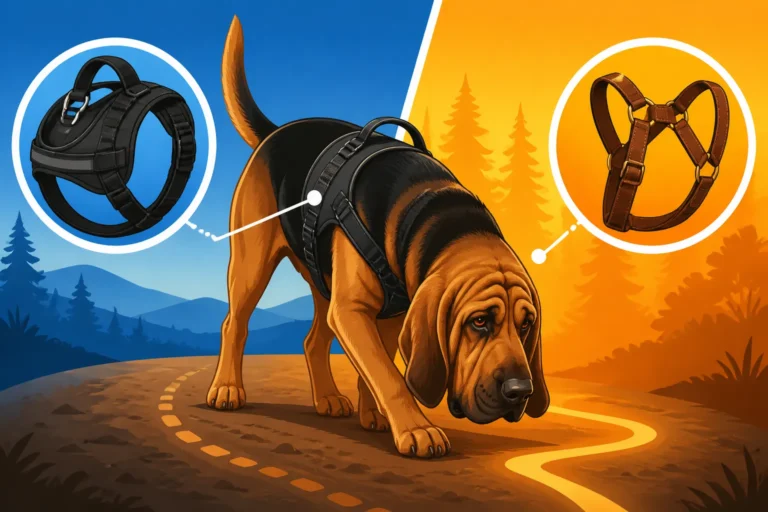
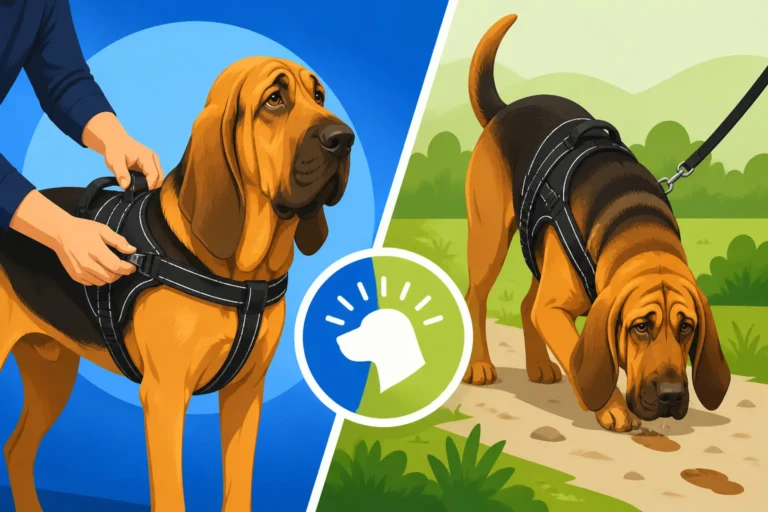
Even in a fenced yard, it’s crucial to assess if the fence is truly Bloodhound-proof. Can they dig under it? Can they squeeze through a loose board? Their persistence when on a scent can be astounding. For walks, always use a sturdy, well-fitting harness that discourages pulling, as their powerful necks and chests can easily strain on a collar. Brands like those found on Amazon offer a wide variety of durable harnesses and long lines that can stand up to a determined Bloodhound.
Structured Scent Work and Mental Stimulation
Instead of fighting their scent drive, lean into it. Structured scent work, like mantrailing or tracking, gives them a productive outlet for their natural talents. These activities are incredibly mentally stimulating and can actually help tire a Bloodhound out far more effectively than a simple walk. When they've had a good, challenging "work" session using their nose, they are often much calmer and more receptive to other forms of training.
Consider engaging in classes or private sessions with a trainer experienced in scent work. This can teach you how to properly lay trails and how to read your Bloodhound's body language when they are working. This focused activity can be a powerful way to bond with your dog and satisfy their deepest instincts, which in turn can make them more cooperative in other areas of life. A mentally fulfilled Bloodhound is generally a happier, more settled Bloodhound.
Building a Stronger Bond and Reliable Cues
While a Bloodhound's nose will always be paramount, you can absolutely build a strong enough bond and reliable enough cues to navigate the world together. It requires patience, consistency, and a deep understanding of what motivates your particular hound.
High-Value Reinforcement and Motivation
We've talked about it before, but it bears repeating: for a Bloodhound, rewards need to be seriously good. A plain biscuit might cut it in the kitchen, but outside, you'll need something much more compelling to compete with a fresh rabbit trail. Think soft, meaty treats, bits of cheese, or even small pieces of cooked chicken or hot dogs. The reward should be delivered immediately upon successful completion of the cue, making it clear that your request led to that amazing prize.
Varying your rewards can also keep things interesting. Sometimes it's a super treat, other times it's a favorite squeaky toy, or even a quick game of tug. The key is to make yourself the most interesting and rewarding part of their environment, even when exciting scents are calling. The better you make it for them to respond to you, the more likely they are to choose you over a fleeting smell.
Consistency and Repetition in Varied Settings
Building reliability is a marathon, not a sprint. Practice your cues daily, in short, positive sessions. Start in low-distraction environments and gradually introduce more. This means doing "sits" in the living room, then the backyard, then a quiet street, then a slightly busier park, and so on. Each time you increase the distraction, slightly increase the value of your reward for success.
Don't be afraid to go back to basics if a cue breaks down. If your Bloodhound fails to "come" at the park, don't just keep calling them. Go get them, gently lead them back to a less distracting area, and practice the cue there with high-value treats until they succeed, then slowly reintroduce the distraction. Think of it as building layers of reliability, one successful repetition at a time. Programs like BAXTER & Bella can offer structured approaches to building this consistency, especially for puppies and young dogs.
Realistic Expectations: What You Can (and Can't) Achieve
It’s easy to feel disheartened when your Bloodhound doesn't conform to the "perfectly obedient dog" stereotype. But for a Bloodhound, expecting perfect obedience in all situations is simply unrealistic and unfair to the breed. Embracing their unique nature is key to a happy partnership.
Understanding Breed-Specific Traits
Bloodhounds were bred for one thing: to follow a scent, tirelessly and single-mindedly. They are not typically known for lightning-fast recalls or precision heeling when a compelling scent is present. Their independent nature and powerful drive mean they often need more consistent management and a different approach to training than many other breeds. Accepting this fundamental truth will save you a lot of frustration.
It's helpful to compare a Bloodhound not to a Border Collie, but to other working dogs with specialized drives. You wouldn't expect a sled dog to excel at delicate agility, just as you shouldn't expect a Bloodhound to ignore a world of scent. Focus on what they can do incredibly well and channel their energy into those pursuits. Recognize that their "stubbornness" is often a manifestation of their unparalleled genetic gifts.
Prioritizing Safety and Enjoyment
Ultimately, your goal should be to keep your Bloodhound safe and to enjoy your time together. This means always having them on a long line in unfenced areas, ensuring your yard is secure, and understanding that their nose will always lead them. While you can build incredible responsiveness over time, there will likely always be moments when their primal instincts take over.
Instead of fighting it, learn to embrace it. Find joy in watching them work a trail, even if it's just a squirrel trail in your local park. Celebrate their unique abilities and understand that their world is simply richer and more complex than ours in one very specific, powerful way. Their dedication to scent is not a fault; it's a marvel that we, as their human companions, are privileged to witness and protect. The First Year With a Bloodhound That Already Wants to Trail is a journey of learning how to integrate their natural instincts with your life.
Remember, every Bloodhound is an individual, but their core drive is universal. Patience, understanding, humor, and a consistent supply of high-value treats (or a rewarding trail) will get you much further than frustration ever will.
Disclaimer
This article is for general informational purposes only and does not constitute professional advice. Laws, prices and regulations vary by location and change over time. Consult a qualified professional for guidance on your specific situation.