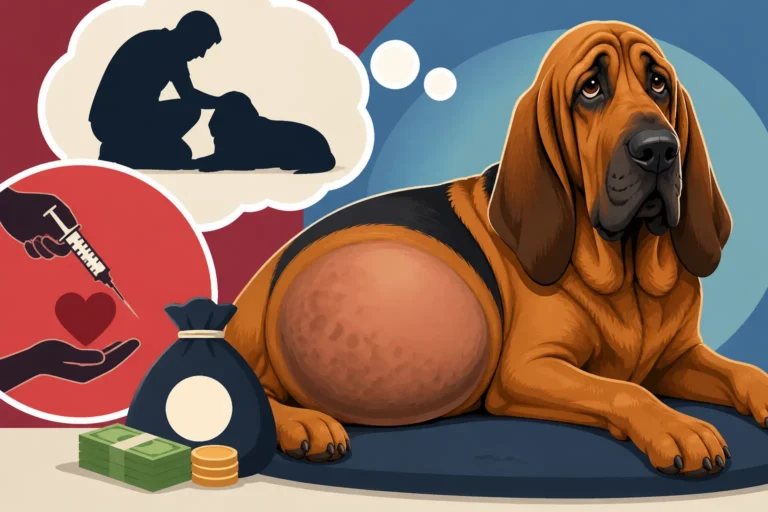
Whether Splitting a Bloodhound’s Meals Costs More
It's a common worry among Bloodhound owners, especially those new to the breed, that adopting the recommended practice of splitting meals throughout the day might somehow increase their monthly budget for dog food. You already know these magnificent hounds can be expensive in a number of ways, and the thought of adding to that financial burden just for feeding can be daunting. But let's get real: the actual cost of the food itself doesn't change when you divide it into two or three servings instead of one big gulp. What does change, however, are some indirect factors and, more importantly, the potential for significant savings on health costs down the line. This guide will walk you through the nuances of meal splitting for your Bloodhound, dispelling myths about increased costs and highlighting the invaluable benefits that truly matter.
The Straightforward Truth About Meal Portioning and Food Costs
When we talk about splitting your Bloodhound's meals, we're simply talking about taking the same total daily amount of kibble or food and dividing it into smaller, more frequent portions. So, if your Bloodhound needs, say, six cups of food per day, whether you feed that as one giant meal, two three-cup meals, or three two-cup meals, you're still feeding six cups of food. The amount of kibble you buy from Chewy or your local pet supply store, and therefore its cost, remains precisely the same over the course of the week or month.
The misconception often comes from a place of human experience – we tend to think of multiple meals as more food. But for our Bloodhounds, it's about how that food is presented and consumed, not about increasing the overall quantity. In fact, many owners find that when they split meals, their Bloodhound feels more satisfied throughout the day, potentially reducing instances of begging or trying to "counter surf" for extra snacks between feedings. This can actually prevent unplanned food costs, like replacing items your hungry hound might decide to "sample" if they're feeling particularly peckish between meals.
Calorie Count Stays Consistent
The nutritional needs of your Bloodhound don't suddenly increase because you've decided to feed them twice or thrice a day. Their total caloric intake, based on their age, weight, activity level, and overall health, remains constant. Your veterinarian will typically recommend a daily caloric target, which you then translate into a specific amount of food. Splitting this amount simply means you're distributing those calories more evenly.
Think of it this way: if your vet suggests 2,000 calories a day for your active adult Bloodhound, you'll find a food that provides a certain number of calories per cup. You then measure out the appropriate number of cups to reach that 2,000-calorie mark. Dividing those cups doesn't add more calories to the bag; it just means your Bloodhound gets a steady supply of energy without the dramatic peaks and valleys of a single, massive meal. This consistent energy release can lead to a more stable demeanor and better digestive function, preventing issues that might otherwise lead to costly vet visits.
No Impact on Food Brand or Quality
Your choice of food brand, whether it's a premium brand like Ollie or your preferred kibble, is also completely independent of your feeding schedule. Splitting meals doesn't force you to buy more expensive food or a different type of food. You continue to purchase the same high-quality, large-breed formula that you've chosen for your Bloodhound. The decision to split meals is a management strategy, not a dietary alteration that requires a change in your grocery list.
The benefit here, however, is that by feeding smaller, more frequent meals, you might actually get more out of the food you're already buying. Better absorption and digestion mean your Bloodhound is utilizing the nutrients more effectively, potentially improving coat health, energy levels, and overall vitality without any additional food expense. It's about optimizing what you already provide.
Understanding the True Value: Preventing Costly Health Scares
While the direct cost of the food itself doesn't increase, the financial impact of not splitting your Bloodhound's meals can be astronomical. The most critical reason to feed multiple smaller meals is to mitigate the risk of Gastric Dilatation-Volvulus (GDV), commonly known as bloat. This is not just a mild stomach ache; it's a life-threatening emergency that can develop rapidly and requires immediate, expensive veterinary intervention.
Bloodhounds, with their deep, narrow chests, are particularly predisposed to bloat. When they gulp down a large meal quickly, they can ingest a lot of air, which causes their stomach to distend. This distended stomach can then twist, cutting off blood supply and trapping gas. The ensuing emergency surgery is one of the most expensive veterinary procedures a dog owner might face, and even with surgery, the outcome isn't guaranteed.
The True "Cost" of Bloat
Let's not sugarcoat it: a bloat emergency is terrifying, and the financial toll can be immense. When a Bloodhound bloats, time is of the essence. You're looking at an emergency clinic visit, potentially after-hours, which always carries a higher price tag. The diagnostic tests, stabilization procedures, and ultimately, the intricate surgery to untwist the stomach and often perform a gastropexy (suturing the stomach to the abdominal wall to prevent future twisting) can add up quickly.
We're talking about bills that easily run into thousands of dollars, depending on your location, the time of night, and any complications. Many owners find themselves facing a heart-wrenching decision due to these costs. This is where the "cost" of not splitting meals becomes overwhelmingly clear. Proactively managing bloat risk through meal splitting is a tiny, practically free habit that can save you from a devastating financial hit and, more importantly, save your beloved Bloodhound's life. It is often the primary reason What a Bloodhound's Bloat Surgery Bill Comes To can be so high.
Long-Term Digestive Health Benefits
Beyond preventing bloat, splitting meals can simply lead to a healthier, happier digestive system for your Bloodhound. Large meals can overwhelm the digestive tract, leading to issues like indigestion, excessive gas, or even regurgitation. Smaller, more frequent meals allow the digestive system to process food more efficiently, leading to better nutrient absorption and fewer uncomfortable gastrointestinal events.
Consider how much you might spend on over-the-counter digestive aids, special diets, or even vet visits for chronic digestive upset if your Bloodhound constantly struggles after eating. While these might not be as dramatic as a bloat emergency, they are still recurring costs that add up over time. By establishing a healthy feeding routine, you can minimize these expenses and keep your Bloodhound feeling good, day in and day out. This proactive approach supports overall well-being and might reduce the need for veterinary intervention related to digestive issues.
Practical Considerations for Implementing Split Meals
Adopting a split-meal schedule for your Bloodhound is usually quite simple, but it does require a bit of planning and consistency. The key is to commit to a routine that works for both you and your dog, recognizing that the benefits far outweigh any minor inconveniences.
Time Management and Consistency
The biggest "cost" of splitting meals isn't monetary, but rather a slight increase in your time commitment. Instead of one scoop-and-serve, you're looking at two or three. For most busy households, this isn't a huge burden, but it's worth acknowledging. You'll need to establish regular feeding times and stick to them as much as possible. Bloodhounds thrive on routine, and consistent meal times help regulate their metabolism and digestive system.
If you have a demanding work schedule, consider automating some aspects. Programmable feeders can be a lifesaver, dispensing measured portions at set times, even when you're not home. However, for Bloodhounds prone to gulping, you'll still want to be present for at least one meal to supervise. Or you might consider a slow feeder bowl, which introduces its own slight upfront cost, but helps your dog eat at a more measured pace. You can find excellent slow feeders on Chewy, designed to make your hound work a little for their meal.
The Need for Special Equipment
While not strictly necessary, some owners find certain feeding accessories invaluable when implementing split meals, especially for a large, enthusiastic eater like a Bloodhound.
Here’s a look at common accessories:
| Accessory Type | Purpose | Potential Cost Impact | Benefit |
|---|---|---|---|
| Slow Feeder Bowls | Prevents rapid eating, reduces air intake | Small upfront cost | Significantly reduces bloat risk, improves digestion |
| Elevated Bowls | Can improve posture for some dogs, may reduce strain | Small upfront cost, debated bloat link | Comfort, may reduce neck strain for large breeds |
| Programmable Feeders | Automates meal delivery at set times | Moderate upfront cost | Convenience for busy owners, ensures consistency |
| Snoods | Keeps long ears out of food/water | Small upfront cost | Prevents ear contamination, reduces cleaning frequency |
Note: While elevated bowls are often suggested for large breeds, some studies have indicated a potential correlation with increased bloat risk. Always discuss feeding ergonomics with your vet, especially for a deep-chested breed like a Bloodhound. Whether a Raised Bowl Is Right for a Bloodhound is a topic with ongoing discussion.
A snood, while not directly related to meal splitting, is a piece of equipment many Bloodhound owners consider essential for mealtimes. It's a fabric tube that goes over your dog's head to keep their long, majestic ears out of their food and water. This prevents food from clinging to their ears, which means less cleaning for you and fewer potential ear infections – another potential long-term cost saving! What a Snood Does for a Bloodhound is a vital piece of the Bloodhound care puzzle.
The Health Savings that Outweigh Any Perceived "Extra" Cost
The real economic argument for splitting your Bloodhound's meals lies in the significant health savings it can provide. While the bag of food costs the same, avoiding a major medical crisis can save you thousands of dollars, not to mention immense emotional stress.
Mitigating Bloat Risk and Associated Veterinary Bills
As we've discussed, bloat is the most pressing concern. By consistently feeding smaller meals and ensuring your Bloodhound rests before and after eating, you drastically reduce their risk of this devastating condition. Think of it as a form of preventative medicine that costs you nothing extra in terms of food.
If your Bloodhound were to bloat, even with pet insurance like Healthy Paws, you'd still likely be looking at your deductible and potentially a co-insurance payment, which can still be a considerable sum for a multi-thousand-dollar emergency surgery. Without insurance, the full brunt of the bill falls on you. This single, proactive measure of splitting meals is one of the most effective ways to avoid that scenario. The Gastropexy Decision Every Bloodhound Owner Faces is another major preventative measure, but splitting meals is a daily habit everyone can adopt.
Better Weight Management and Joint Health
Bloodhounds, like many large breeds, can be prone to hip and elbow dysplasia. Maintaining a healthy weight is crucial for managing these conditions and preventing them from worsening. Feeding multiple smaller meals can help your Bloodhound feel fuller longer, making it easier to control their overall caloric intake and prevent overeating.
An overweight Bloodhound puts extra strain on their joints, accelerating the onset or severity of arthritis and other mobility issues. These conditions often require long-term management with pain medication, joint supplements, physical therapy, or even surgery, all of which incur significant costs. By helping your Bloodhound maintain an ideal body condition through mindful feeding, you're investing in their long-term joint health and saving on potential future veterinary expenses related to weight-related problems. Hip and Elbow Dysplasia in the Bloodhound can be aggravated by excess weight, making proper meal portioning an even greater benefit.
Improved Digestion and Nutrient Absorption
When a Bloodhound scarfs down a huge meal, their digestive system might struggle to process it all effectively. This can lead to less efficient absorption of nutrients, meaning that even if you're feeding a high-quality food, your dog might not be getting the full benefit. Smaller, more manageable meals allow the digestive enzymes to work more thoroughly, breaking down food properly and maximizing nutrient uptake.
Better nutrient absorption translates to a healthier dog overall – a shinier coat, more consistent energy, and a stronger immune system. These factors contribute to fewer minor health issues, potentially reducing visits to the vet for things like dull coat, low energy, or vague digestive complaints. While less dramatic than bloat, these small savings add up over your Bloodhound's lifespan, contributing to a lower overall cost of ownership and a higher quality of life for your cherished companion. How Many Meals a Day a Bloodhound Should Eat is a commonly asked question precisely because of these health implications.
Conclusion: An Investment in Health, Not an Increase in Cost
In the grand scheme of Bloodhound ownership, the idea that splitting meals "costs more" is a common misunderstanding. The direct cost of the food itself remains exactly the same. What you are actually investing in is your Bloodhound's health and well-being, which, in turn, can lead to substantial financial savings by preventing serious, expensive medical emergencies like bloat.
By adopting a routine of two or three smaller meals per day, you're not just pouring food into a bowl; you're implementing a vital preventative health measure. You're ensuring better digestion, managing bloat risk, and supporting optimal weight and joint health. Any minor "costs" – like a few extra minutes of your day or the one-time purchase of a slow feeder from Chewy – pale in comparison to the thousands you could spend on emergency surgery or chronic health issues. Ultimately, splitting your Bloodhound's meals is a simple, effective, and essentially free way to contribute to a longer, healthier, and happier life for your beloved hound.
Disclaimer
This article is for general informational purposes only and does not constitute professional advice. Laws, prices and regulations vary by location and change over time. Consult a qualified professional for guidance on your specific situation.