Whether a Gastropexy Is Standard for Bloodhounds Now
The fear of bloat is a heavy cloud hanging over many Bloodhound owners. This sudden, deadly condition can steal our beloved companions in a matter of hours, leaving us feeling helpless and heartbroken. For years, emergency surgery was the only hope, but now, preventive measures like gastropexy are becoming an increasingly common topic of discussion. This guide will delve into whether a gastropexy is now considered a standard part of responsible Bloodhound care and what you need to know to make the best decision for your furry family member.
The Terrifying Reality of Bloat in Bloodhounds
No Bloodhound owner wants to hear the word "bloat," but the grim reality is that this breed is particularly vulnerable to it. Gastric Dilatation-Volvulus (GDV), or bloat, is a life-threatening condition where a dog's stomach fills with gas, food, or fluid, and then twists upon itself. This twisting cuts off blood supply to the stomach and can compress major blood vessels, leading to shock, organ damage, and ultimately, death if not treated immediately. It’s a terrifying, fast-acting emergency that demands immediate veterinary attention.
Why Bloodhounds Are So Susceptible to Bloat
Bloodhounds, like many large and giant breed dogs, possess a unique anatomical predisposition to bloat. Their characteristic deep, narrow chests are a significant risk factor. Imagine their stomach as a pendulum in a tall, narrow bell – it has more room to swing and twist within the abdominal cavity. This isn't just anecdotal; scientific studies have consistently highlighted the correlation between deep-chested breeds and a higher incidence of bloat. It's an unfortunate truth that comes with their magnificent structure, something that makes them such incredible scent hounds. Understanding why a Bloodhound's chest shape causes bloat is the first step toward appreciating the need for preventative action.
Beyond chest conformation, other factors contribute to their susceptibility. Eating too quickly, exercising vigorously after eating, stress, and even genetics can play a role. Some studies suggest a familial link, meaning if a Bloodhound's close relatives have bloated, their risk might be higher. It's not just one thing; it's a perfect storm of elements that makes Bloodhounds tragically prone to this condition. This makes preventive strategies all the more crucial for their well-being.
The Urgency of Bloat: What Happens When It Strikes
When bloat strikes, time is of the essence. You might notice your Bloodhound trying to vomit but producing nothing, pacing anxiously, drooling excessively, or having a distended, hard abdomen. These signs mean you have mere minutes, not hours, to get to an emergency veterinary clinic. Bloat is what kills most Bloodhounds, and it does so with terrifying speed. The stomach's twisting action quickly leads to shock as blood flow is cut off, causing rapid cell death and systemic failure.
The pain is immense, and their condition deteriorates rapidly. What starts as discomfort quickly escalates to a critical emergency. Owners often describe the feeling of powerlessness as they watch their strong, vibrant hound succumb to this sudden illness. Even with immediate intervention, the outcome is never guaranteed, and the cost of emergency treatment can be astronomical. The emotional toll of facing such a crisis is immense, and for many, the idea of preventing such an ordeal becomes paramount.
What a Gastropexy Actually Does for Your Bloodhound
Given the dire threat of bloat, many Bloodhound owners are now exploring proactive measures. This is where the gastropexy comes in – a surgical procedure designed to prevent the stomach from twisting. It's a game-changer for breeds at high risk.
How Gastropexy Prevents Stomach Twist
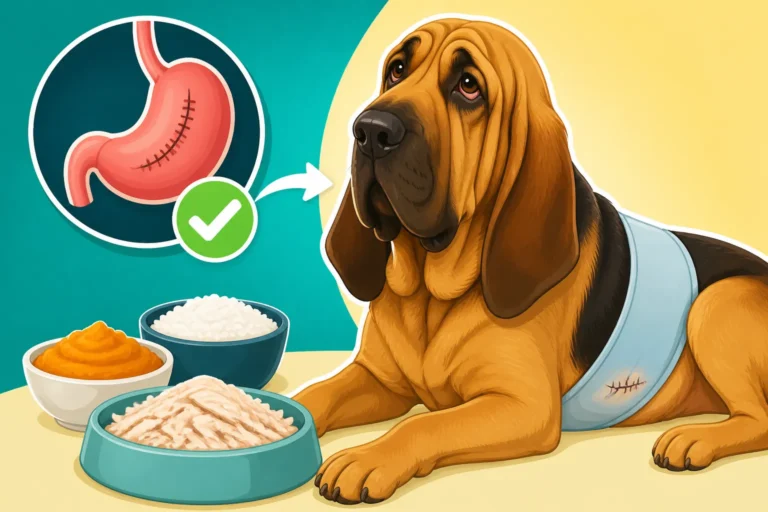
A gastropexy essentially tacks the stomach to the inside of the abdominal wall. Think of it like anchoring a swinging door. The surgeon permanently attaches a section of the stomach wall to the abdominal wall, typically using sutures or sometimes staples, thereby preventing it from rotating. The stomach can still expand and fill with gas (dilate), but it cannot twist (volvulus). This distinction is critical because it's the twisting that leads to the life-threatening complications of GDV.
The procedure can be performed conventionally with an open incision or laparoscopically, which is less invasive. Whether a laparoscopic gastropexy suits a Bloodhound depends on factors like the dog's size, the vet's experience, and the equipment available. While a gastropexy doesn't prevent bloat (the gas-filling part), it does prevent the deadly stomach torsion, buying critical time and often allowing the gas to pass naturally or be relieved by a vet without emergency surgery. It's a preventative measure that offers tremendous peace of mind.
Gastropexy vs. Emergency Bloat Surgery: A World of Difference
It's crucial to understand that a gastropexy is not the same as emergency bloat surgery. When a Bloodhound comes in with full-blown GDV, the veterinary team is racing against the clock. First, they must stabilize the dog, which often involves IV fluids for shock and sometimes decompressing the stomach by inserting a tube or needle. Then, the surgeon manually untwists the stomach, assesses for damage (sometimes requiring removal of parts of the stomach or spleen), and then performs a gastropexy to prevent recurrence. This is a far more complex, risky, and expensive procedure.
A preventive gastropexy, on the other hand, is usually performed when the dog is healthy, often during spay or neuter. The animal is not in shock, the stomach is not damaged, and the surgery is much simpler and safer. This proactive approach significantly reduces the risk of ever needing that frantic, high-stakes emergency operation. Knowing what a preventive gastropexy does for a Bloodhound highlights its immense value in averting a crisis.
Is Gastropexy the New Standard for Bloodhound Care?
The landscape of veterinary care for at-risk breeds is evolving, and for Bloodhounds, gastropexy is increasingly moving from an optional procedure to a highly recommended one.
Growing Consensus Among Vets and Breeders
There's a noticeable shift in veterinary recommendations. Many veterinarians who work with large and giant breeds like Bloodhounds are now routinely discussing gastropexy with owners. They understand the statistics and the devastating impact of bloat. This isn't just about avoiding emergency situations; it's about improving the overall health and longevity of these magnificent dogs. Breeders, too, are becoming more vocal about the benefits. Responsible Bloodhound breeders are often the first to educate new puppy owners about bloat risk and the option of prophylactic gastropexy. They want to ensure their puppies live long, healthy lives, free from the shadow of this deadly condition. This growing consensus reflects a commitment to advanced preventative care.
Many owners opt to have the procedure done when their Bloodhound is young, often at the same time as their spay or neuter. The age a Bloodhound should have a gastropexy can vary, but typically, it's recommended before they reach full maturity, often between six months and two years of age. This allows the dog to recover while still young and resilient, before they encounter situations that might trigger bloat later in life.
The Financial and Emotional Investment in Prevention
Let's be realistic: owning a Bloodhound is an investment, both financially and emotionally. A preventive gastropexy can certainly feel like an added expense upfront. The cost can range from a few hundred dollars to over a thousand, depending on your location, the type of surgery (open vs. laparoscopic), and the veterinary practice. However, when you compare this to what emergency bloat surgery costs on a Bloodhound – which can easily run into the thousands, often $4,000 to $8,000 or more – the preventive procedure becomes a wise financial decision.
| Feature | Preventive Gastropexy | Emergency Bloat Surgery (with Gastropexy) |
|---|---|---|
| Timing | Planned, healthy dog, often with spay/neuter | Emergency, critical condition |
| Complexity | Less complex, fewer complications likely | Highly complex, severe complications possible |
| Risk to Dog | Lower risk | High risk of mortality (up to 30-50%) |
| Cost | Typically hundreds to low thousands | Often multiple thousands (e.g., $4,000-$8,000+) |
| Recovery | Generally smoother, faster | Intensive, longer, more difficult |
| Peace of Mind | High, greatly reduces GDV twisting risk | Minimal, only addresses immediate crisis |
Beyond the money, consider the emotional toll. Watching your Bloodhound in excruciating pain, enduring a frantic midnight dash to the emergency clinic, and then waiting anxiously for hours for surgery results is an experience no one wants. The gastropexy alleviates much of that potential anguish. Pet insurance providers like Healthy Paws often cover gastropexy if it's considered medically necessary preventative care or if it's done in conjunction with a covered surgery like a spay/neuter (always check your specific policy details!). This makes the decision even easier for many families.
Considerations Before Deciding on a Gastropexy
While the benefits of gastropexy are clear, it's still a surgical procedure, and every dog is an individual. Before deciding, you should have a thorough discussion with your veterinarian. They will assess your Bloodhound's overall health, age, and any existing conditions to determine if they are a good candidate for surgery. For instance, if your Bloodhound has a history of heart issues, additional cardiac screening might be necessary.
You'll also want to discuss the different surgical techniques available – traditional open surgery versus laparoscopic. Laparoscopic procedures tend to have faster recovery times and less post-operative pain, which can be appealing. Ask about the experience of the veterinary team with gastropexies and their post-operative care protocols. While a gastropexied Bloodhound can still bloat, meaning their stomach can fill with gas, the critical difference is that it cannot twist, which is the deadly component. Therefore, continuing to manage feeding practices, like providing multiple smaller meals a day and avoiding strenuous activity after eating, remains important even after surgery.
Beyond the Surgery: Ongoing Care for Your Bloodhound
A gastropexy is a fantastic tool in the fight against bloat, but it's not a magic bullet that lets you ignore all other preventative measures. Responsible Bloodhound ownership means continued vigilance and care.
Post-Gastropexy Life and Monitoring
After a gastropexy, your Bloodhound will need some quiet time to recover. This usually involves a period of restricted activity, pain management, and monitoring of the incision site. Most Bloodhounds bounce back quickly, especially if the procedure was done electively when they were young and healthy. You'll need to prevent them from licking or chewing the incision, often with an Elizabethan collar (the "cone of shame").
It's important to remember that even with a gastropexy, a Bloodhound can still experience gastric dilatation – meaning the stomach can fill with gas. The crucial difference is that it won't twist. So, you should still be aware of the signs of bloat, such as restlessness, attempts to vomit, and abdominal discomfort. If you see these signs, even with a gastropexy, it's wise to contact your vet. The stomach can still distend uncomfortably, and while not immediately life-threatening from a twist perspective, it might still require veterinary intervention to relieve the pressure. Having pet insurance like Healthy Paws can be incredibly helpful for any follow-up care or unexpected health issues that might arise.
Lifestyle Adjustments to Further Reduce Risk
Beyond the surgery, maintaining healthy habits for your Bloodhound is key to reducing their overall bloat risk. This includes feeding them multiple small meals throughout the day instead of one large one. This helps prevent the stomach from getting too full at once. Avoid strenuous exercise or excitement an hour before and after meals. Some owners opt for slow feeder bowls to encourage their Bloodhounds to eat at a more leisurely pace, preventing them from gulping down air with their food.
Managing stress can also play a role, as anxious dogs might be more prone to bloat. Ensure your Bloodhound has a calm feeding environment and minimize any sudden changes to their routine. Staying informed about their health, maintaining a healthy weight, and scheduling regular veterinary check-ups are all part of comprehensive care for your deep-chested companion. You might also want to look into whether a Bloodhound owner should screen for bloat genetics, as understanding family history can add another layer of preventative insight.
Disclaimer
This article is intended for informational purposes only and does not constitute veterinary advice. Always consult with a qualified veterinarian for any health concerns or before making any decisions regarding your Bloodhound's medical care. Individual circumstances can vary, and your vet is the best resource for personalized recommendations.