Whether Television Made the Bloodhound Popular
A familiar image of a long-eared hound following a scent can make the Bloodhound seem like a household name. But being recognizable on television is not the same as becoming a popular pet. This guide separates the breed’s screen presence from real-world ownership, explains what television may have contributed, and looks at why public affection has not translated into widespread demand.
Television made the Bloodhound familiar, not necessarily popular
A recognizable silhouette is easy to use on screen
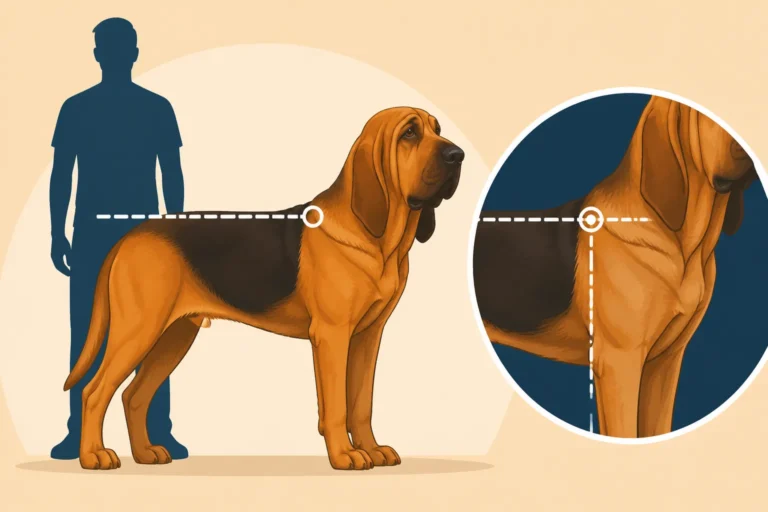
The Bloodhound has a distinctive look: loose skin, long ears, a heavy muzzle, and a serious expression that can read as thoughtful, comic, or determined. Those features make the breed easy to recognize in a quick scene, even for viewers who could not name many dog breeds. Its strong association with tracking gives writers and artists an instant visual shorthand for “the dog that follows a trail.”
That shorthand is useful in television because a character’s traits often need to register quickly. A Bloodhound shown with its nose to the ground can suggest investigation, persistence, or a search for someone who has gone missing. A cartoon version can exaggerate the ears or nose for a joke. In either case, the breed can become familiar as an idea without viewers learning much about what individual Bloodhounds are like at home.
The same distinction applies to many recognizable breeds. A dog can be a memorable character or recurring image without prompting a lasting wave of people to seek that breed out. Television may create a moment of interest, but viewers still have to consider whether the dog fits their home, schedule, and tolerance for everyday care.
For a closer look at the features that make the breed recognizable, see What a Bloodhound Weighs and How Tall It Stands and The Colors a Bloodhound Comes In. Appearance is part of the screen appeal, but it is only one piece of the ownership picture.
Screen portrayals often use a general tracking-dog idea
Not every fictional hound shown searching for a person is necessarily meant to be a Bloodhound. On television, a dog may simply be presented as a “tracking dog,” and its appearance can be simplified or altered to suit the story. Cartoons and children’s programs may borrow familiar traits—drooping ears, a low head, a deep bay—without aiming for an exact representation of the breed.
That makes it difficult to credit television with increasing Bloodhound ownership. A viewer might remember the image of a scent-trailing dog but not know whether the character was meant to be a Bloodhound, another hound, or a fictional mixture of familiar features. Recognition of the role is not the same as recognition of the breed.
Television also tends to compress the work into a satisfying scene. A dog picks up a scent, follows it through a few obstacles, and finds the person before the next commercial break. Real scent work is more complicated. The handler must understand the dog, manage the line, and interpret changing conditions; the dog may work slowly, lose the trail, or need a fresh start. For context on what the breed is actually doing when it follows a trail, read What a Bloodhound Is Actually Smelling on a Trail.
So television can help establish the Bloodhound as the archetypal tracking dog while still leaving viewers with a simplified picture of its abilities and needs. That kind of cultural visibility is real, but it is not strong evidence that the breed became more common in homes because of it.
Why screen recognition does not automatically lead to ownership
Popularity has more than one meaning
When people ask whether television made the Bloodhound popular, they may mean several different things. They might be asking whether more people recognize the breed, whether it appears frequently in entertainment, whether audiences like it, or whether more households actually own one. Those are related questions, but they do not have the same answer.
A breed can be culturally visible while remaining uncommon as a pet. Viewers may know the droopy-eared tracking dog from television and still choose a smaller or quieter companion when they begin looking for a dog. A show can generate affection for a character without changing the practical realities of feeding, exercising, training, and caring for a large scent hound.
| Meaning of popularity | What it describes | What television can influence |
|---|---|---|
| Recognition | How readily people identify the breed | It can make the breed’s appearance or tracking role more familiar |
| Screen presence | How often a breed or breed-like character appears | It can reinforce a familiar image, though fictional dogs may not be accurate |
| Public affection | Whether viewers enjoy or remember the dog | A sympathetic character can make the breed appealing |
| Household ownership | How many people actually keep the breed | Screen exposure alone does not overcome the breed’s practical demands |
| Breed registrations | Recorded puppy registrations within a specific system | A television appearance would need to be linked to registration data to show an effect |
The most careful conclusion is that television may have helped keep the Bloodhound recognizable, but recognition alone does not show that television caused a meaningful increase in ownership. Establishing that kind of cause would require more than pointing to a character or a popular program. It would mean comparing interest or registrations before and after specific portrayals while accounting for other influences, such as breeder availability and general changes in dog ownership.
For the broader context of why visibility and household numbers can diverge, see Where the Bloodhound Sits in AKC Popularity and Why the Bloodhound Never Became a Popular Breed.
The breed’s everyday needs matter more than its television image
A Bloodhound can be gentle and affectionate, but prospective owners need to plan for a large dog with a strong nose and a distinctive voice. A scent can pull attention away from a cue, and a dog following an interesting smell may be less responsive than it is in a familiar, low-distraction setting. Secure outdoor management and consistent training are practical necessities, not optional details suggested only by dramatic television plots.
Noise can also be a real consideration. Bloodhounds may bay, and neighbors in a densely settled area may not find that as charming as an audience watching a brief scene. People considering the breed should think about their housing, their schedule, and how they would respond when the dog vocalizes or wants to follow a scent. Why a Bloodhound Bays and Whether Neighbors Tolerate a Bloodhound cover those day-to-day questions in more detail.
Then there is routine care. Long ears can drag near food and water, and the skin folds and eyes may need regular attention. A short coat does not make the breed effortless to maintain. Owners often need a workable system for cleaning and drying, plus the patience to build handling routines so the dog accepts them comfortably.
Television rarely devotes much time to the unglamorous parts: muddy paws after a walk, a wet ear tip, a trail that takes longer than expected, or a dog that needs a secure lead because it is following its nose. Those realities do not make the breed a poor choice. They simply mean that liking a fictional Bloodhound is a different decision from being ready to live with a real one. The Household a Bloodhound Was Built For offers a useful starting point for assessing that fit.
What television may have contributed to the Bloodhound’s image
The tracking-dog archetype is powerful
The Bloodhound’s television image is closely tied to its historical and cultural reputation as a scent-trailing dog. That association is memorable because it gives the breed a clear role. A familiar breed silhouette paired with a simple action—nose down, ears swinging, following a trail—can tell a story without much explanation.
That image has likely helped keep the Bloodhound in the public imagination, particularly among people who do not meet the breed in everyday life. It also reinforces a longstanding association between the breed and search work. The breed’s real capabilities, however, are not just a matter of a highly developed nose. Training, handling, scent conditions, and the specific task all matter.
It is also worth separating fictional certainty from real-world evidence. A television plot may treat a dog’s response as an unquestionable answer because the story needs to move forward. In actual search work or legal contexts, a dog’s behavior has to be understood within the limits of the work being done, and the handler’s role matters. The topic is explored further in The Bloodhound Is the Only Dog Whose Evidence Stands in Court, including why a dramatic portrayal should not be mistaken for a complete account of how evidence is evaluated.
The breed’s image can also be simplified into a few visual cues: a wrinkled face, hanging ears, a slow, deliberate sniff. Those cues are recognizable, but they do not capture the variety of individual dogs or the practical training needed for scent work. Television is good at creating a vivid symbol; it is not necessarily a reliable guide to breed behavior.
A beloved character can create short-term curiosity
A memorable dog character can prompt viewers to look up a breed, talk about it with family, or imagine having a similar dog. That is a reasonable effect of entertainment. But curiosity does not always become a purchase or adoption. After learning that the breed is large, vocal, scent-driven, and in need of regular ear and skin care, some interested viewers may decide another breed fits their circumstances better.
That can be a positive outcome. Choosing a dog based on a screen image alone may lead to frustration when the real animal does not behave like a trained character or when ordinary care becomes more demanding than expected. A thoughtful pause allows people to consider their living space, access to secure walking areas, comfort with baying, and willingness to train on a long line rather than expect reliable off-leash control.
If a television portrayal has sparked interest, use it as a reason to learn—not as a substitute for meeting the breed or talking with experienced owners. A prospective owner can ask about daily routines, training, social behavior, grooming, and health care. It is also worth considering whether the person is drawn to the actual dog or mainly to the dramatic image of a relentless tracker.
For people researching the practical side, a retailer such as Chewy can help them review the kinds of routine supplies owners may need, including food, cleaning products, and feeding equipment. That shopping research does not establish whether a Bloodhound is the right match, but it can make recurring care needs more concrete before a household commits.
How to judge the claim that television made Bloodhounds popular
Look for evidence about ownership, not just mentions
Anecdotes about a famous dog or a memorable scene can show that the breed appeared in popular culture. They cannot, on their own, demonstrate that more people acquired Bloodhounds because of television. To support a stronger claim, evidence would need to connect particular portrayals with measurable changes in ownership or registrations and distinguish that effect from other trends.
Even registration figures need careful interpretation. They describe dogs recorded in a particular system, not every Bloodhound living in a home. They may not include all rescue dogs, mixed-breed dogs, or animals whose owners do not register them. Likewise, search interest or social media attention can indicate curiosity without showing that households followed through with ownership.
A more balanced way to phrase the relationship is that television may have supported the Bloodhound’s cultural recognition. It can help explain why many people associate the breed with scent tracking, even if they have never met one. That is a meaningful contribution to public awareness, but it is not the same as making the Bloodhound a common household dog.
Use television as a starting point, not a buying guide
If a show or character has made you curious about Bloodhounds, the next step is to learn what life with one actually involves. Spend time around the breed if possible, talk with knowledgeable owners, and ask what a typical week looks like—not just what the dog does at its most impressive. Consider how the dog’s size, voice, scent interests, and care routine would work in your home.
It can also help to make a practical list before deciding:
- Think about secure exercise. A dog focused on a scent needs safe handling, and an ordinary open yard may not provide reliable containment.
- Consider sound and neighbors. Ask yourself how you would manage baying in your specific home and neighborhood.
- Plan for routine care. Ear, eye, and skin-fold checks are part of ownership, not occasional extras.
- Learn about training. A Bloodhound may understand a cue yet find a scent more compelling in a distracting environment.
- Meet individual dogs. A fictional character cannot tell you how a particular dog behaves, settles, or responds to handling.
For the household budget side, researching supplies can help turn vague expectations into a more useful plan. Chewy and other retailers can be places to compare categories of products and think through what would need regular replacement. But product listings cannot replace conversations with a veterinarian or experienced Bloodhound owners about what is appropriate for an individual dog.
The short answer is that television likely helped make the Bloodhound recognizable as a tracking dog, but visibility is not proof that it made the breed broadly popular as a pet. A screen portrayal can introduce the breed; the realities of living with one determine whether the match makes sense. If researching supplies on Chewy or elsewhere is part of your preparation, treat that as one small piece of a larger decision that should include training, secure management, care, and the dog’s fit with your household.
Disclaimer
This article is for general informational purposes only and does not constitute professional advice. Laws, prices and regulations vary by location and change over time. Consult a qualified professional for guidance on your specific situation.