Whether a Bloodhound Puppy’s Color Changes
A Bloodhound puppy’s coat can look noticeably different by the time the dog reaches adulthood, which can leave new owners wondering whether the color is changing normally or whether something is wrong. In most cases, gradual changes come from coat maturation, shedding, and lighting. This guide explains what may shift, what usually stays the same, and when a color change deserves a veterinarian’s attention.
How a Bloodhound puppy’s coat can change
Puppy coat and adult coat are not always identical
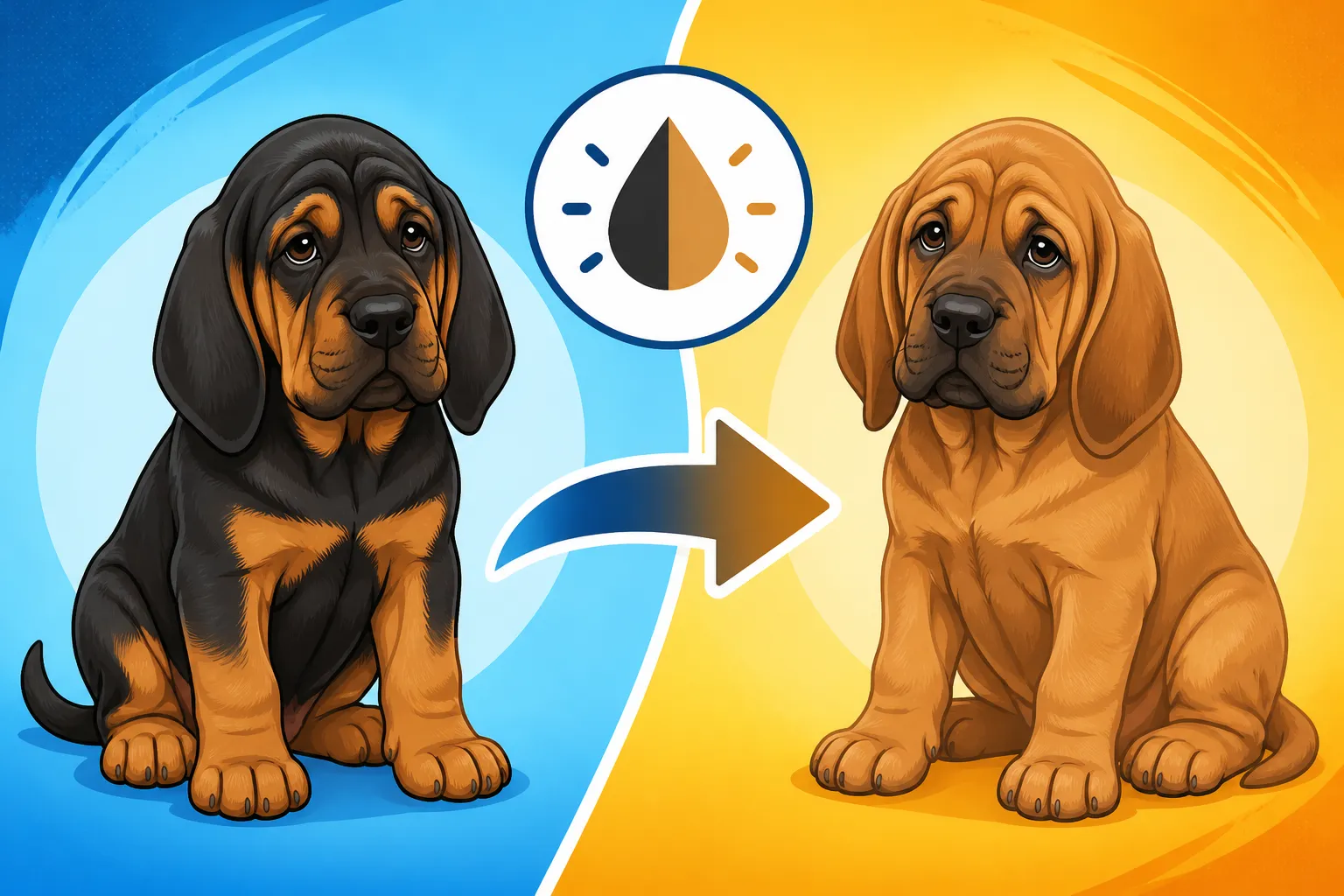
Bloodhound puppies are born with their inherited coat pattern, but the way that pattern appears can change as they grow. The short puppy coat may be softer, fluffier, or less clearly marked than the adult coat. As it sheds and a more mature coat comes in, colors and boundaries between patches may look sharper or different.
Some owners notice that a puppy’s back seems darker at first, then looks lighter or more evenly colored later. Others see the tan areas become easier to distinguish as the coat develops. These shifts can be subtle, and not every Bloodhound puppy goes through the same visible changes. The underlying pattern is inherited; the appearance of the coat can evolve while the puppy matures.
A helpful way to think about it is to compare the coat with a childhood hair color that looks different in different light and at different ages. The color may seem to deepen or soften, but ordinary coat development does not mean the dog’s genetic color has suddenly changed.
The three familiar Bloodhound color patterns
Bloodhounds are commonly seen in black and tan, liver and tan, and red. These labels describe broad coat patterns rather than a promise that every individual will have precisely the same shade or markings. A black-and-tan dog may have a dark saddle over the back and tan areas on the face and legs, for example, but the outline and contrast can vary.
The breed’s recognized colors and markings are covered in The Colors a Bloodhound Comes In and Which Colors the Bloodhound Standard Allows. Those references can help if you are trying to describe a puppy’s coat or compare it with the breed standard. They are less useful as a prediction tool for exactly how one puppy will look as an adult.
| Puppy appearance | What may look different as the coat matures | What to keep in mind |
|---|---|---|
| Black and tan | The dark saddle may seem less sharply outlined, or the tan areas may become more noticeable | Variation in contrast does not necessarily mean the dog is changing color category |
| Liver and tan | Brown areas and tan points may appear richer, lighter, or more distinct | “Liver” describes a brown-based coat, not a health problem |
| Red | The coat may appear deeper or paler depending on shedding and light | Red shades naturally vary between individual Bloodhounds |
| Any of these patterns | White markings may be easier to see as the coat grows or changes | A small marking is different from new, spreading depigmentation |
For more on two common questions about pattern, see Whether Black and Tan Is the Most Common Bloodhound Color and What a Liver and Tan Bloodhound Looks Like. A puppy’s appearance may not match a single tidy example, and photographs can make the same coat look like a different shade from one setting to another.
Why the same coat can look like a new color
Lighting has a surprisingly big effect. A puppy photographed in warm indoor light may look more reddish or golden than the same puppy standing outdoors on an overcast day. Phone cameras also adjust exposure and color automatically, so pictures taken months apart may not be a reliable comparison.
Coat condition matters too. A clean, dry coat often reflects light differently from one that is damp, dusty, or carrying loose undercoat. A recent bath can temporarily make the coat look sleeker and darker. Sun exposure may also fade or lighten the appearance of some hair, particularly in dogs who spend a lot of time outdoors.
When you want to track a real change, take photographs in the same spot, in similar daylight, from the same angle. Include the back, sides, face, and legs. That is more useful than comparing a close-up taken under a kitchen light with an outdoor photo from another season.
What affects the way a Bloodhound’s color looks
Growth, shedding, and coat turnover
A puppy’s body changes quickly, and the coat changes along with it. As puppy hair is replaced, the new coat can differ in texture and apparent shade. Shedding can make the coat look patchy or uneven for a while, especially if old hairs are loosening while new hairs are coming through.
This can be alarming if you are used to seeing a very dark saddle or a distinct tan mask. Before assuming the pattern has changed permanently, check whether the area is shedding evenly and whether the skin underneath looks healthy. A gradual, symmetrical shift with normal skin is generally less concerning than a sudden patch of hair loss, redness, or irritation.
Age-related changes can happen later as well. Some Bloodhounds develop gray or pale hairs around the muzzle as they get older. That is separate from a puppy’s coat maturing. If you are curious about that later-life change, see Whether a Bloodhound's Muzzle Grays Early.
Sun, dirt, bathing, and grooming
A coat can look lighter after frequent sun exposure or simply appear different when clean. Dust and dried mud can dull the coat, while regular brushing can lift loose hair and make the remaining coat look smoother. These are changes in appearance, not necessarily changes to the dog’s natural pigmentation.
Bloodhounds do not need elaborate coat styling, but regular checks help you notice what is normal for your dog. Use a soft brush suited to a short coat, and avoid harsh products meant to bleach, brighten, or alter coat color. If you are comparing grooming tools or basic dog-safe supplies, Chewy is one place owners may browse; the important part is choosing a product appropriate for a dog’s coat and skin rather than one promising to change its color.
If you are documenting coat development, keep the routine simple and consistent. A quick brush before a photo can remove loose hair, but avoid bathing the puppy right before every comparison because a freshly washed coat may reflect light differently. Chewy product listings can help you review ordinary grooming options, but a retailer cannot determine whether a patch of pale skin or hair loss needs medical care.
Genetics set the pattern, but not every visual detail
A puppy’s inherited coat pattern is not something that can be reliably changed with food, supplements, or shampoo. Nutrition supports healthy skin and hair, but it is not a safe way to “bring out” a particular color. Be cautious of products marketed as color enhancers, especially if they claim to alter the dog’s natural pigmentation.
Even within a litter, puppies can differ in shade, markings, and contrast. Parents’ appearance offers useful context, but it does not let anyone predict every detail of an individual puppy’s adult coat. If a breeder has photographs of previous puppies from related lines as adults, those can provide a general impression, not a guarantee.
White markings also prompt questions. A small amount of white on the chest, toes, or tail tip may be visible in some Bloodhounds. The presence or extent of white does not automatically mean the puppy’s color is changing. For details on that topic, see Whether a Bloodhound Can Have White Markings.
Normal color development versus a possible health concern
Changes that are usually less worrying
A gradual shift in shade as the puppy grows, changes coat, or spends time in the sun is often simply a change in appearance. It is reassuring when the hair remains present, the skin looks comfortable, and the change occurs evenly rather than forming a sharply defined bald or irritated patch.
You can keep a brief record: note the date, take a photograph in consistent light, and write down any recent bath, outdoor activity, or shedding. This makes it easier to tell whether the change is steady and widespread or sudden and localized. It also gives your veterinarian a clearer picture if you later have a concern.
A single photo is rarely enough to judge a coat change. Compare several images over time, and look at the skin as well as the hair. A darker-looking coat with healthy skin is a different situation from a bare, inflamed area where the hair has fallen out.
Signs that deserve a veterinary check
Contact a veterinarian if the color change comes with hair loss, scaling, redness, sores, persistent itching, an unpleasant odor, or obvious discomfort. A sudden patch of pale or dark skin, especially if it is spreading or accompanied by other symptoms, also merits professional assessment. The cause may be unrelated to coat color itself, and it is not possible to diagnose it from appearance alone.
Pigment can sometimes change because of skin inflammation, injury, infection, or other health issues. Some conditions affect the hair; others affect the skin underneath. That is why the pattern of change and the condition of the skin matter more than whether the coat looks a little lighter in one photograph.
Do not apply human hair dye, bleaching products, or home remedies to test whether a color change can be reversed. These can irritate a dog’s skin or be unsafe if licked. If a product is being considered for a skin or coat problem, ask the veterinary clinic first. Chewy may be useful for comparing routine supplies, but unusual skin changes and persistent symptoms belong with a veterinarian.
How to follow your puppy’s coat as it matures
Make a simple photo record
Choose a place with indirect natural light and use it each time. Photograph your puppy’s whole body from the side, then take closer views of the face, back, and legs. Try to use the same camera settings and avoid filters, which can shift the color noticeably.
Take a picture every few weeks rather than every day. Coat changes are usually gradual, and frequent checking can make ordinary variation feel more dramatic than it is. If a new patch appears quickly, photograph it sooner and note when you first noticed it.
Include a photo of the skin if the coat is thinning or changing in a small area. Do not pull at the hair or scrub the skin to investigate. A clear image and a calm description of what you have observed can help your vet decide whether an examination is needed.
Ask the breeder useful questions
If you are choosing a puppy or want context for a change, ask the breeder how the puppy’s parents and older relatives looked as adults. Ask whether they have photographs of related dogs at different ages, and whether the puppy’s current markings are typical for that line. The answer may help set expectations, but it cannot promise the puppy will mature into an exact copy of a parent.
It can also help to ask what the breeder means by a color description. Words such as “red,” “liver,” and “black and tan” are broad labels; people may use them differently when describing a young puppy whose markings are still developing. A written description and photographs are often clearer than relying on a color name alone.
If the concern is not just appearance but a new symptom, skip the guesswork and speak with your veterinarian. For broader coat-pattern questions, Whether a Bloodhound Can Be Solid Black may also help explain why a single dark puppy photo should not be treated as a definitive prediction of adult color.
Keep grooming gentle and consistent
A soft brush, a clean towel, and a calm handling routine are usually enough for basic coat upkeep. Build grooming into pleasant, short sessions so your puppy learns that being touched and examined is ordinary. While brushing, check for burrs, skin irritation, and areas where the coat seems unusually thin.
If you use Chewy or another retailer to find grooming supplies, read the label and choose products intended for dogs, ideally for sensitive skin if your puppy has reacted to products before. Do not buy a supplement solely because it claims to darken or brighten the coat. When a coat problem is suspected, a veterinarian can advise whether any specific care is appropriate.
Most Bloodhound puppies do not need their color “fixed.” Their coat can look different as they grow, shed, get clean, or stand in different light. Keep the skin comfortable, observe changes without panic, and seek veterinary advice when color changes arrive with signs of illness or irritation.
Disclaimer
This article is for general informational purposes only and does not constitute professional advice. Laws, prices and regulations vary by location and change over time. Consult a qualified professional for guidance on your specific situation.