What a Liver and Tan Bloodhound Looks Like
A liver and tan Bloodhound can look strikingly different from the familiar black-and-tan hound: the darker areas are rich brown rather than black, set against warm tan markings. But lighting, age, and individual variation can make the color hard to judge from a photo. This guide explains the coat pattern, what to look for, and how the color fits the breed.
What liver and tan means on a Bloodhound
The dark coat is brown, not black
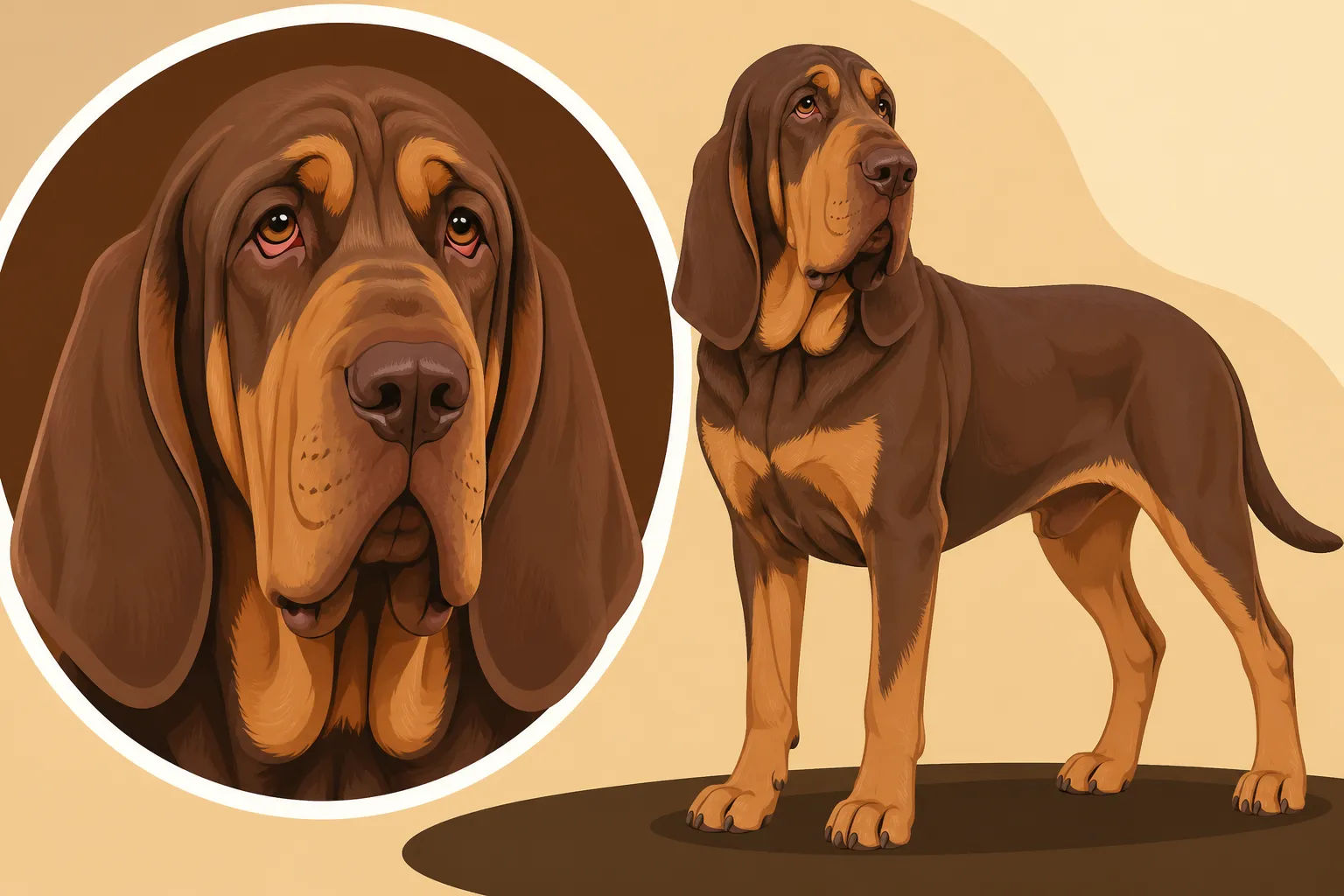
“Liver” describes the Bloodhound’s dark coat color. It can appear as chocolate, reddish brown, or a deeper brown that looks nearly black in dim light. In bright daylight, the brown tone is often easier to see, particularly on the back and sides.
The “tan” describes the lighter markings that contrast with that darker coat. Depending on the individual dog, the markings can range from pale tan to a deeper, warmer shade. They commonly show above the eyes, on the muzzle and cheeks, across the chest, and on the lower parts of the legs. The exact borders and proportions vary, so two liver and tan Bloodhounds may not look identical.
A useful comparison is to picture the usual black-and-tan pattern with the black replaced by brown. That description gets you close, though real coats are not always perfectly uniform blocks of color. Some have blended edges or lighter and darker areas within the brown. For a broader look at the breed’s permitted coat colors, see The Colors a Bloodhound Comes In.
Coat color is only one part of the picture
The color does not change the Bloodhound’s characteristic build. A liver and tan Bloodhound still has the long, loose ears, wrinkled skin, and substantial frame associated with the breed. Its coat is short and close lying, but the loose skin and facial folds can make the overall appearance feel softer and more textured than the coat itself.
The nose and other visible areas of pigmentation can help distinguish liver coloring from black-and-tan coloring. A liver dog may have brown pigment where a black-and-tan dog has black. Still, a single snapshot can be misleading: shadows, camera settings, and indoor lighting can make brown look black or make tan markings look pale.
Color also does not tell you whether a Bloodhound is a better tracker, calmer companion, or healthier dog. Temperament, training, health, and individual experience matter far more than coat shade. For a detailed overview of the breed’s proportions and size, see What a Bloodhound Weighs and How Tall It Stands.
Where to look for liver and tan markings
Common places the tan appears
Look first at the face. Tan may appear as small spots above the eyes, along the sides of the muzzle, or across the cheeks. The ears can also show a combination of darker and lighter coloring, though the amount of tan varies. Some dogs have a clearly defined contrast; on others, the colors blend gradually.
The chest is another place where lighter markings may be visible. Tan can continue down the legs, especially around the lower portions. The pattern is not a precise map that every dog follows, so a marking that is faint or shaped differently does not automatically mean a dog is not liver and tan.
The best way to assess a dog is to look at the whole coat in natural daylight rather than judging one patch in a flash photo. If you are comparing a puppy with its littermates, take a moment to view each one from several angles. Coat color can seem noticeably different depending on whether the dog is standing in sunlight, shade, or a warm indoor room.
How liver and tan compares with other Bloodhound colors
Bloodhounds are commonly described in three broad color groups: black and tan, liver and tan, and red. The words are helpful shorthand, but coat shades can vary within each group. A red Bloodhound, for instance, may have a range of red tones, while liver and tan dogs can vary in how dark the brown appears and how strongly the tan contrasts.
| Color description | Darker coat area | Lighter or contrasting areas | What can make it hard to identify |
|---|---|---|---|
| Liver and tan | Brown, often chocolate or reddish brown | Tan markings in varying shades | Brown can look black in shade or in photos |
| Black and tan | Black | Tan markings in varying shades | Dark areas can dominate the coat in low light |
| Red | Red shades, with variation between dogs | May have less obvious contrast | Red tones can look lighter or darker under different lighting |
This table is a visual aid, not a substitute for examining the individual dog. Coat color descriptions can be used somewhat differently in casual conversation, and a photo may not show the true shade. If you are looking at a puppy listing or breeder photographs, ask for clear pictures taken in natural light and a description of the puppy’s coat in person.
A liver and tan Bloodhound can also have small white markings. Their presence does not necessarily erase the overall liver-and-tan impression. To understand what markings are commonly seen in the breed, Which Colors the Bloodhound Standard Allows provides useful context.
How the color can look as a Bloodhound grows
Puppy coats and changing impressions
A puppy’s coat can look different from the adult coat as it matures. The basic color pattern may be visible early, but the depth of the brown and the contrast of the tan can be harder to judge while the coat is short, soft, or changing. Puppy photographs can also exaggerate differences because lighting and camera exposure vary from one image to another.
If you are choosing a puppy, it is reasonable to ask the breeder how the coat looks in person and whether the litter has similar shades. Do not rely on a phone photo alone to decide that a brown coat is black, or that a very dark puppy cannot be liver and tan. A well-lit view of the back, face, chest, and legs makes comparison easier.
The coat color itself is not a reliable indicator of future adult size, working ability, or personality. A puppy’s likely adult appearance is better assessed by looking at its parents and relatives, while health and temperament questions should be discussed separately. If you are comparing pups, Whether a Bloodhound Puppy's Color Changes covers why early photographs can leave room for uncertainty.
Sunlight, dirt, and seasonal coat changes
Natural light is usually the clearest way to see the brown in a liver coat. Direct sun can make it appear warm or reddish, while shade can make it look much darker. Artificial indoor lighting can shift the color too, especially in photos taken with a phone.
Outdoor life can temporarily affect how the coat looks. Dust, mud, wet fur, or a recent bath may change the apparent shade until the coat is clean and dry. Bloodhound owners also know that a short coat does not mean a no-maintenance coat: it still sheds, and the dog’s skin folds, ears, and facial areas need sensible routine care. A liver coat does not require a special color treatment or dye.
For everyday grooming supplies, some owners look at retailers such as Chewy for a suitable brush or washable grooming cloth. Choose tools based on the dog’s coat and skin, not its color, and check with a veterinarian if the skin becomes irritated or develops a persistent odor. General coat-care guidance is available in The Coat Is the Easy Part of a Bloodhound.
What the color does and does not tell you
Appearance does not predict personality or tracking skill
A liver and tan coat is a color description, not a personality type. It does not mean a dog will be more independent, more affectionate, more energetic, or more talented at trailing than a black-and-tan or red Bloodhound. Those qualities depend on the individual dog, its breeding, early experiences, health, and training.
Bloodhounds are scent-driven dogs, and their behavior can be shaped by that instinct regardless of coat color. If a dog catches an interesting scent on a walk, it may become absorbed in following it. Consistent handling and safe equipment matter much more than whether the dog’s coat is brown or black. For more on why the breed can seem to tune out a familiar cue, see A Bloodhound's Nose Outvotes Its Handler.
Color is also not a meaningful shortcut for judging health. A prospective owner should ask about health history, veterinary care, and responsible breeding practices rather than treating a particular shade as a sign of better or worse health. The breed’s appearance is only one small part of the decision to bring a Bloodhound home.
Questions to ask when viewing a liver and tan Bloodhound
If you are meeting a dog or considering a puppy, ask the breeder, rescue, or current owner to describe the coat and show it in ordinary daylight. You can also ask whether the dog’s nose and other visible pigment are brown, and whether the coat has changed noticeably since puppyhood. These questions help clarify appearance without turning color into a promise about the dog’s future.
If the dog is being represented as a particular color for registration or showing, ask how that description is being used and check the relevant breed rules. Everyday labels are useful, but official descriptions may have specific definitions. A breeder should be able to discuss the dog’s lineage, health, and temperament without making color the main selling point.
For a pet owner, the practical choice is usually simpler: decide whether you like the dog in front of you, whether its care needs fit your household, and whether you are prepared for Bloodhound grooming and management. Chewy may be one place to browse basics such as brushes, towels, or washable mats, but the right setup depends on the individual dog and home. If you are still learning what living with the breed involves, The Household a Bloodhound Was Built For offers broader breed context.
A quick visual checklist
When deciding whether a Bloodhound appears liver and tan, look for several features together rather than relying on one patch of fur:
- Check the darker coat in daylight. Look for brown or chocolate tones rather than assuming a dark coat is black.
- Find the contrasting tan. Check the face, chest, and lower legs, while remembering that markings vary.
- Look at visible pigmentation. Brown pigment can support the liver description, though photos may obscure the detail.
- Consider the lighting and coat condition. Wet fur, dirt, shade, and camera settings can all alter the apparent shade.
- Ask about the dog’s history. For a puppy, ask how its color has appeared as it has grown and whether the description is informal or tied to a particular standard.
A short-haired breed still benefits from routine care, and some owners keep grooming cloths or a suitable brush close at hand. Chewy is one possible source for those everyday items, but whichever retailer you use, select products for comfort and practical use rather than trying to intensify or alter the dog’s natural coat color.
Disclaimer
This article is for general informational purposes only and does not constitute professional advice. Laws, prices and regulations vary by location and change over time. Consult a qualified professional for guidance on your specific situation.