Whether a Male Bloodhound Is Much Larger Than a Female
A male Bloodhound is usually taller and heavier than a female, but the difference is not a clean dividing line. Plenty of females are larger than plenty of males, and build varies with family, age, and condition. This guide explains the typical size ranges, what the difference looks like at home, and how to judge an individual dog without relying on sex alone.
How much larger is a male Bloodhound than a female
Typical height and weight ranges
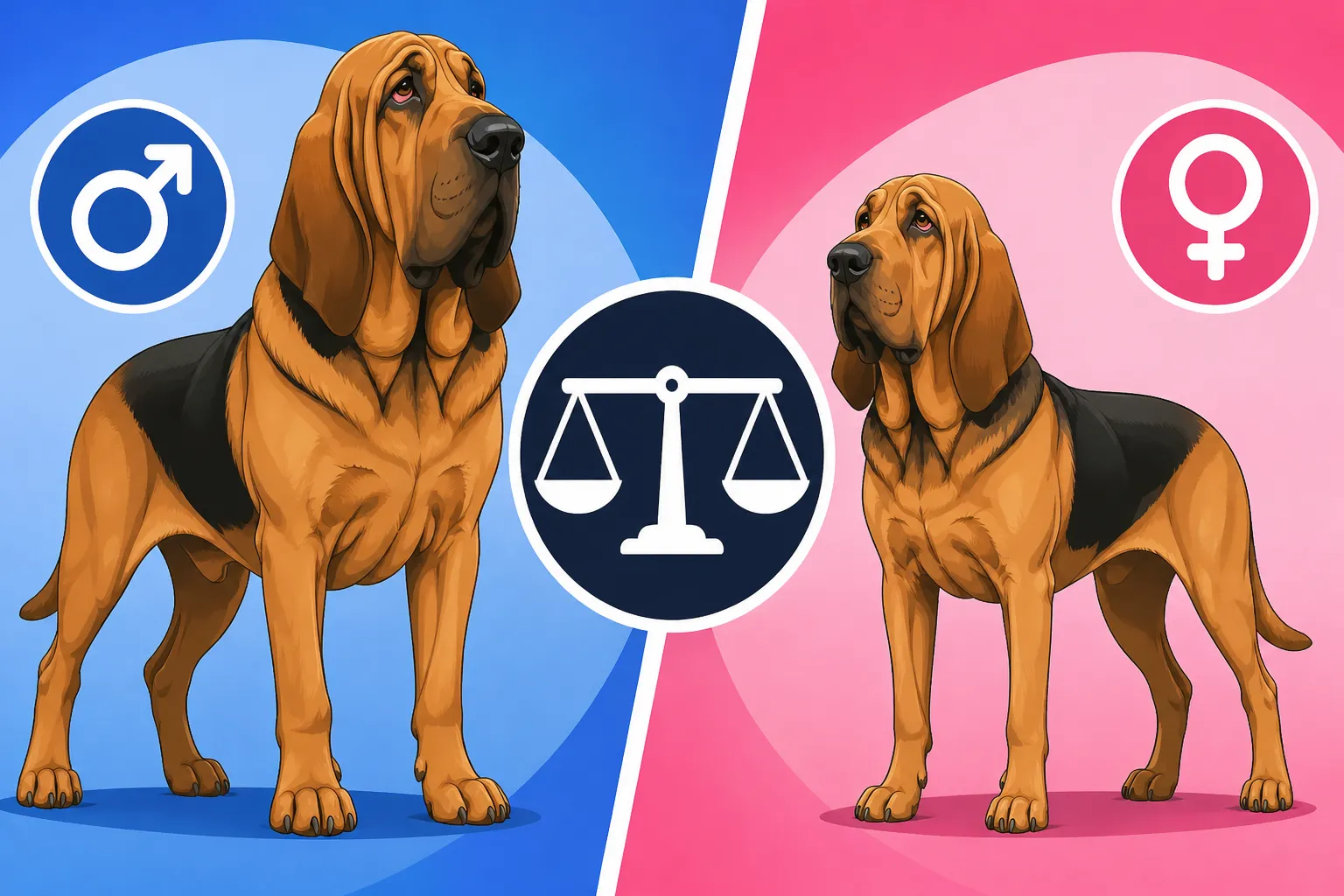
Male Bloodhounds are generally the larger sex. Breed standards commonly place males around 25 to 27 inches tall at the shoulder and females around 23 to 25 inches. Typical weight ranges are roughly 90 to 110 pounds for males and 80 to 100 pounds for females. These are useful reference points, not guarantees for every adult dog.
The ranges overlap: a large female may weigh as much as a smaller male, and an individual dog can fall outside the usual range while still being healthy. Height is measured at the shoulder, not to the top of the head, so a dog can look taller when its head is raised without actually being unusually large.
| Measure | Typical male range | Typical female range | What to keep in mind |
|---|---|---|---|
| Height at the shoulder | About 25 to 27 inches | About 23 to 25 inches | The ranges overlap at their edges |
| Adult weight | About 90 to 110 pounds | About 80 to 100 pounds | Frame and body condition matter as much as the number |
| General impression | Often taller and heavier | Often somewhat lighter and more compact | Individual dogs may not match the average |
These measurements are a starting point when comparing the sexes. They do not tell you whether a dog is at a healthy weight, whether its joints are developing well, or how much room it will take up on your sofa. For a closer look at the breed’s overall proportions, see What a Bloodhound Weighs and How Tall It Stands.
Why the size difference is not always obvious
The average difference is modest compared with the dog’s overall size. Both sexes are large, strong hounds with substantial bone, long ears, loose skin, and a deep chest. A female Bloodhound is not a small version of the breed, and a male is not necessarily dramatically bigger in every part of his body.
Bloodhounds also vary by lineage and individual build. One may be tall and rangy, while another has a broader frame and heavier appearance. A dog’s weight can also change with age, activity, diet, and health. Two dogs of the same sex and similar height may look quite different because one carries more muscle or has a heavier frame.
This is why comparisons based only on a photograph or a single number can be misleading. If you are considering a puppy, ask about the size of both parents and other close relatives. Their adult size offers a useful clue, though it still cannot predict an exact height or weight. For more context on the breed’s proportions, How Much a Bloodhound Weighs looks at size in more detail.
What the difference means in everyday life
Handling, lifting, and getting through the house
A heavier male may be harder to lift into a car or help onto a raised surface, but even a smaller female can be a lot of dog to manage. Bloodhounds are powerful, and their weight is only one part of the handling picture. A dog that leans into a scent, pulls toward an interesting smell, or plants its feet can be challenging regardless of sex.
For everyday handling, good leash manners and a well-fitted harness matter more than whether the dog is male or female. When shopping for gear, measure your own dog’s chest and neck and follow the specific sizing guide rather than assuming that a “male” or “female” size will fit. Chewy product listings can be one place to compare measurement charts, but the dog’s actual measurements should guide the choice.
At home, think about practical access as well. A large Bloodhound may need help getting into a vehicle, and a dog with joint discomfort may struggle with stairs even if it is within a typical weight range. A sturdy ramp, nonslip flooring, and a comfortable resting spot can make daily routines easier for either sex.
Food, exercise, and healthy body condition
A male’s higher average weight does not automatically mean he needs much more food than a female. The right amount depends on the dog’s body condition, age, activity level, metabolism, and the calorie density of its food. A sedentary dog may need less than a similarly sized dog that regularly works or exercises.
Use your veterinarian’s guidance and monitor body condition over time. You should be able to feel the ribs without pressing hard, and the dog should have a visible waist when viewed from above. A scale can help track change, but it cannot distinguish muscle from excess fat. Keeping a Bloodhound lean is especially worthwhile because extra weight adds strain to a large dog’s joints. See Keeping a Bloodhound Lean on Purpose for practical body-condition guidance.
Exercise needs do not divide neatly by sex, either. A healthy adult male may have more body mass, but that does not mean he should automatically receive more intense exercise. Growth, fitness, heat, footing, and individual health all matter. For puppies and young dogs, avoid treating their eventual adult size as a reason to push long, strenuous outings before they are ready.
Choosing equipment and planning for an adult Bloodhound
Measure the dog instead of guessing from sex
A collar, harness, crate, bed, or vehicle restraint should fit the dog in front of you. Breed averages can help you prepare, but they are not a substitute for measuring. For a harness, check the manufacturer’s instructions for where to measure the chest and neck. For a bed or crate, consider the dog’s length while lying down and whether it can stand, turn, and stretch comfortably.
Bloodhounds’ loose skin and distinctive proportions can make fit less straightforward than a weight label suggests. A harness that fits the chest may rub behind the legs, while a collar that seems secure may sit poorly on a dog with a broad neck. If possible, check the fit with the dog standing and moving, and reassess as a puppy grows.
Chewy’s listings may make it convenient to compare products and their stated measurements, but sizing charts differ between manufacturers. Do not buy a larger size solely because the dog is male, or a smaller one solely because the dog is female. If your dog is between sizes or has an unusual build, contact the maker or ask your veterinarian or trainer to help assess fit.
Plan for strength as well as size
A Bloodhound’s adult weight affects more than equipment. It can influence how easily the dog can be lifted, transported, or safely restrained, especially if the dog becomes injured or unwell. A smaller female still needs secure handling arrangements, while a large male may need a stronger ramp or a second person’s help in some situations.
Think ahead about your vehicle, home layout, and daily routine before bringing a puppy home. Check whether the dog can enter the car safely, whether gates and doorways are secure, and whether everyone in the household can manage the leash. Bloodhounds can be enthusiastic scent-followers, so secure equipment and consistent training are important regardless of body size. Which Harness a Bloodhound Trails In offers additional context on choosing a harness for a Bloodhound’s work and movement.
How to judge an individual dog’s size
Consider age, family, and body condition
A puppy’s current size does not reveal exactly how large it will become. Growth happens over time, and pups from the same litter may mature at different rates. A breeder can share the parents’ sizes and the growth patterns of related dogs, but those details remain estimates rather than promises.
For an adult dog, assess height, frame, muscle, and body condition together. A dog that weighs more is not necessarily taller, and a heavier dog is not necessarily healthier or more substantial in a useful way. If you are comparing two dogs, observe them standing naturally and moving, rather than judging only by weight or by how bulky their coats and loose skin appear.
A veterinarian can help determine whether a dog’s weight is appropriate for its frame. This is particularly helpful if a Bloodhound has gained weight quickly, seems uncomfortable moving, or has a body shape that makes visual assessment difficult. Breed-specific reference ranges are useful, but your dog’s health and condition come first.
Questions to ask before choosing a puppy
If you are choosing between a male and female puppy, ask the breeder about adult sizes in the line, the parents’ health and build, and how the puppies are growing. A responsible breeder should be comfortable discussing variation and should not promise that a puppy will reach an exact adult weight. If adopting an adult, ask for the dog’s current weight, medical history, and any known information about its parents or previous care.
It is also worth considering temperament and fit with your household instead of making size the deciding factor. A slightly smaller dog is not automatically easier to handle, and a larger dog is not automatically more difficult. Training, confidence, health, and the dog’s individual habits have a major effect on daily life.
For a broader look at Bloodhound traits and what living with the breed involves, explore Whether a Male Bloodhound Is Much Larger Than a Female alongside Whether a Bloodhound Is Heavier Than a Coonhound and Whether a Bloodhound Suits a First Time Owner. Chewy can be useful for checking product dimensions when preparing for a dog, but a breeder, rescue, or veterinarian is a better source for an individual dog’s expected growth and health.
Disclaimer
This article is for general informational purposes only and does not constitute professional advice. Laws, prices and regulations vary by location and change over time. Consult a qualified professional for guidance on your specific situation.