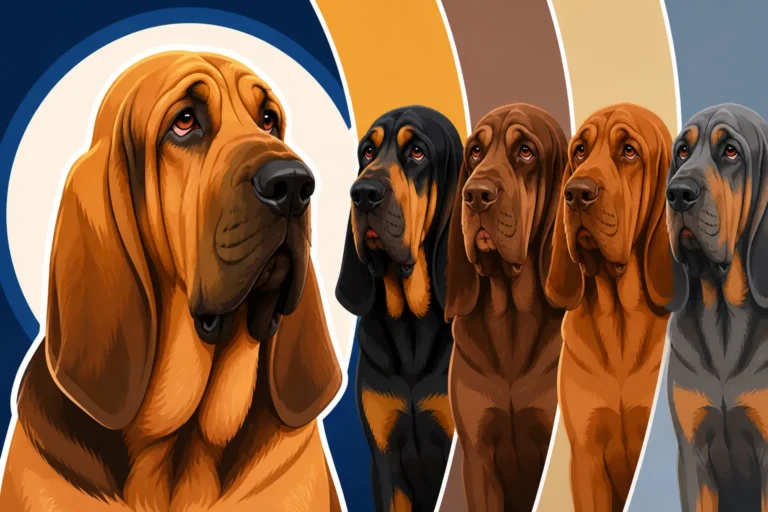
Whether a Red Bloodhound Is Standard
A red Bloodhound is a standard color, not a fault or an unusual mix. The tricky part is that “red” can describe a range of shades, and a puppy’s coat may look different as it matures. This guide explains what the breed standard allows, how red differs from other Bloodhound colors, and what to look for when identifying a dog’s coat.
Is a red Bloodhound a standard color
What “red” means in the breed standard
Yes. Red is one of the recognized Bloodhound colors, alongside black and tan and liver and tan. In other words, a red Bloodhound can meet the breed standard for color; red does not, by itself, make a dog a nonstandard color.
The word “red” does not mean every dog must be one identical shade. A red coat may range from a lighter, tawny or warm reddish tone to a deeper, richer red. Natural variation is normal, and a dog’s coat can have areas that appear lighter or darker without changing its basic color category.
It is also worth separating “standard color” from “show quality.” Color is only one part of conformation evaluation. A dog is not automatically a strong show prospect because its coat is standard, just as a dog is not automatically unsuitable because its red is lighter or darker than someone expects. Structure, movement, condition, temperament, and the rest of the breed standard matter too.
For a broader look at the recognized shades and patterns, see The Colors a Bloodhound Comes In and Which Colors the Bloodhound Standard Allows.
Does a red Bloodhound have to be evenly colored
No. A red Bloodhound does not have to look like a single flat block of color. Some coats show subtle variation, such as darker hairs mixed through a lighter area, or a lighter shading across parts of the body. That natural variation is different from a coat pattern that clearly places the dog in another color category.
This is one reason photographs can be misleading. Warm indoor lighting may make a red dog look orange or coppery, while shade or a phone camera’s color settings can make the same coat appear brown. A wet coat can look much darker than a dry one, and puppy coats may be softer and less visually defined than adult coats.
If you are evaluating a particular dog, look at the coat in natural daylight and consider its overall appearance rather than judging it from one close-up photo. A breeder or experienced Bloodhound person can also help describe the dog’s color, especially if its coat has mixed shading.
| Coat description | How it generally relates to the standard |
|---|---|
| Red | A recognized Bloodhound color, with shade varying from lighter to deeper red |
| Black and tan | A recognized color pattern with black and tan areas |
| Liver and tan | A recognized color pattern with liver-colored and tan areas |
| Small white markings | A limited amount of white may be permissible in specified areas |
| A color outside the recognized categories | May be considered nonstandard for conformation purposes |
How red differs from black and tan or liver and tan
Red is a color category, not a promise of one exact shade
People sometimes expect a “red Bloodhound” to have a bright, unmistakably red coat. In practice, red is a broad color description. Depending on the individual dog and the light, the coat may look reddish brown, warm mahogany, russet, or a paler red-tan.
That variation can lead to understandable confusion when comparing puppies from the same litter. One puppy may appear lighter, another deeper in color, and both may still fall within the red category. Coat shade alone does not tell you whether a dog is healthy, well bred, or more suited to a particular kind of home.
It helps to compare the overall pattern, not just a small patch of fur. A red coat is generally described as red throughout, though natural shading can occur. Black and tan and liver and tan have distinct color areas that make them different patterns. For a closer comparison, see Whether Black and Tan Is the Most Common Bloodhound Color and What a Liver and Tan Bloodhound Looks Like.
Is a red Bloodhound the same as a liver and tan Bloodhound
Not necessarily. Liver and tan is a recognized color pattern with two distinguishable areas of color. A red Bloodhound, by contrast, is categorized as red. In everyday conversation, people may use loose descriptions such as “reddish,” “brownish,” or “rust-colored,” which can make the categories sound more interchangeable than they are.
This is especially confusing when a dog has subtle shading. A red dog with darker hairs may look brown in a photograph, while a liver-and-tan dog may appear mostly warm brown if the lighting washes out the contrast. If color classification matters for a show entry, registration record, or breeding discussion, ask the breeder or relevant registry how the dog should be recorded rather than relying on an online photo.
A responsible breeder should be able to explain the colors in a litter and how they describe each puppy. If the breeder seems unsure, or makes dramatic claims about a color being rare, healthier, or more valuable without a clear basis, ask for a straightforward explanation. Coat color is not a substitute for health testing, sound structure, or thoughtful breeding decisions.
White markings, puppy coats, and color changes
Can a red Bloodhound have white markings
A small amount of white may be permissible on the chest, feet, or tip of the tail under the breed standard. That does not mean every white marking is automatically acceptable in every context, or that a white-marked dog will be evaluated exactly the same in every registry or event. The size, location, and applicable rules matter.
White markings also do not necessarily mean the dog is a mixed breed. People can be quick to label a Bloodhound as a mix when they see a small white area, but coat color alone is not enough to establish ancestry. If you are considering a puppy, ask about its pedigree and the breeder’s documentation rather than trying to infer breed background from one marking.
The article Whether a Bloodhound Can Have White Markings looks more closely at where white may appear and why the amount and placement matter. For a pet owner, though, a small marking is usually a question of appearance and standard interpretation, not a reason to assume something is wrong with the dog.
Can a red Bloodhound puppy change color
A puppy’s coat can appear to change as it grows. The color may seem deeper, lighter, or more clearly defined as the coat matures, and lighting, coat condition, and seasonal changes can affect what you see. That does not necessarily mean the dog has changed from one recognized color category to another.
For example, a puppy that looks like a pale red in a breeder’s indoor photograph may appear richer outdoors. A freshly bathed coat can also reflect light differently from a coat that is dusty or damp. When comparing puppy photos over time, try to look at images taken in similar lighting and remember that cameras often shift warm colors.
If you are choosing a puppy, ask the breeder how they describe the parents’ colors and what they expect the puppy’s adult coat to look like. A good breeder will usually be candid about uncertainty rather than promising an exact adult shade. See Whether a Bloodhound Puppy's Color Changes for more on what can shift as a puppy matures.
Choosing a red Bloodhound and caring for its coat
What to ask a breeder about color
If you want a red Bloodhound, ask whether the breeder’s description means a red coat under the relevant breed standard, and ask to see clear photographs of the puppy and its parents. It is reasonable to ask how the breeder records the litter’s colors, but color should be one small part of your overall decision.
Spend just as much time asking about health screening, temperament, the puppy’s early socialization, and the breeder’s plans for matching puppies to homes. A red coat is visible and easy to get excited about; health and temperament details take more questions, but they matter far more to your life with the dog.
Be cautious if a seller presents red as a rare or premium feature and uses that claim to pressure you into a quick decision. The fact that red is standard means it is a recognized color, not proof that a puppy is unusually healthy or that its price should be treated as automatically justified. Ask for written records and take time to review them.
Does a red coat need special care
No special grooming routine is needed just because a Bloodhound is red. The coat is short, but regular brushing can help lift loose hair and give you a chance to check the skin. A soft grooming brush or rubber curry can be useful; if you are ordering basic grooming supplies through a retailer such as Chewy, choose a tool suited to a short-coated dog rather than buying products marketed around coat color.
A red coat also does not need color-enhancing shampoo or dye. Use products intended for dogs, and ask your veterinarian for guidance if your dog has itchy, irritated, or unusually flaky skin. A coat that looks dull or changes texture may be a reason to check overall skin and health, not a cue to use a cosmetic color product. If you already shop at Chewy, compare the product label and ingredients with your veterinarian’s advice rather than choosing a shampoo based on a “brightening” claim.
Routine care is more about the whole Bloodhound than its color. Keep an eye on the ears, eyes, skin folds, nails, and body condition. The breed’s long ears and facial folds can need regular attention, whether the coat is red, black and tan, or liver and tan. If color is the only thing you are uncertain about, ask the breeder or a knowledgeable breed mentor; if the coat or skin itself seems abnormal, bring it up with your veterinarian. Chewy may be convenient for replacing everyday brushes or dog-safe grooming basics, but it cannot determine whether a particular coat is healthy or correctly classified.
What to remember when you see a red Bloodhound
Red is a standard Bloodhound color, and the shade can vary. A red dog may look lighter or darker depending on its coat, age, and the light in a photo. Limited white markings may also be permissible in certain areas, while color descriptions can be harder to judge when a dog has subtle shading.
If you are buying or adopting, treat color as one part of the conversation, not the deciding factor. Confirm the dog’s background and records, ask how the breeder identifies the coat, and prioritize health, temperament, and a good fit for your household. A red Bloodhound can be a perfectly standard example of the breed without needing to match a single idealized shade.
Disclaimer
This article is for general informational purposes only and does not constitute professional advice. Laws, prices and regulations vary by location and change over time. Consult a qualified professional for guidance on your specific situation.